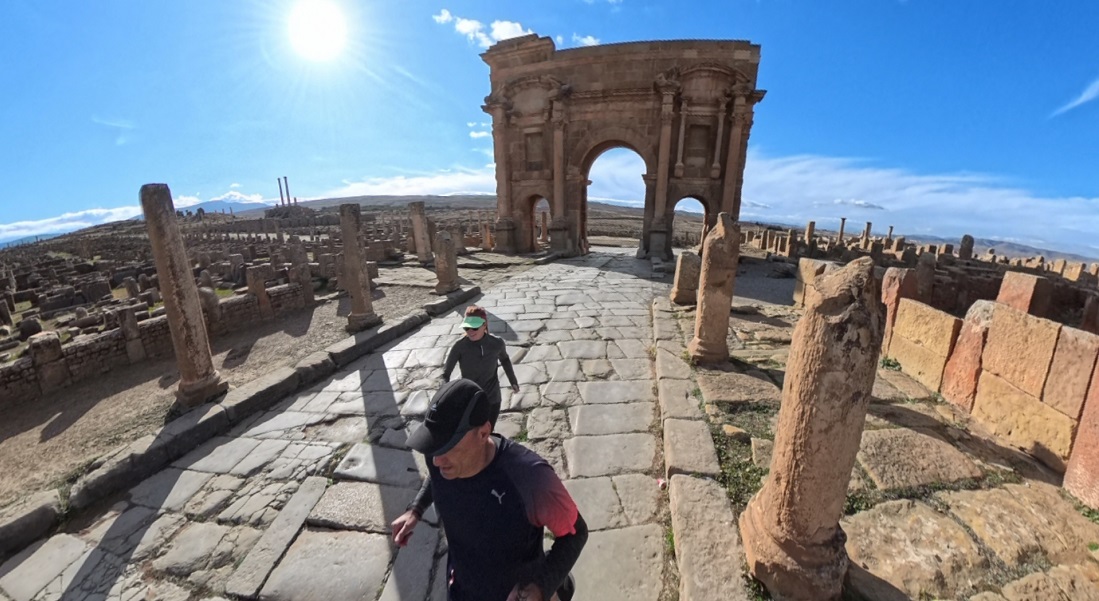
Timgad Ruins, Constantine and Algiers (15 kms). January 2026.
I traveled to Algeria expecting history and complexity, but running gave me a deeper and more personal connection with the country. 🏃♂️ And we even ended up watching the streets in Algiers celebrate Senegal’s epic victory in the AFCON final 2026! Who would have expected that?
Moving on foot helped me understand cities, ruins, and daily rhythms better than any guided explanation ever could.
This entry mixes my personal running experiences with practical travel observations for runners curious about Algeria. 🌍 It is written for travelers who want culture, movement, and context, not just sightseeing.
And be assured – Algeria is not what you expect… it is so much better!
TLDR; “too long, didn’t read”
- I just want to run! Take me to RUNS.
- I have 1 minute. Take me to USEFUL INFORMATION.
- Running is my excuse for travelling. Take me to TRIP.
- Running is my excuse for eating. Take me to CARBOLOADING.
- I want to know what to read in the plane. Take me to ONE BOOK.
🌍 The trip 📷: What to see in Argelia
Arrival and first impressions
✈️ Arriving in Algeria felt surprisingly smooth, with a modern airport, free wifi, and calm procedures that immediately lowered my travel anxiety….
Specially after having struggled a lot with the Visa! (We had to visit the consulate 4 times)
Security felt present but relaxed, and many officers spoke some Spanish, which made interactions easier than expected. Seriously, many of them! Such a nice surprise.
Outside, winter rain and cold temperatures reminded me that Algeria is not always desert, especially along the Mediterranean coast. 🌧️
Language diversity appeared instantly, with Arabic, French, and Amazigh writing sharing public signs naturally.
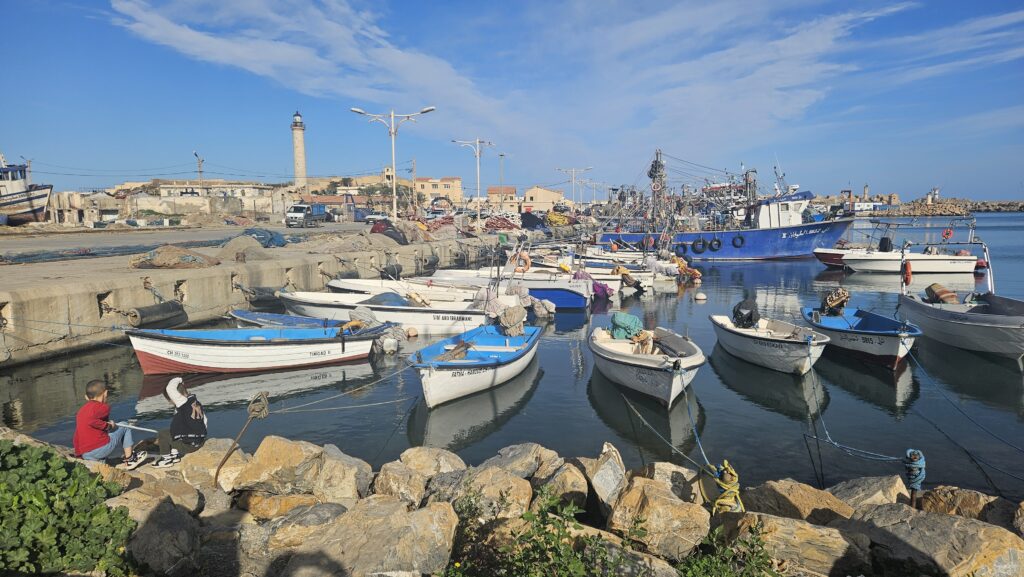
Cherchell. Roman echoes by the sea
Rain cleared just in time to reveal Cherchell under bright sunlight, instantly transforming the coastal town into a calm and welcoming place. ☀️
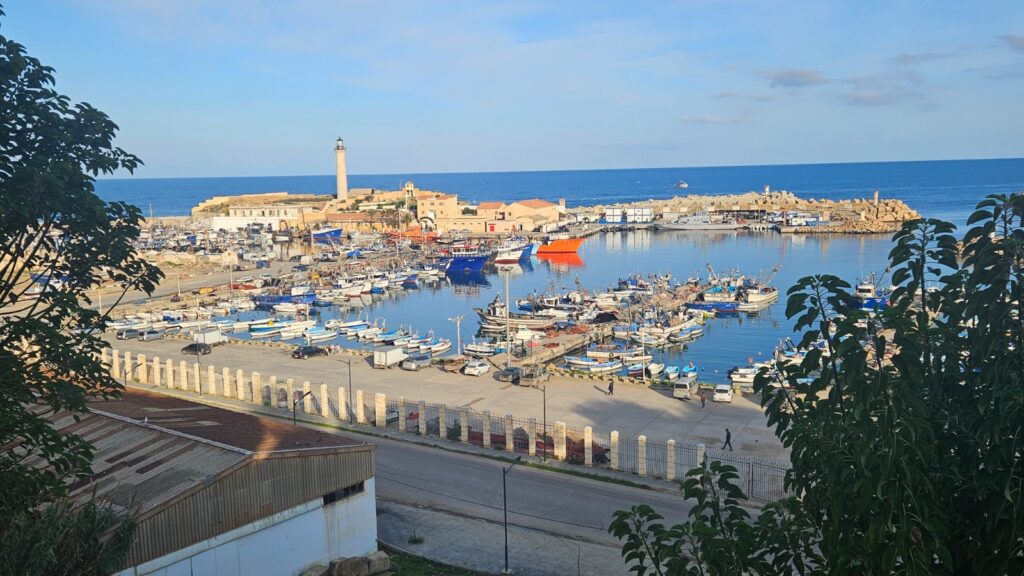
The seaside park overlooked the port and lighthouse, creating a relaxed atmosphere shaped by the rhythm of Friday prayer.
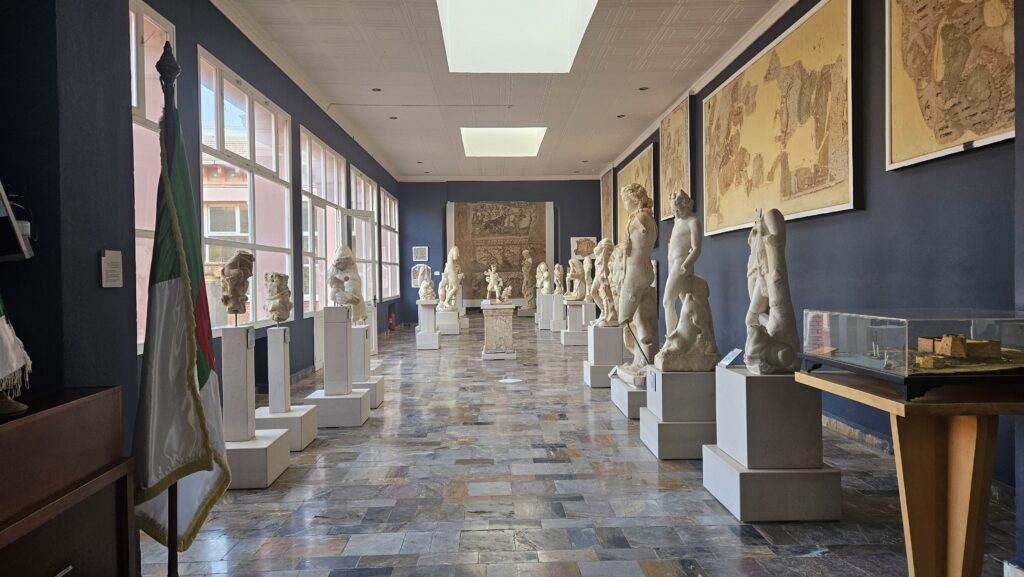
The museum impressed me deeply, with Roman sculptures displayed in a quiet house built around a central atrium. 🏛️
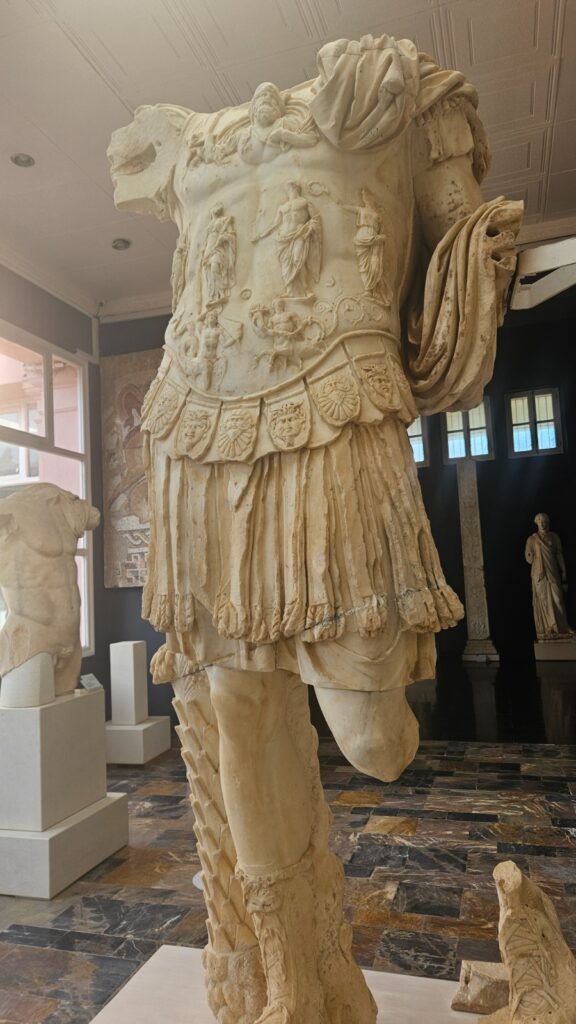
Old fountains of Neptune and big torsos of Roman Emperors made the visit really worth it.
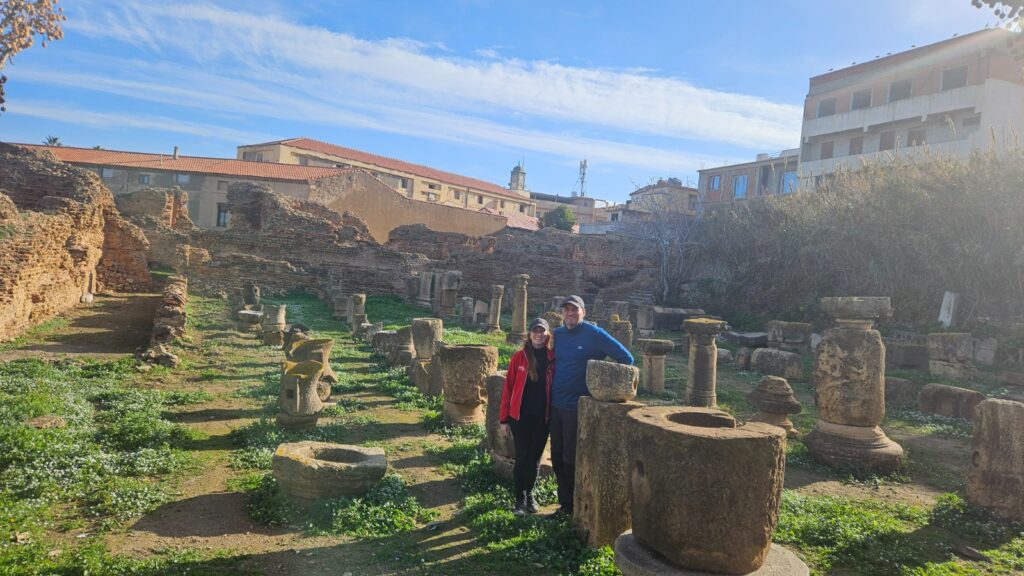
Later, walking through town revealed Roman columns between modern buildings, showing how history here remains part of daily life. 🧱
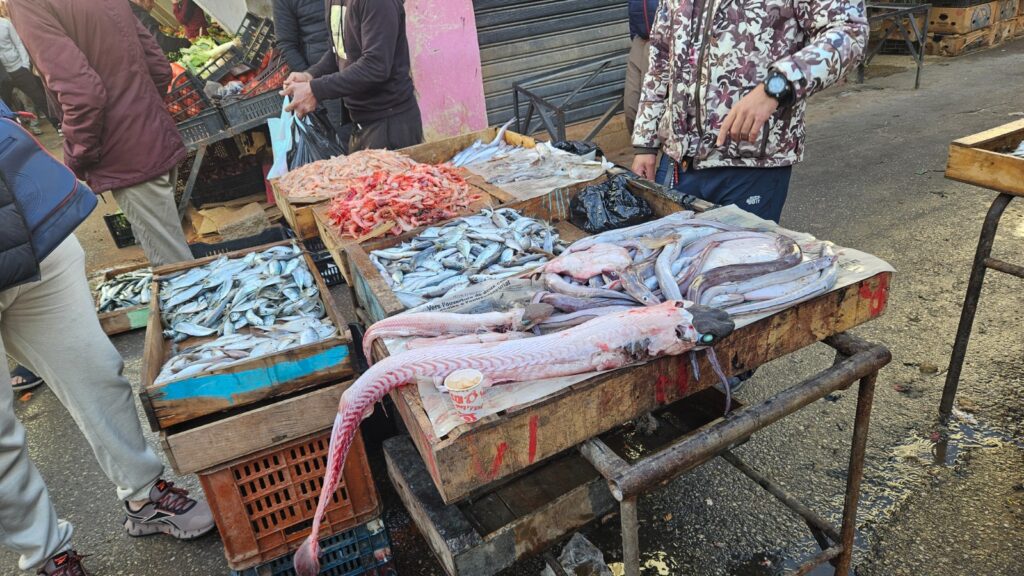
And talking about daily life, we also walked around the Zouk, with a very impressive collection of fish in its stalls!
Tipaza. Ruins above the Mediterranean
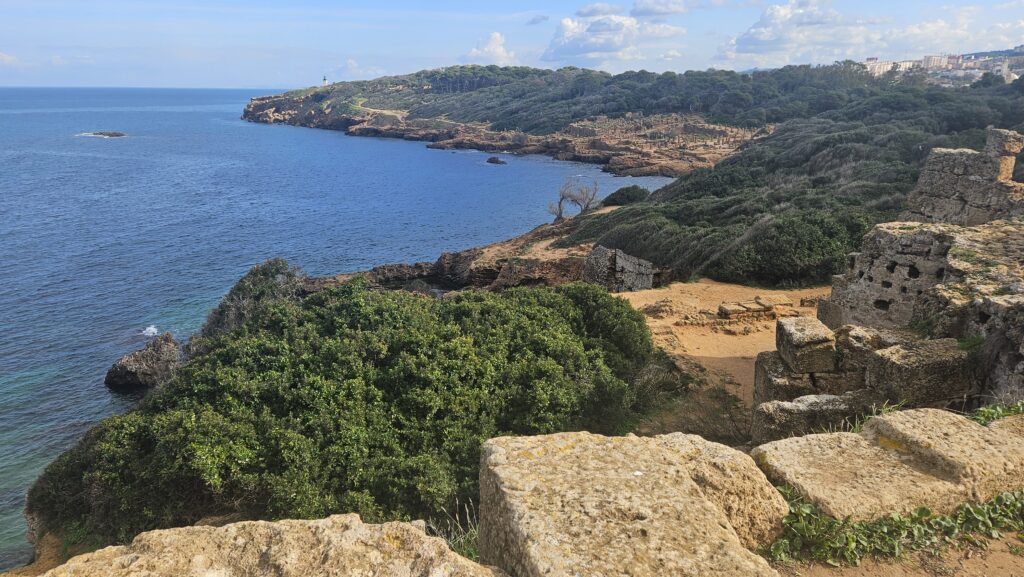
Tipaza felt spectacular, with Roman ruins stretching across cliffs directly above the Mediterranean Sea. 🌊
The combination of archaeology and landscape created one of the most beautiful ancient sites we have ever visited (comparable only to my dear Ampurias, where I used to spend my summers).
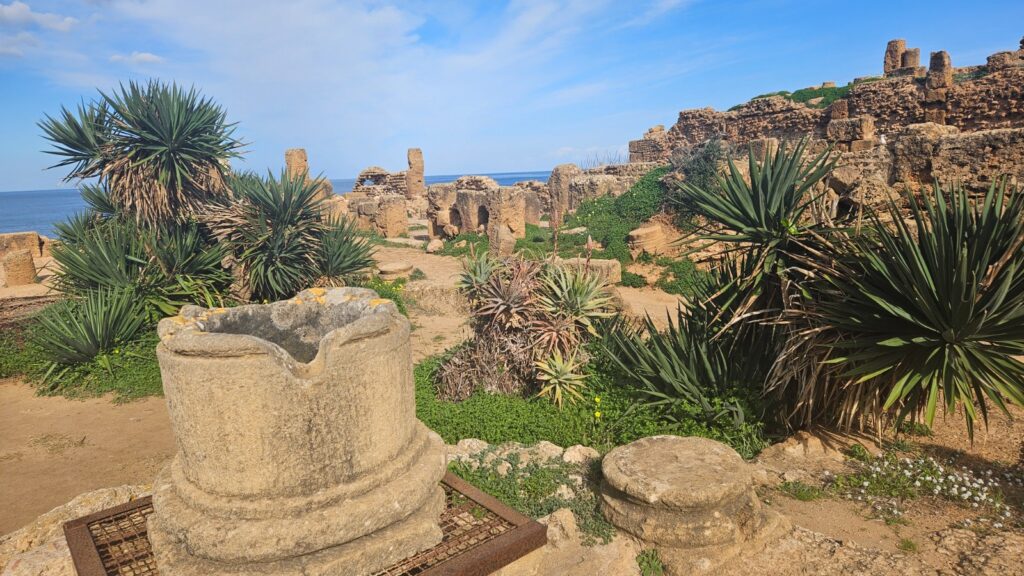
After a school group and an unexpected large group of Indian tourists left for lunch, silence returned, allowing us to explore amphitheaters, villas, and basilicas peacefully.
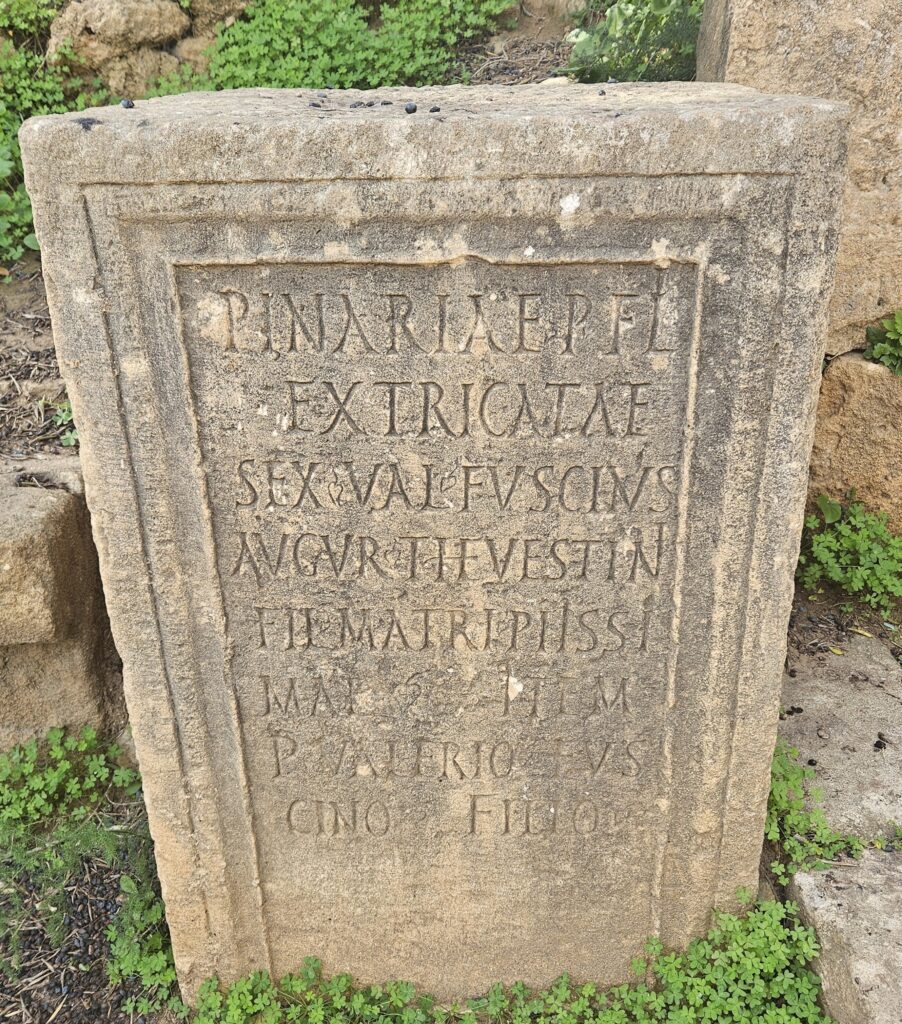
🏺 Names of gladiators engraved in stone made the past feel immediate and personal.
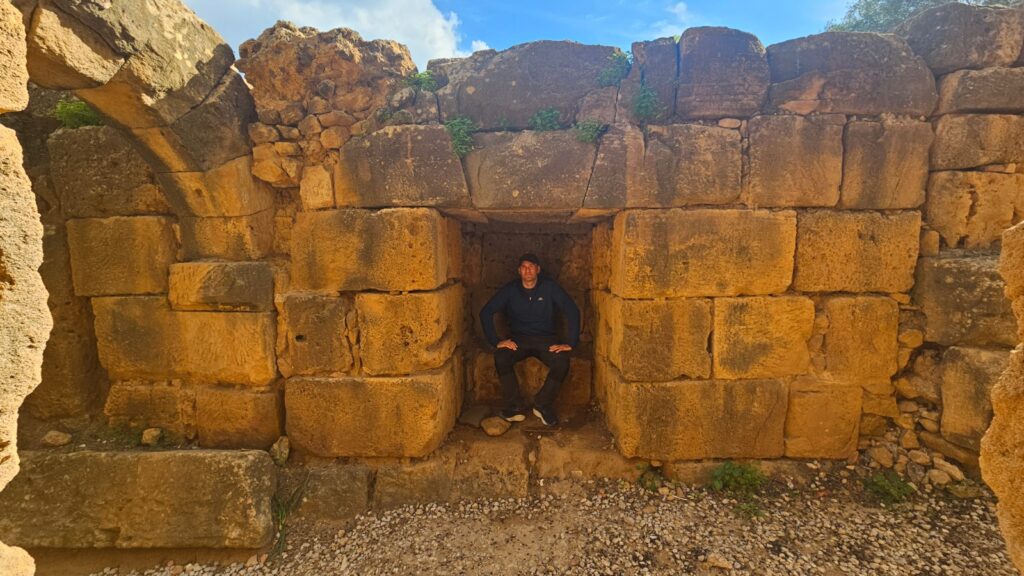
We even saw the seats where the gladiators would sit down just before jumping to fight! Very imppresive.
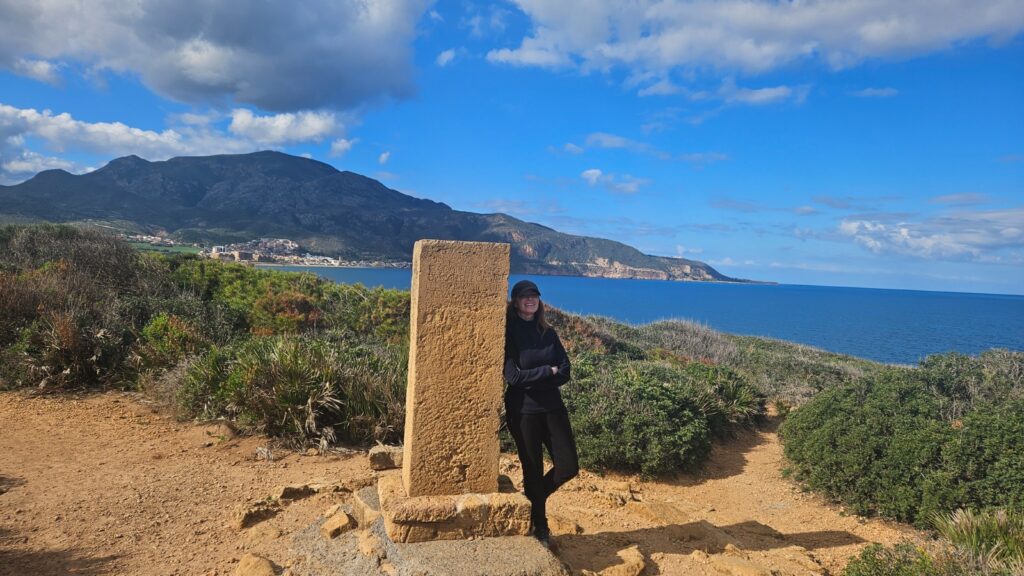
Near the basilica, a stone commemorated Albert Camus’ visit, quietly linking literature, landscape, and philosophy. 📖
I tried to translate what it says and I had to ask my French sister-in-law for help. It says:
« Je comprends ici ce qu’on appelle gloire : le droit d’aimer sans mesure »
That is: “Here I understand what they call glory: the right to love without measure”.
Royal Mausoleum and the great mosque
The Royal Mausoleum surprised me completely, as I had never heard of this monumental structure before arriving. 😮
Built by Juba II for Cleopatra Selene, it combines Amazigh, Roman, and Egyptian styles seamlessly.
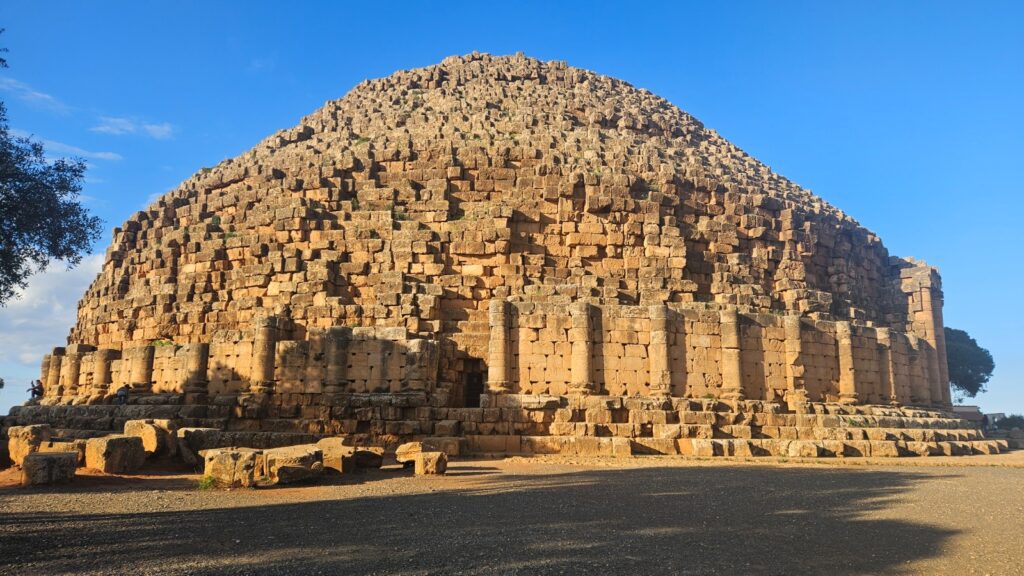
Walking around it at sunset with local families felt peaceful and deeply human, far from typical tourist crowds. 🌅
The monument felt respected rather than commercialized.
And, to finish our day, the great mosque of Algiers overwhelmed me with its scale, crowned by the tallest minaret in the world.
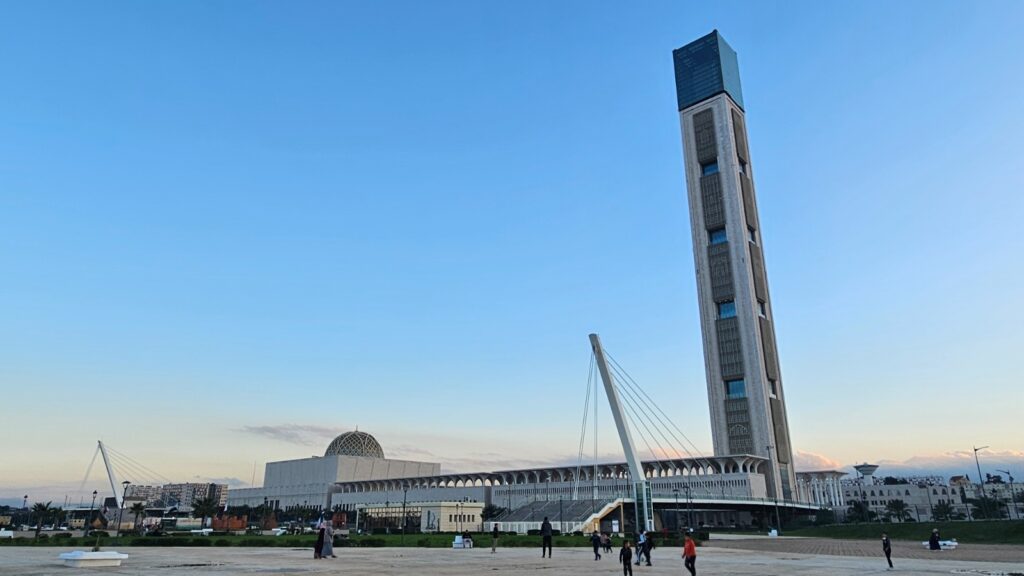
🕌 It is also the biggest mosque of in the World; after Mecca and Medina!
Toward the interior. Constantine and Roman Algeria
Flying toward Constantine revealed snow-covered mountains, completely reshaping my idea of Algerian geography. ❄️ The landscape felt closer to the Alps than the Sahara.
Constantine itself felt dramatic, built over deep gorges and connected by a network of impressive bridges. 🌉
The city wakes early, with brisk walkers and traffic already moving at sunrise.
From there, long drives across the country revealed Algeria’s immense scale and changing landscapes. 🚗
Djemila. Silence and mosaics
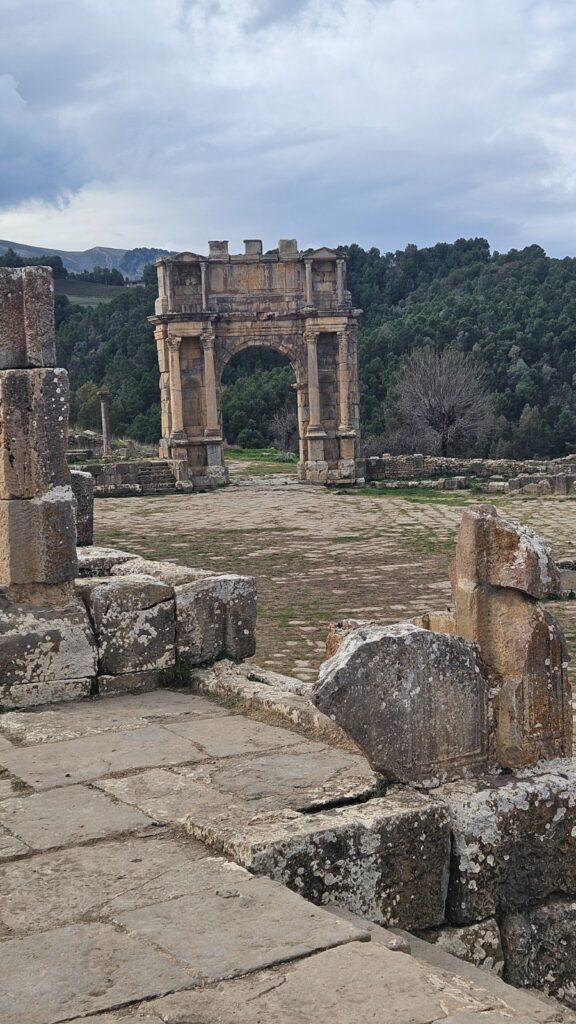
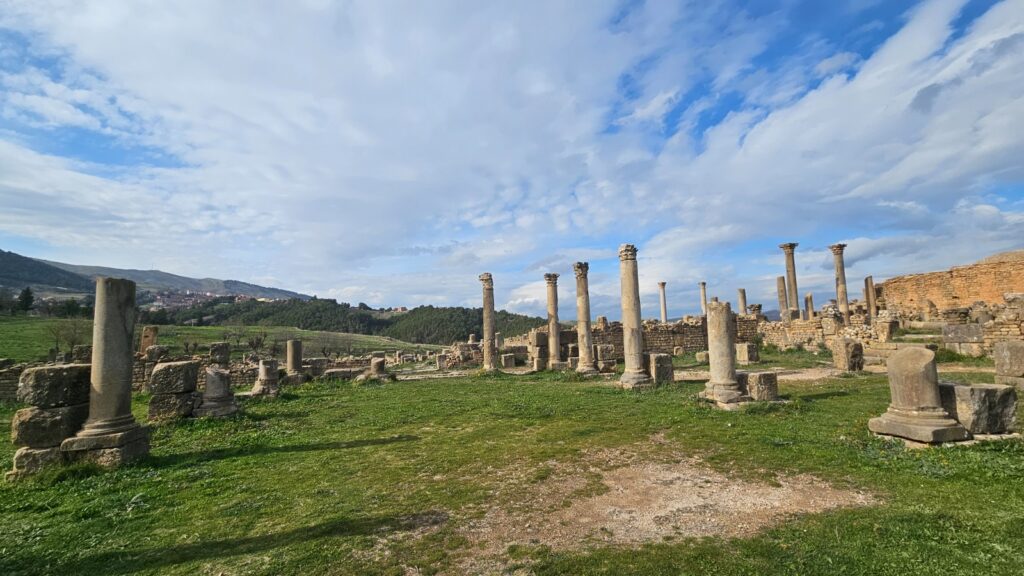
Djemila appeared after hours of driving, surrounded by hills and near total silence. 🏞️
The lack of tourists made the ruins feel untouched and deeply atmospheric.
A local artisan in the museum demonstrated ancient mosaic techniques. He still practices them today, using stones he collects himself from nearby hills. 🎨
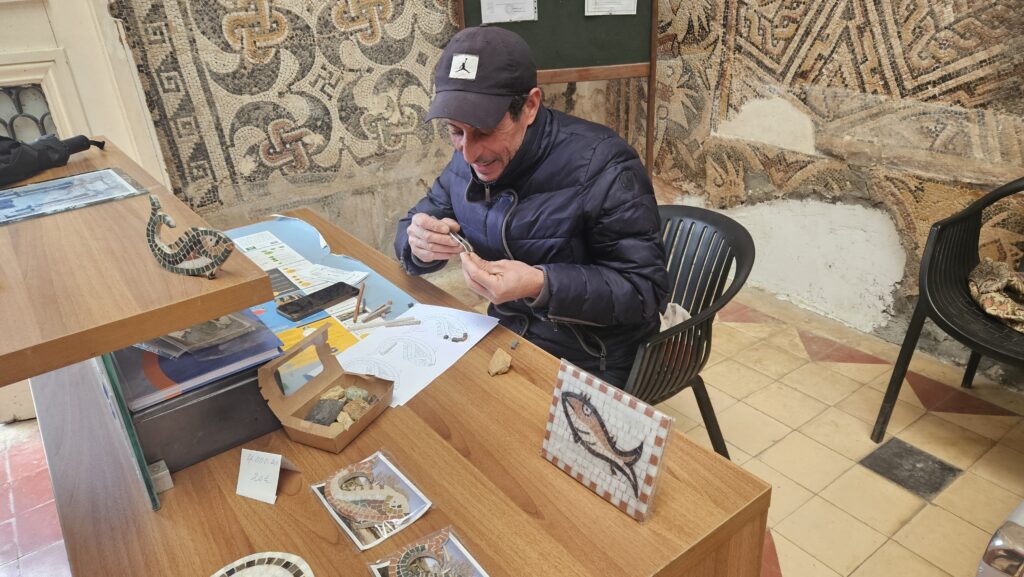
Buying his work felt meaningful, especially when he gifted extra stones with visible pride. If you drop by the Museum, be sure to buy a beatiful fish to decorate your dining room!
In the museum we saw engravings revealing humor, fertility symbols, and daily life, reminding me how human these ancient cities remain:
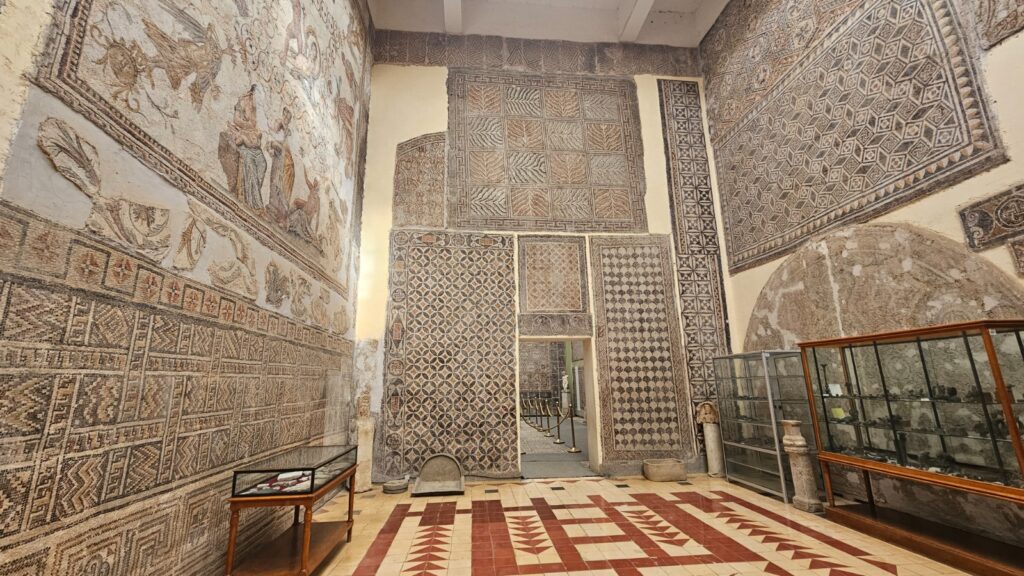
After the museum, we wandered through the streets of Djemila, where almost no tourists walked.
The houses rose in rows, some still showing stone foundations, while columns marked public spaces. This was so well preserved because it was buried under the sand for hundreds of years. In fact, only the triangular pediment of the temple was visible.
So nowadays we could enjoy the ruins, the forums framed by arches, the mosaics and even the small carvings, which caught our attention, including symbols of virility and everyday life.
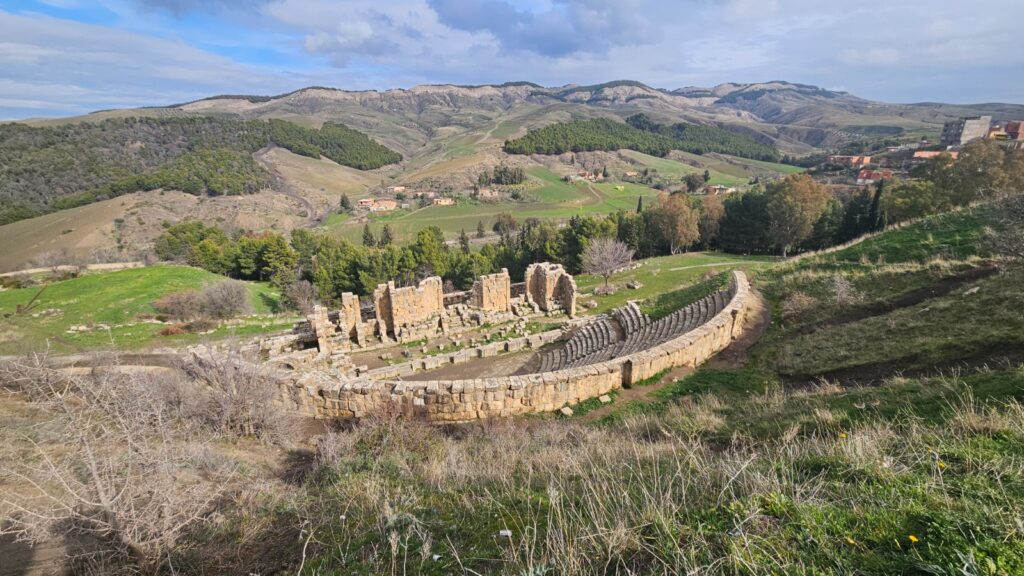
The narrow streets led us past the remains of marketplaces and private homes, giving a sense of how people lived, worked, and worshipped nearly two thousand years ago.
Timgad. A Roman city preserved
And then, what turned out to be the highlight of our trip. Timgad! (And, spoiler alert… we did run here!)
The day after, Timgad unfolded under clear skies and cold air, revealing a perfectly planned Roman military colony. 🏛️
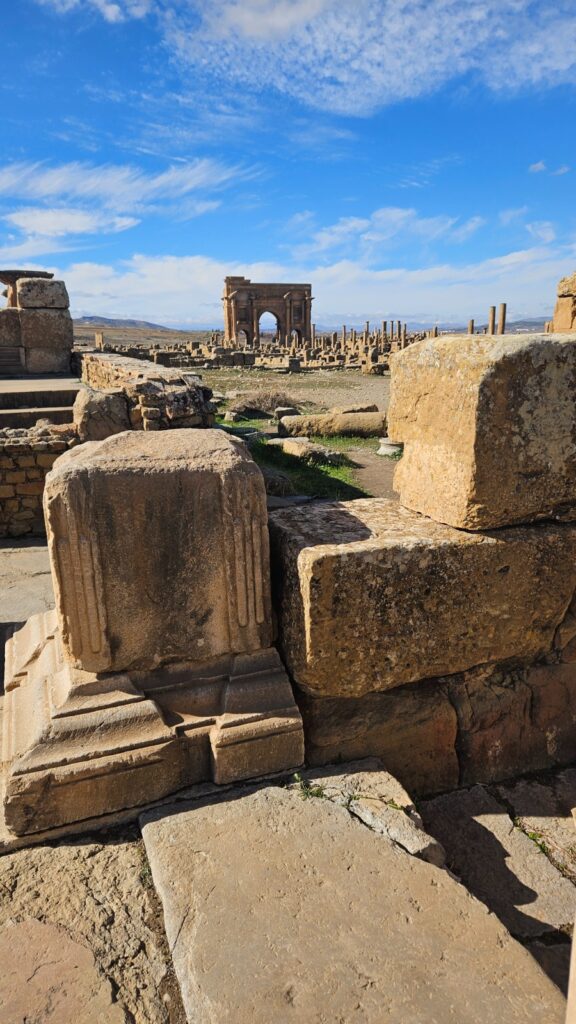
Wide streets and ordered layouts reflected discipline and long-term urban vision.
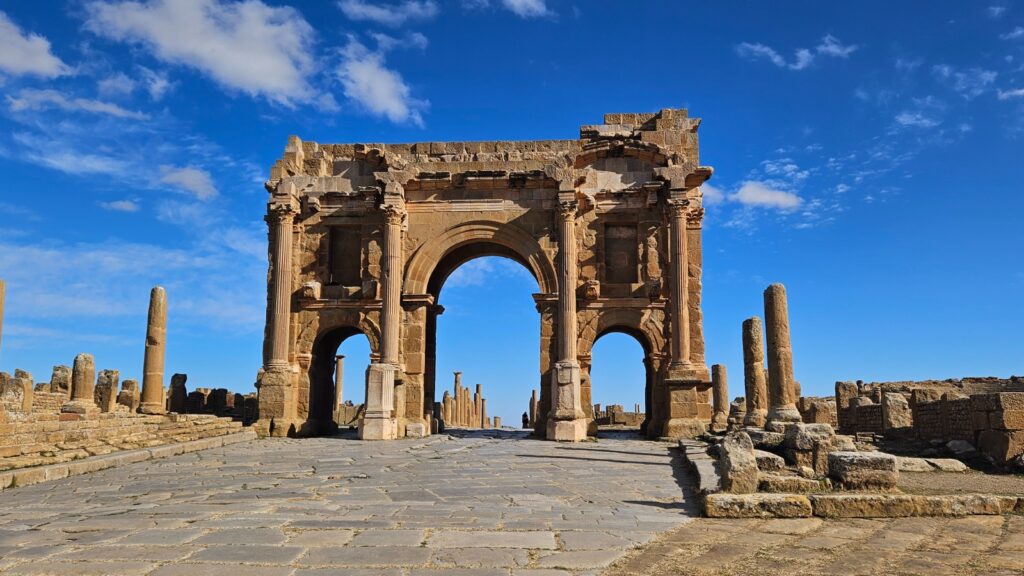
Games carved into stone showed how retired soldiers filled their days with leisure and community. 🎲
Life here was structured but not austere.
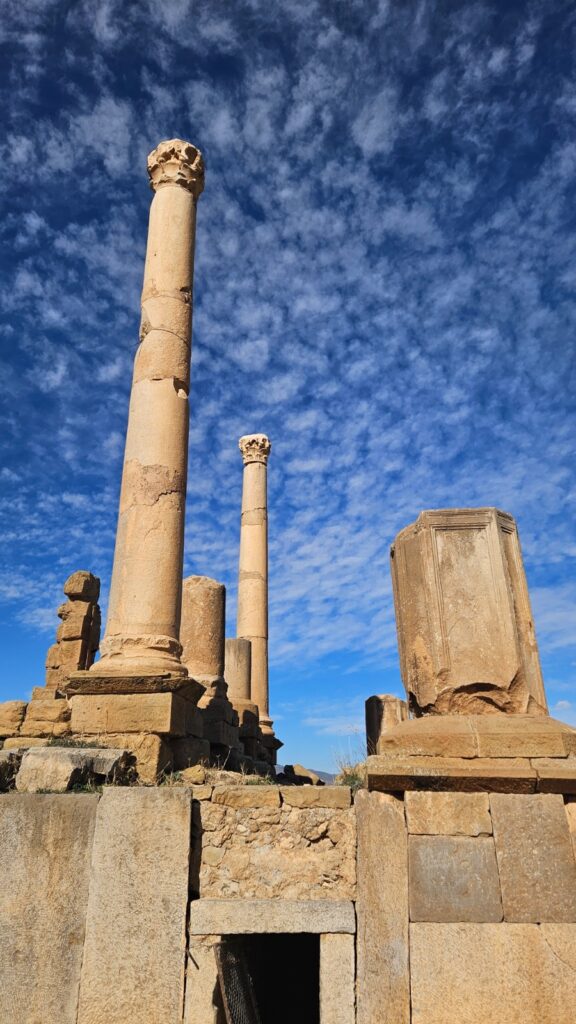
Curious fact: Everywhere we found the names of Sertius and his wife, Cornelia Valentina, big benefactors of the city! Even the market has his name. Their full names were Cornelia Valentina Tucciana and Plotius Faustus Sertius, a “Flamen Augusti”.
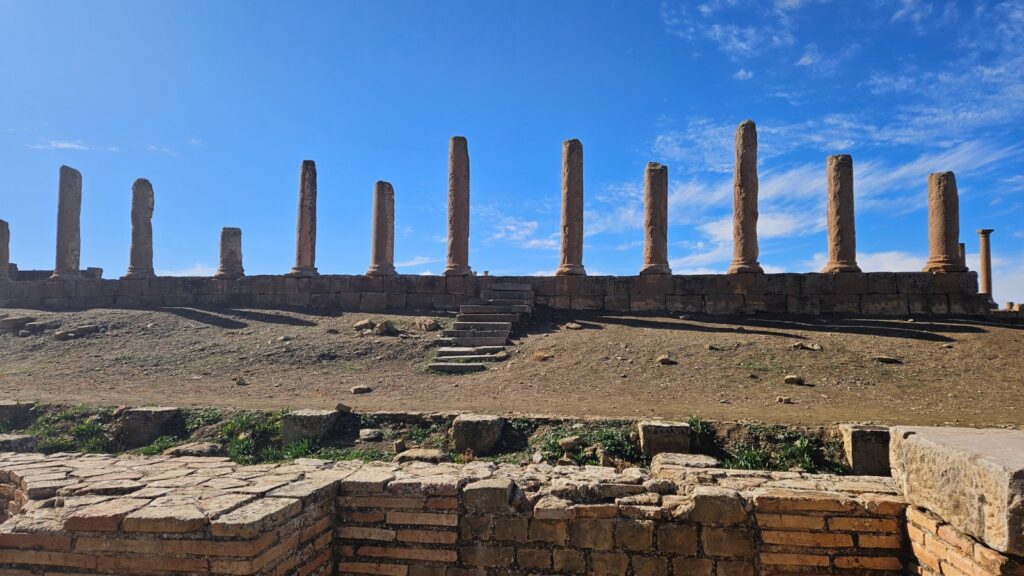
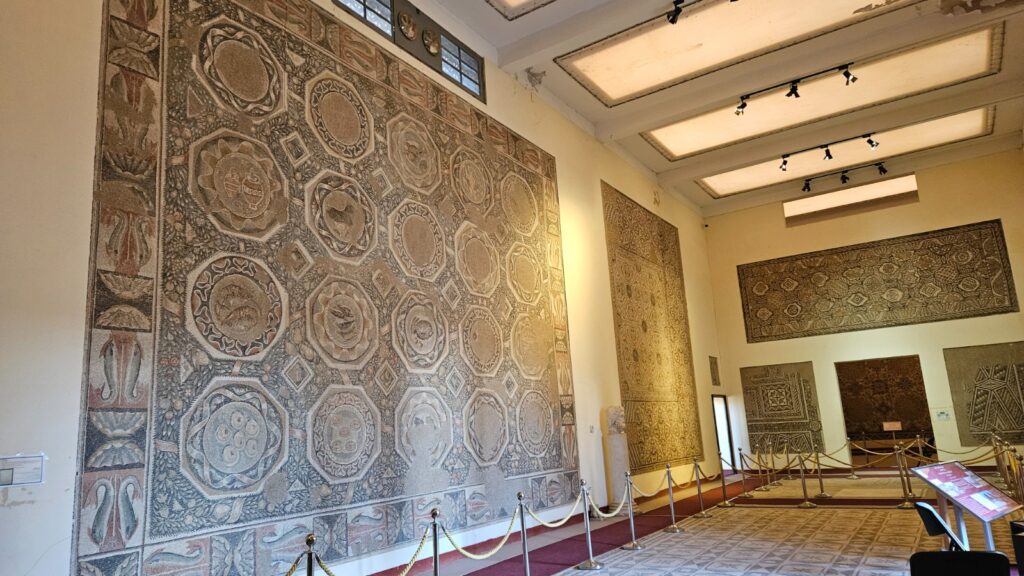
The museum mosaics stunned me, with vivid colors and scenes preserved across centuries. 🖼️
However, there was a mosaic which is currently hidden from the public because of “morality issues” which I include here. Ït shows a black slave, completely naked, working on the baths and showing…
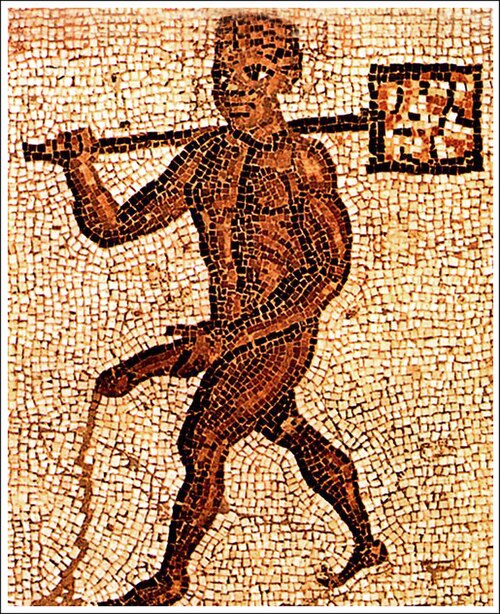
Well, that.
Back to Algiers
Driving back toward Algiers, snow-capped Djebel Chélia appeared again in the distance, reinforcing Algeria’s geographic diversity. 🏔️
Rain returned near the capital, thickening traffic and signaling urban density again. Algiers felt elegant, with wide boulevards, French-influenced buildings, and a constant Mediterranean presence, which I explain later in more detail in the run part 🏙️
The city felt alive and confident. And then… the final of the African Cup happened. Morocco against Senegal. Senegal managed to land an epic win against all odds… and unexpected football celebrations filled streets and hotels, uniting people in joy and noise. ⚽
These Algerias really do not like their neighbours 😂! Ïn fact, at the time of our visit, the land frontier was closed.
🏃♀️ The Runs 🏃♂️
Running in Algeria is more than just exercise. It’s an experience of landscapes, history, and culture all at once. From Algiers’ bustling colonial streets to Constantine’s vertigo-inducing bridges and Timgad’s ancient Roman roads, each run presents challenges, surprises, and breathtaking beauty. 🌍
Every city has its own rhythm, terrain, and story, turning a simple run into a journey through time, architecture, and daily life.
Running in the Roman Ruins of Timgad
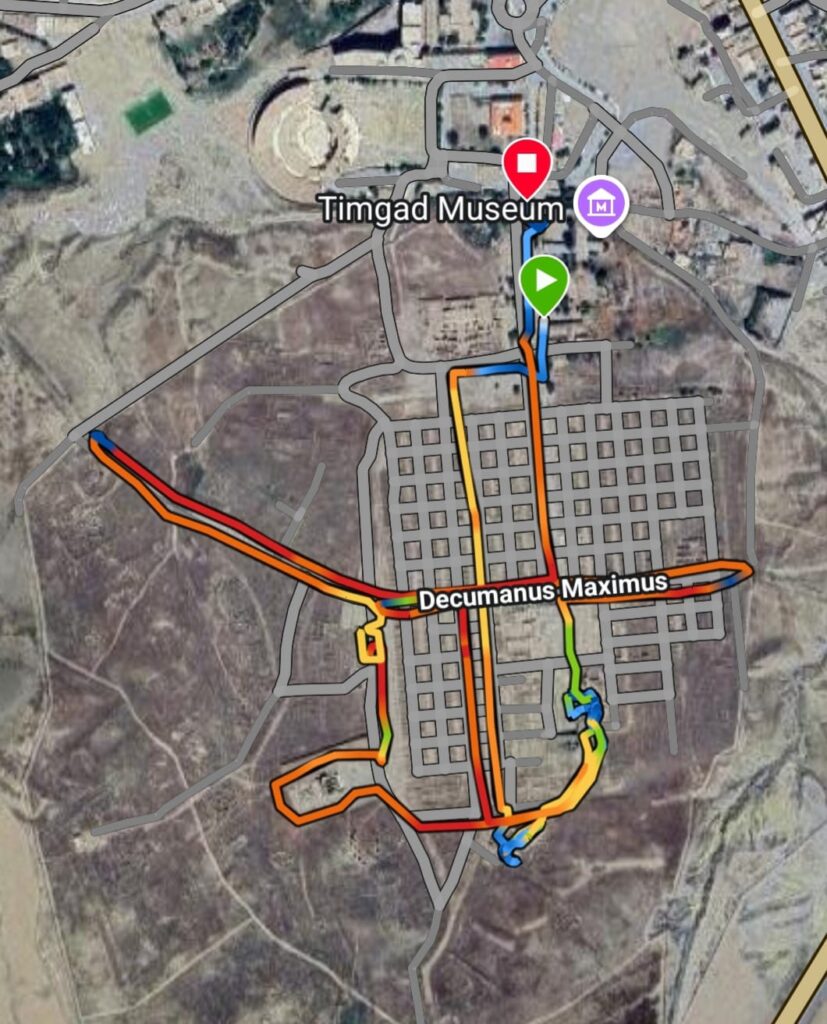
Running inside Timgad, the Roman “Pompeii of Africa,” felt completely surreal, as our footsteps echoed on roads built two thousand years ago🏃♀️
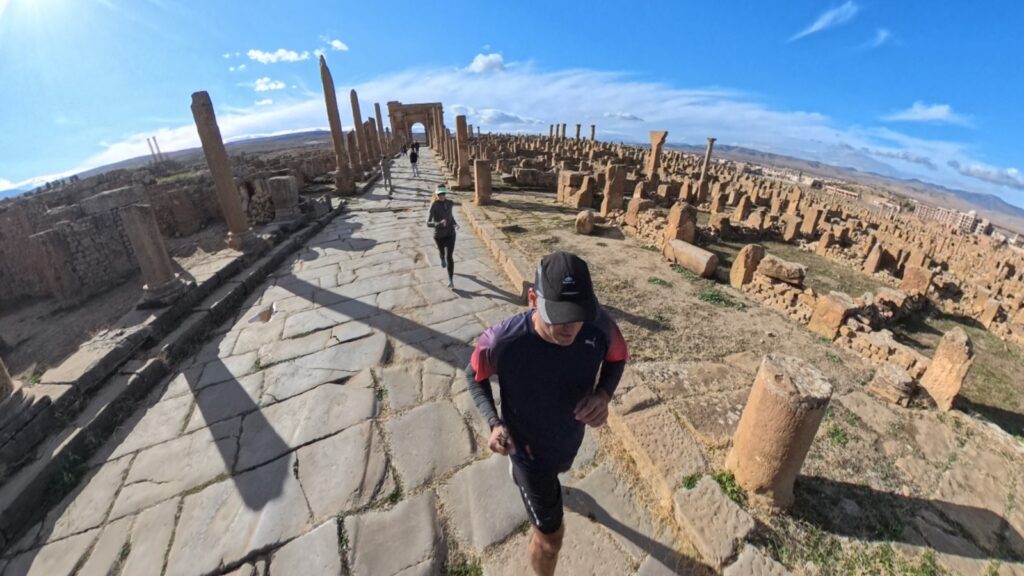
Because, yes. We did run inside the ruins!
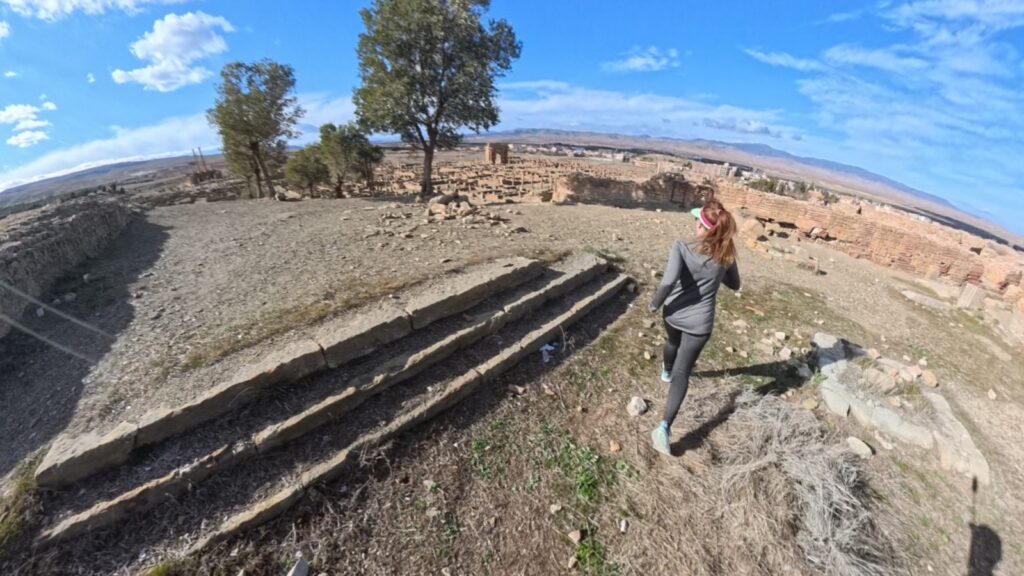
Silence amplified every movement, broken only by the occasional birdsong or whisper of wind through the ruins.
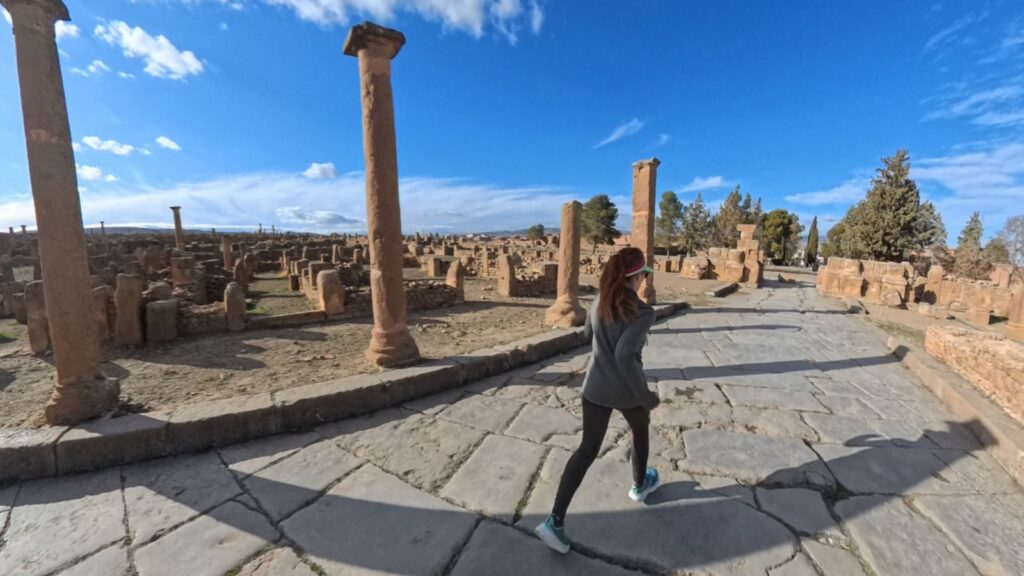
Timgad’s layout is remarkably well preserved: the main forum, surrounded by ancient columns, provides a sense of the civic heart of the city, while the theater, with its semicircular rows of stone seating, offers a glimpse into entertainment from centuries past.
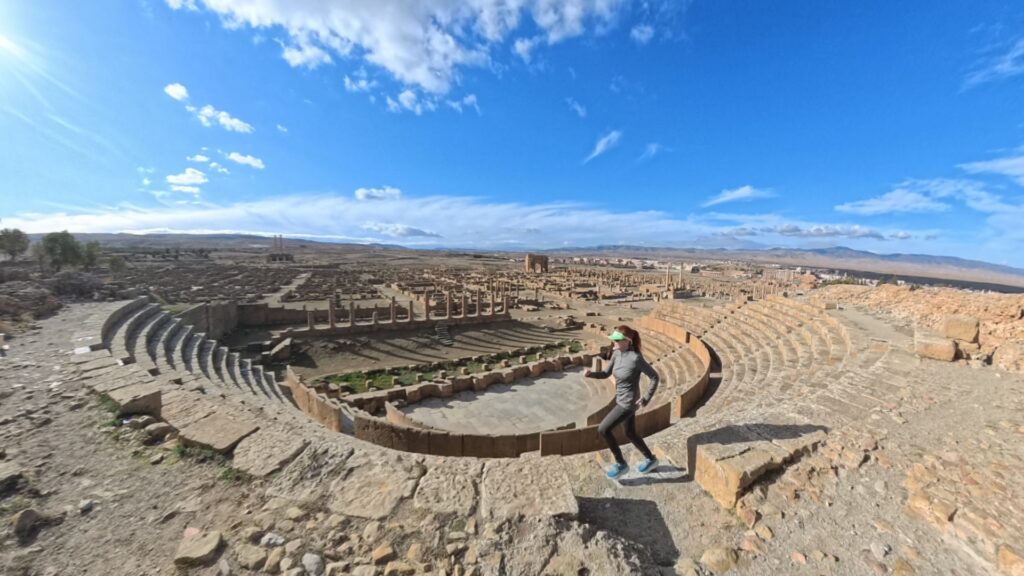
Watching the sunlight hit the stage and seating, you can almost imagine gladiators and actors performing here. 🎭
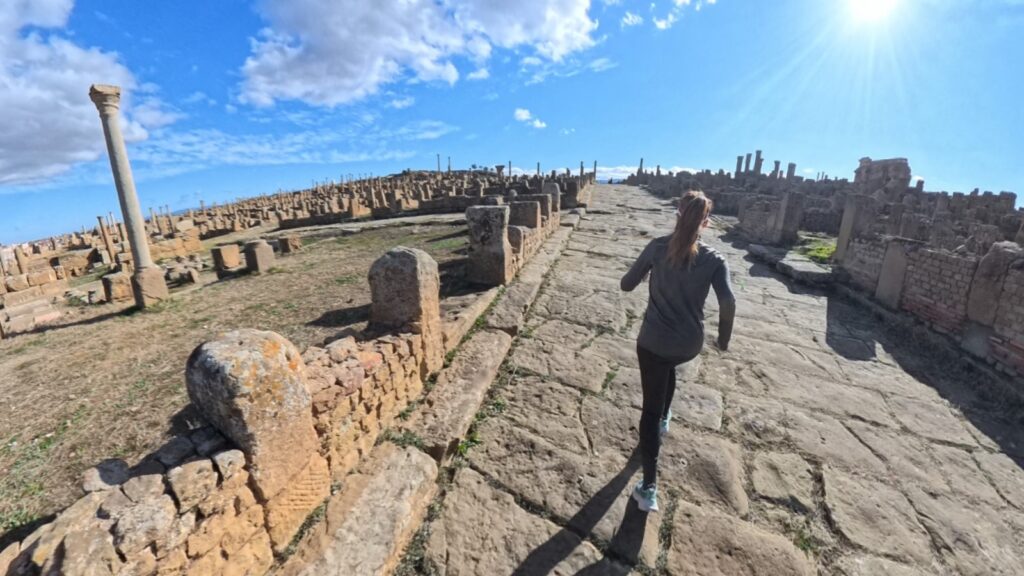
The triumphal arch at the entrance is monumental, marking Timgad’s identity as a Roman colony and celebrating Emperor Trajan. 🏛️ An Emperor who, by the way, was born in the same region as Roger. Tarragona 😂
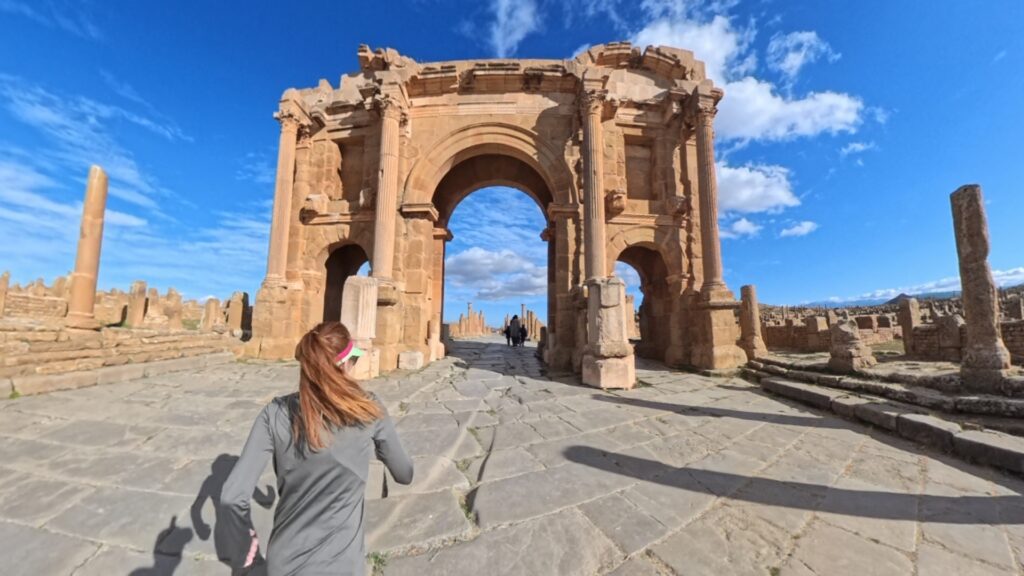
Running past it feels ceremonial, as if each step is a journey through history.
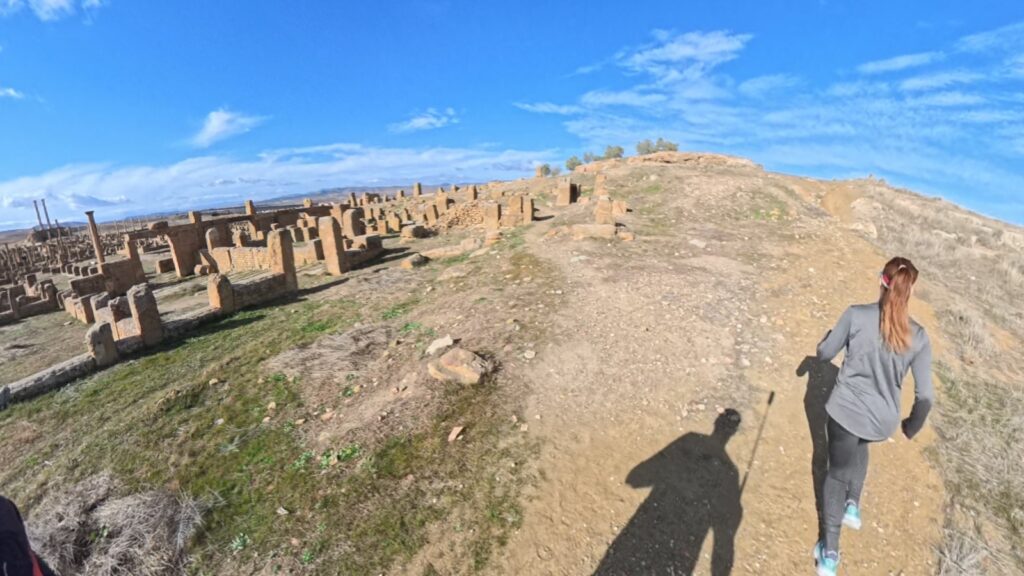
The cardo and decumanus, ancient Roman streets, stretch in straight lines, making it easy to maintain pace, but the uneven stones demand focus to avoid a twisted ankle.
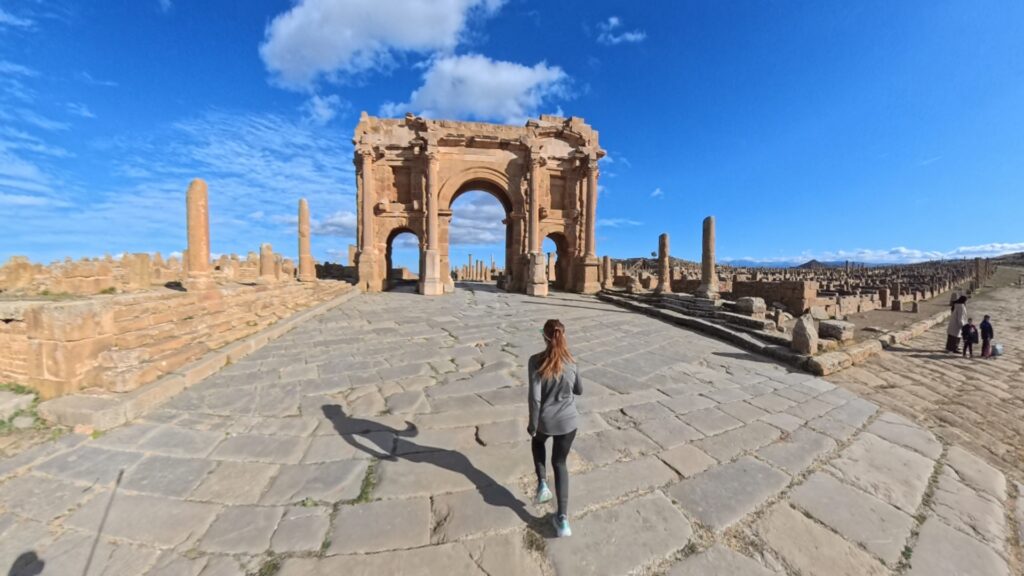
The combination of history, scale, and preserved architecture makes running here deeply emotional.
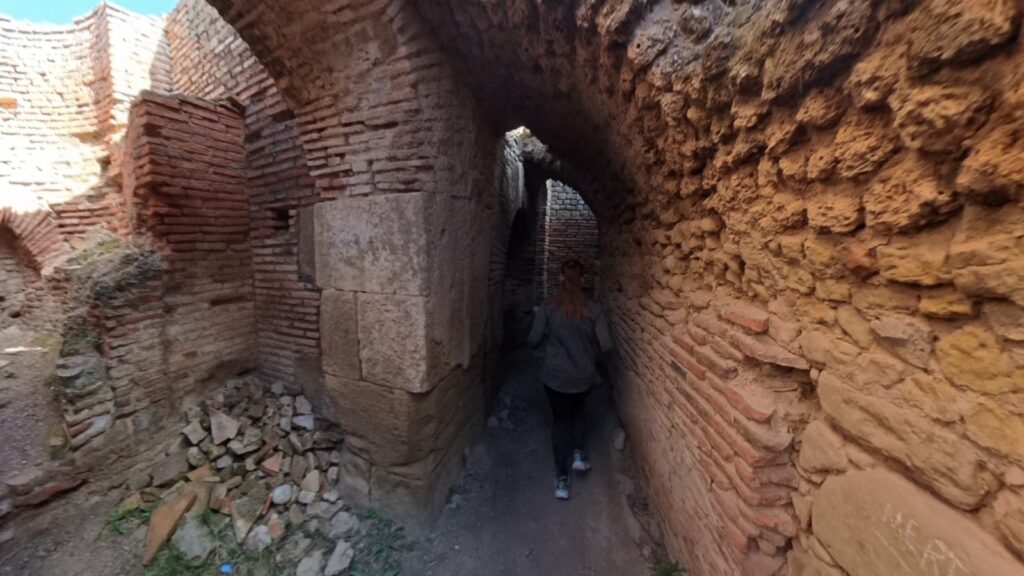
We even dared to run inside the bath’s heating chambers (the scenario of the famous mosaic I have mentioned before). This was not going to be an easy run. It was an exploration, dive-into-history run.
🌉 Run Two. Constantine Bridges and Markets
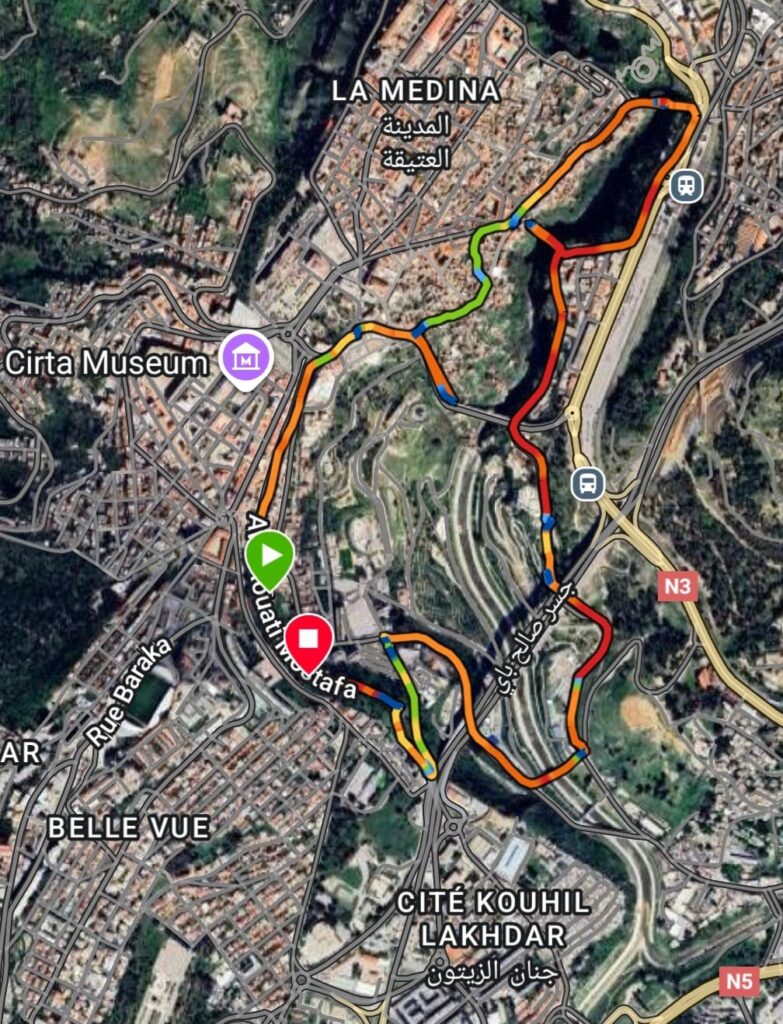
This run really surprised us, as we did not expect Constantine to be that scenic. It really is!
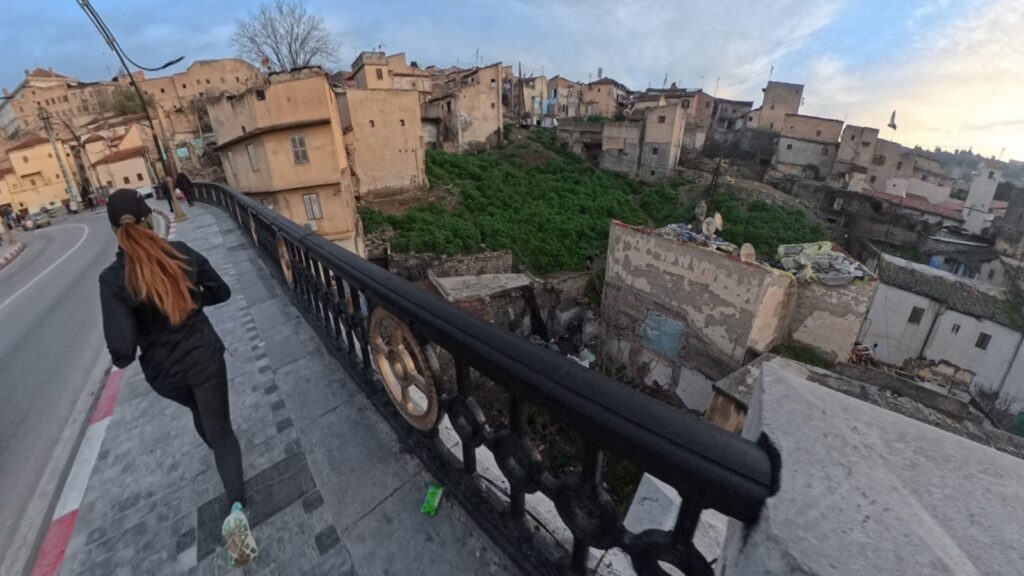
The cold air in Constantine demanded layers, but the sunrise painted the city in golden light, making the effort worthwhile. 🌅
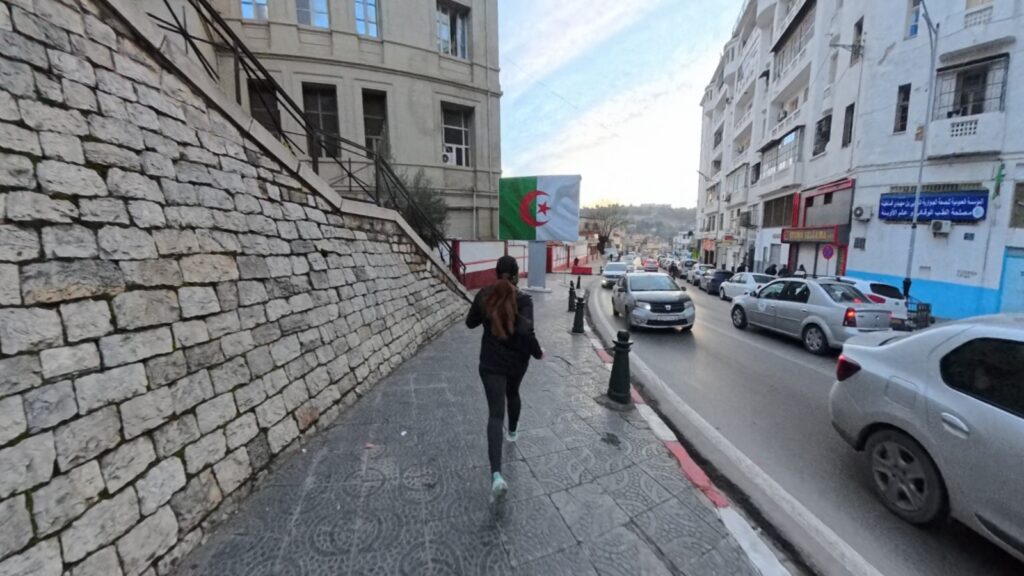
Running here felt like moving through a living postcard. Constantine is famous as the “City of Bridges,” and you immediately notice the dramatic gorges and steep cliffs that define the urban landscape.
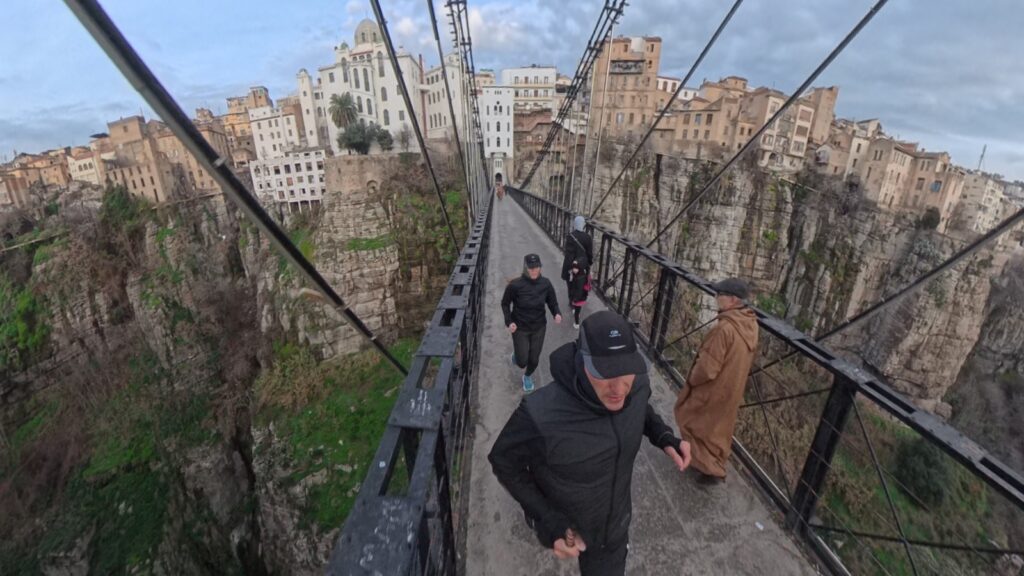
Bridges cross deep ravines repeatedly, with constant elevation changes testing your rhythm and endurance. 🌉
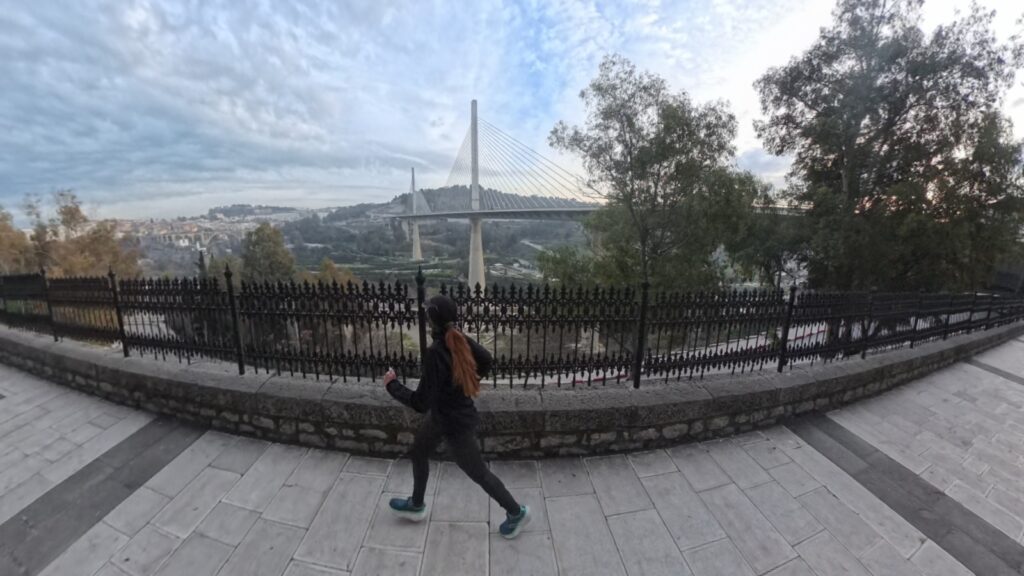
The Sidi M’Cid Bridge, with its impressive suspension structure spanning a deep canyon, is both terrifying and exhilarating to run across, offering stunning views of the city below.
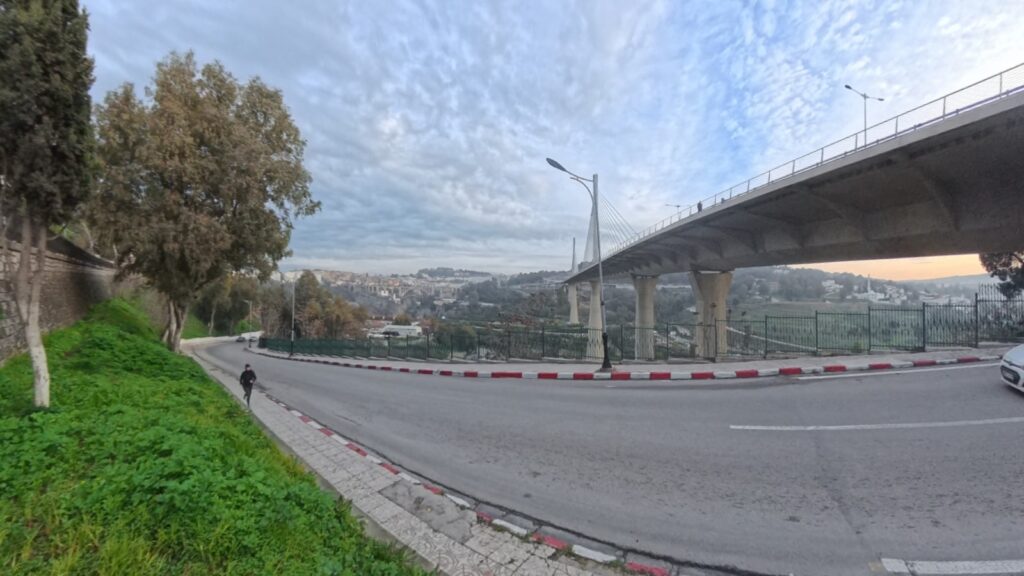
The city’s mountainous terrain makes every run a challenge, but also a chance to admire Constantine’s unique layout.
We passed through souks and open-air markets, where shops were just opening, dogs barked in the narrow streets, and the aroma of fresh bread, spices, and pastries filled the air. 🐕
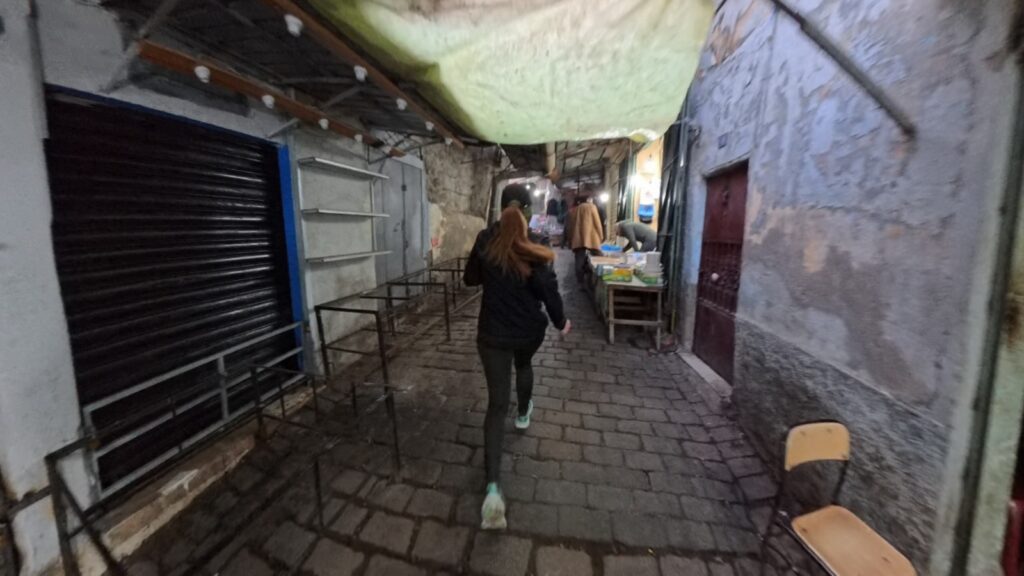
Running through these lively areas, you can feel how daily life unfolds in real-time.
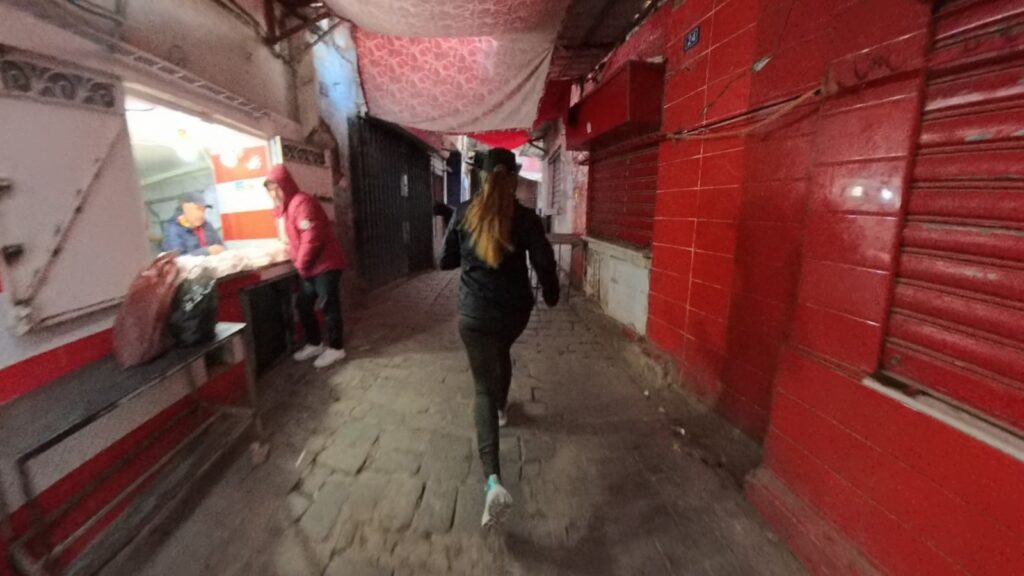
Every turn offers something new: a street artist practicing, a group of children chasing a ball, or a tea shop preparing mint tea.
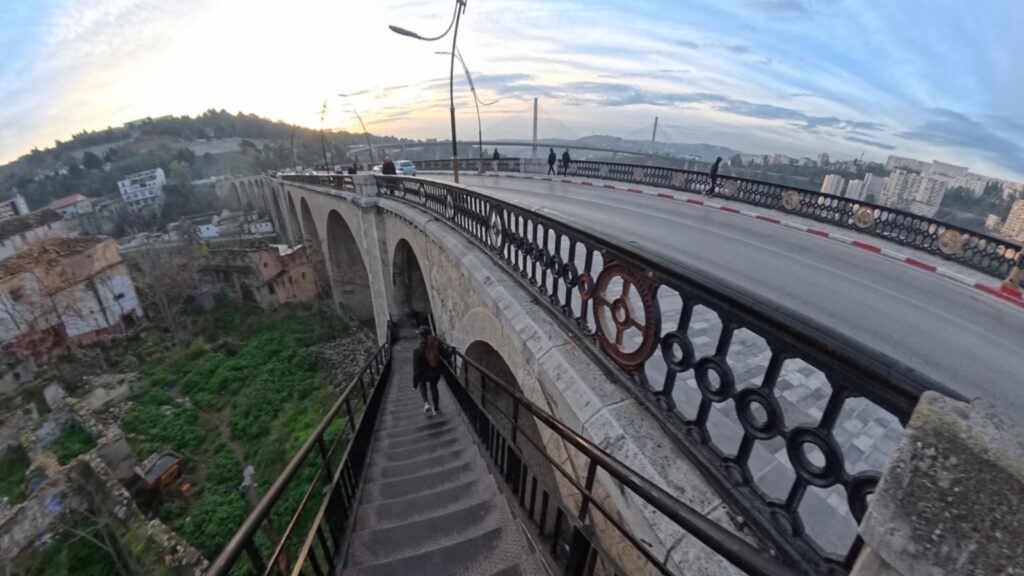
The combination of natural and man-made landmarks keeps runners alert while immersing them fully in local culture. ☕
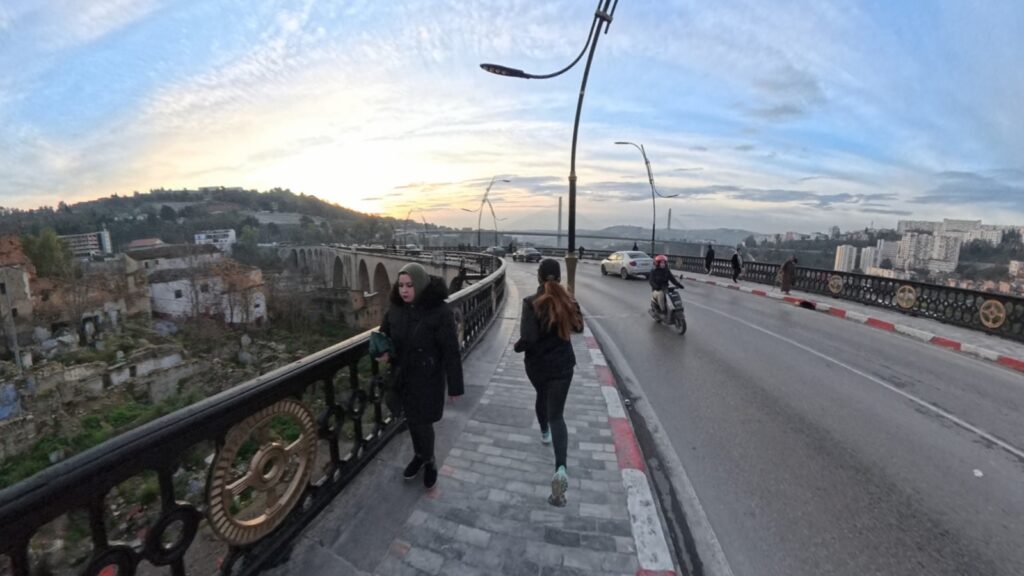
🏃♂️ Run Three. Algiers City Awakening
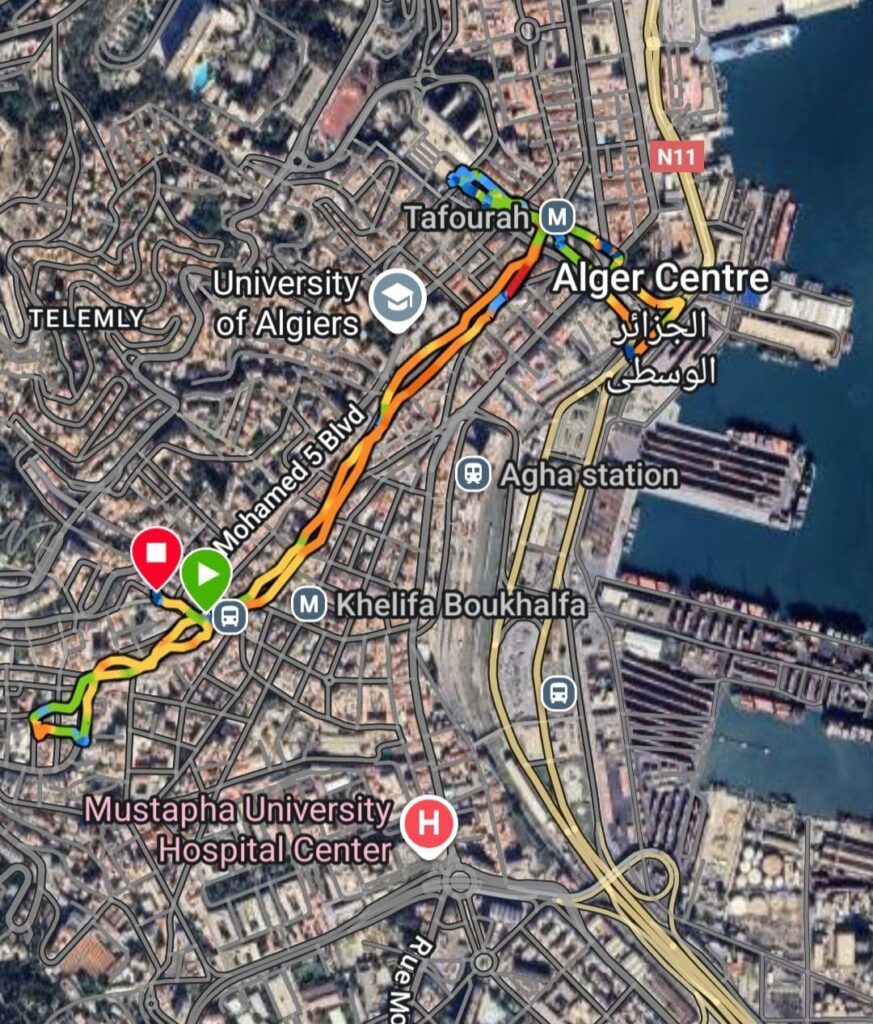
Running early in Algiers meant sharing the streets with rush-hour traffic, demanding constant awareness and adaptability. 🚦
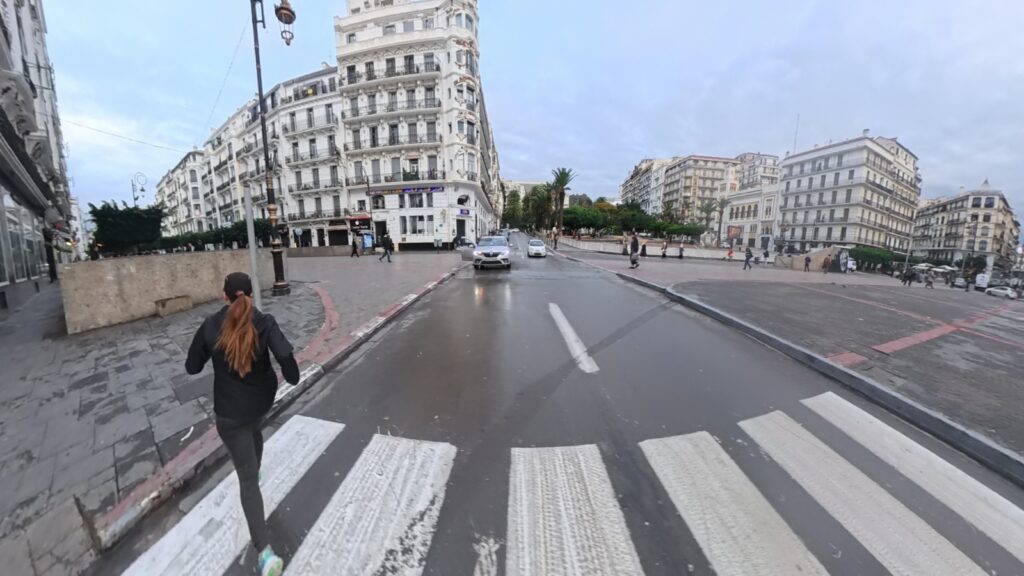
The city’s rhythm is alive from the first light, with honking cars, bus stops filling up, and people moving quickly toward work. Despite this, the city revealed elegance and charm almost immediately.
French colonial architecture dominates the central neighborhoods, with ornate facades, arched windows, and mosaic pavements shaping the route.
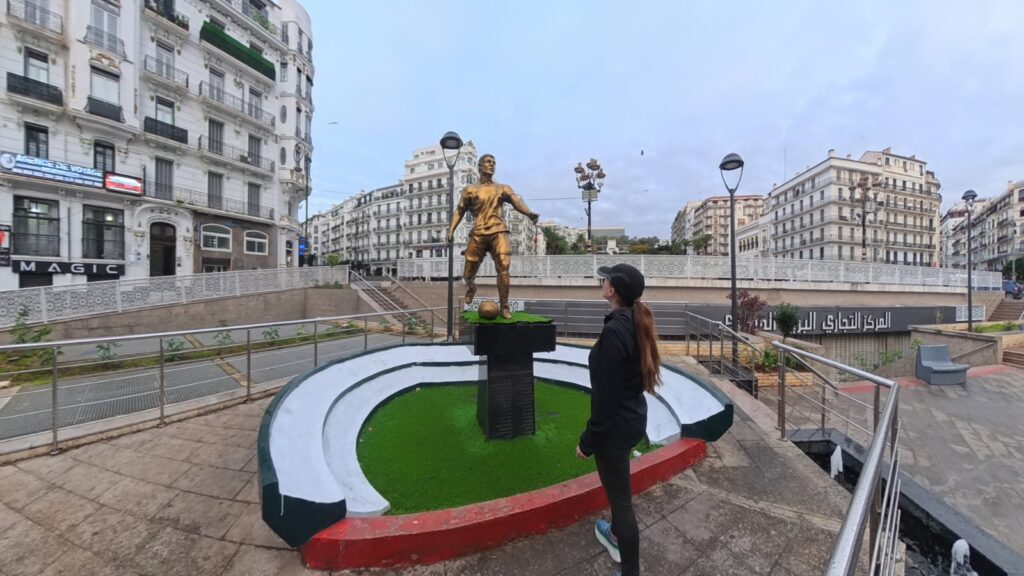
🏛️ Every corner felt cinematic, as if the city itself were moving to a carefully choreographed rhythm.
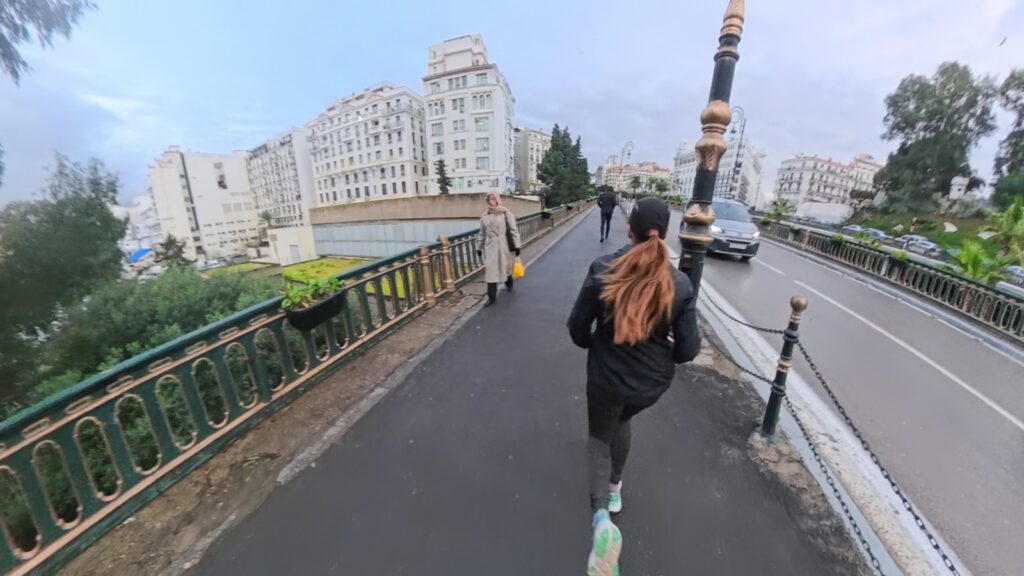
Passing Le Poste, the historic post office building, felt especially iconic. Its stone exterior and grand entrance give it the feeling of a bygone era, frozen in time.
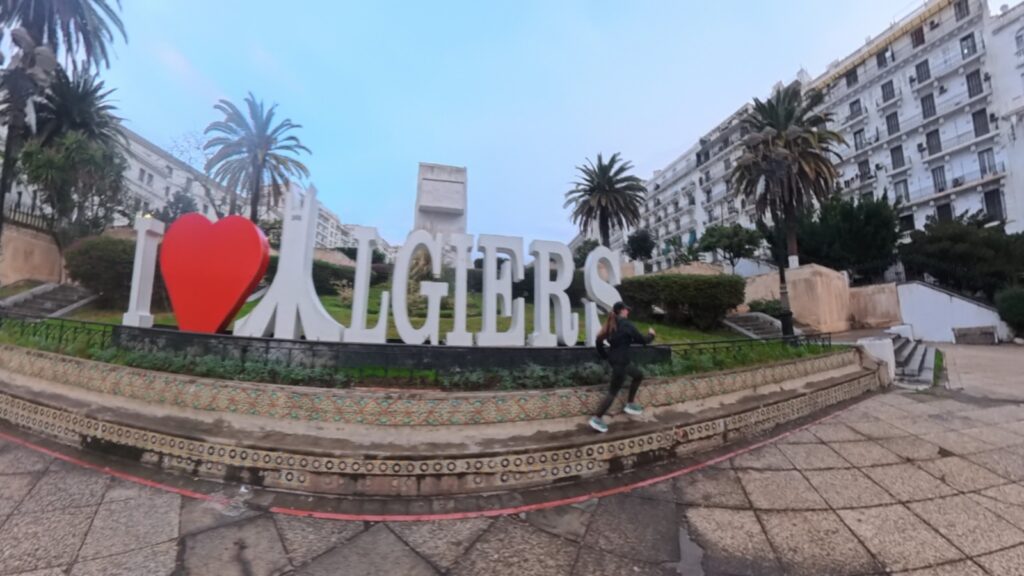
Descending toward the harbor, the landscape opened to container ships lining the docks, the sprawling Great Mosque of Algiers with its gleaming white minaret, and the Mediterranean Sea stretching to the horizon. 🌊
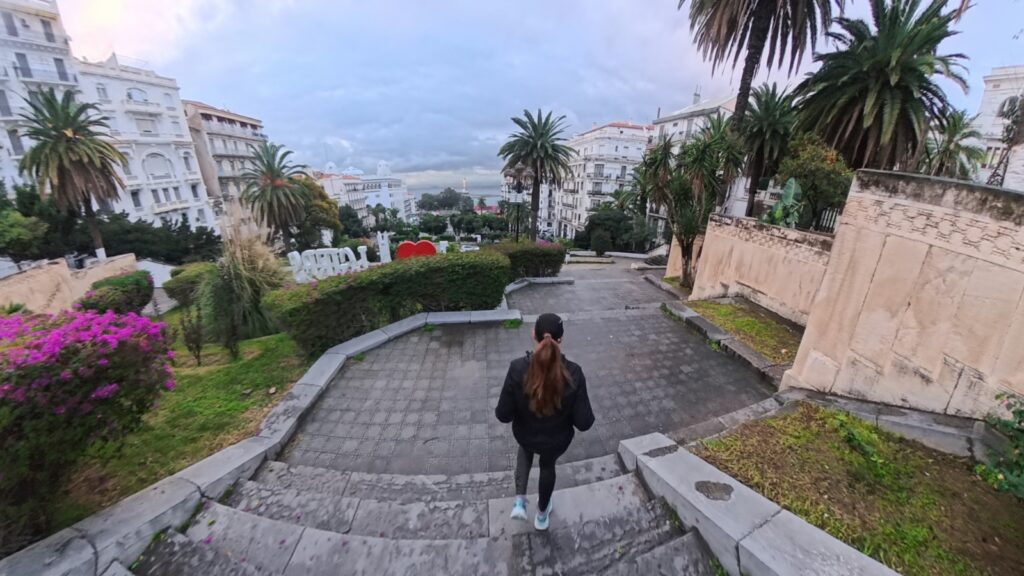
The light on the water in the morning made the skyline shimmer, and the salty breeze was both refreshing and grounding.
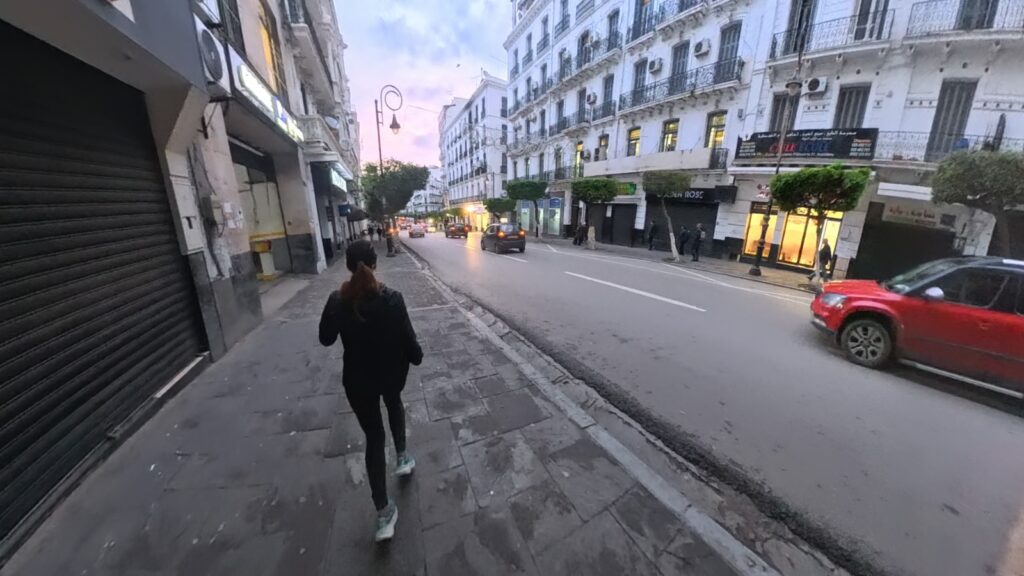
Running along the corniche, the contrast between urban bustle and sea serenity created a uniquely Algerian energy that made every step memorable.
🍜 Carboloading 🍝: What to eat in Argelia if you are a runner
If you’re running in Algeria, whether it’s a city route in Algiers or a trail through the Atlas mountains, fueling your body properly is essential. Here’s a guide for carb-loading before your run and protein-rich recovery meals after.
🥖🍚 Carb Loading Before Your Run
Carbohydrates are key to giving your muscles energy for a long run. In Algeria, you have some delicious local options:
- Couscous: The classic North African dish made from steamed semolina. Pair it with vegetables for a nutrient-rich pre-run meal.
- Kesra (Algerian bread): Perfect with honey or jam for a quick carb boost.
- Frites Omelette: A local favorite combining eggs and fried potatoes 🍳🍟. Rich in carbs and a bit of protein, it’s a perfect energy-packed breakfast before your morning run.
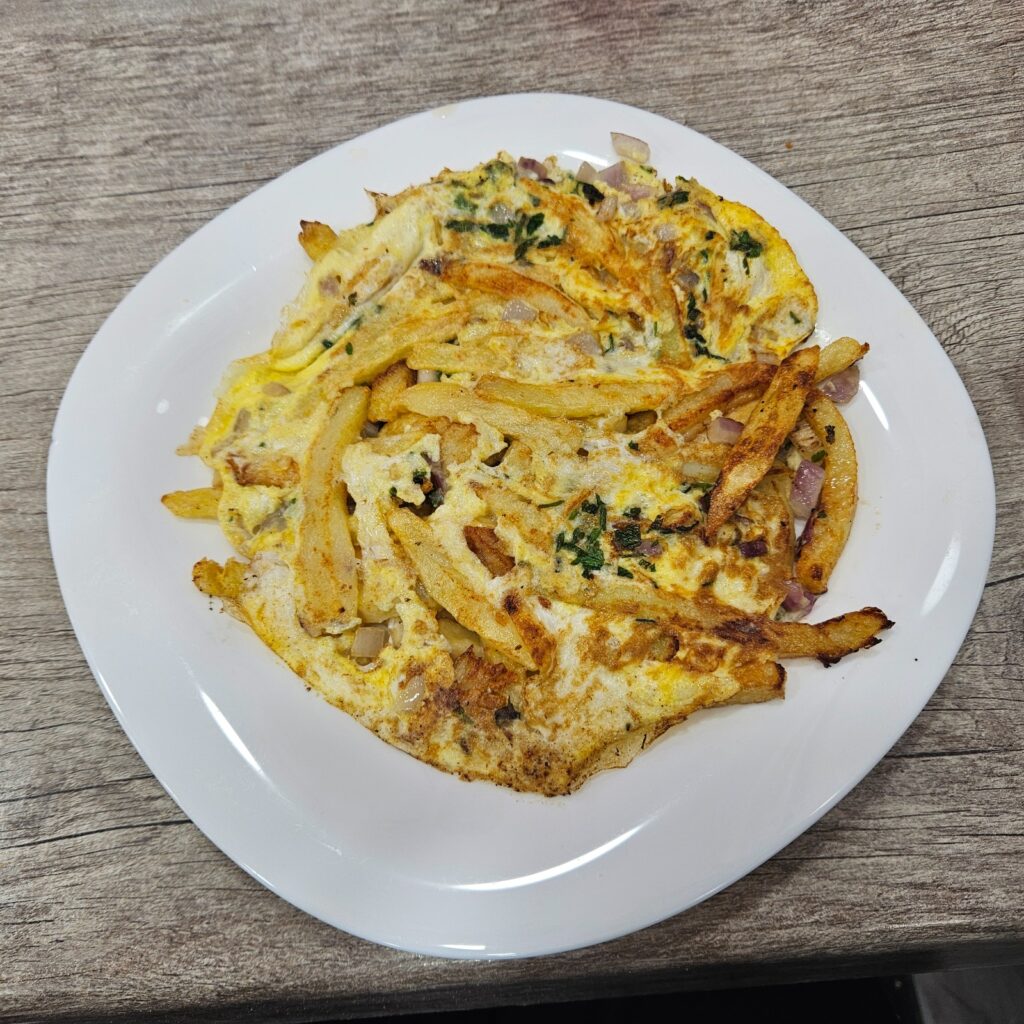
Tip: Eat your pre-run meal about 1.5–2 hours before running to allow for digestion.
🍗🥗 Protein-Rich Meals After Your Run
After your run, your muscles need protein to recover and rebuild. Algerian cuisine has plenty of options:
- Roasted Chicken in Underground Ovens: Known as Djej Mechoui, this tender, smoky chicken 🍗🔥 is cooked in traditional underground ovens. It’s packed with protein and flavor—perfect for post-run recovery.
- Grilled Fish or Meat: Algeria’s Mediterranean coast offers fresh fish 🍤, which is light yet protein-packed, ideal for refueling after a long run.
- Moulkhia: A hearty green stew made with jute leaves and often served with meat 🥬🥩. Rich in nutrients and protein, it helps replenish what you lost during your workout. A favourite of our tour guide:
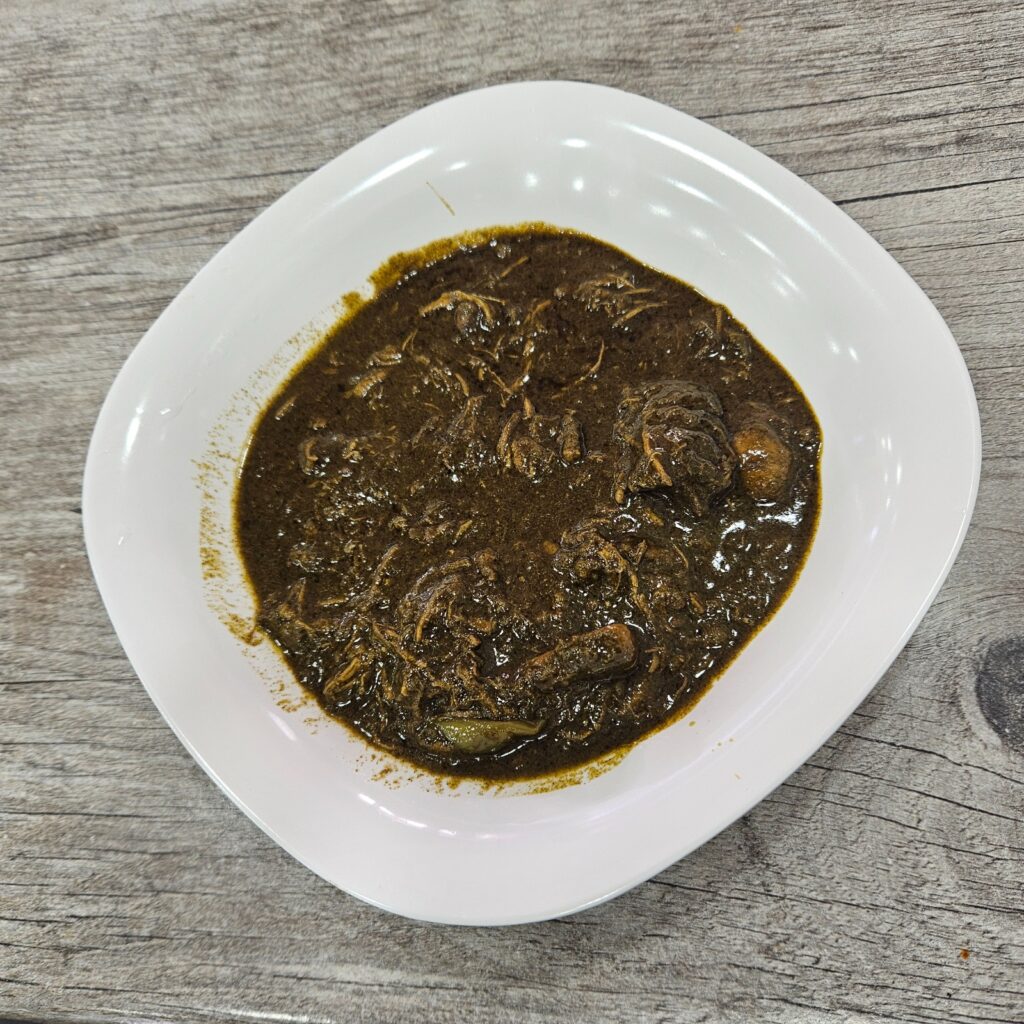
Pair these meals with some local bread or rice for a balance of carbs and protein.
🥤💧 Hydration and Extras
Don’t forget fluids! Mint tea 🍵 and fresh fruit juices are common in Algeria and help with electrolytes. Dates and figs are great natural snacks for energy before or after running.
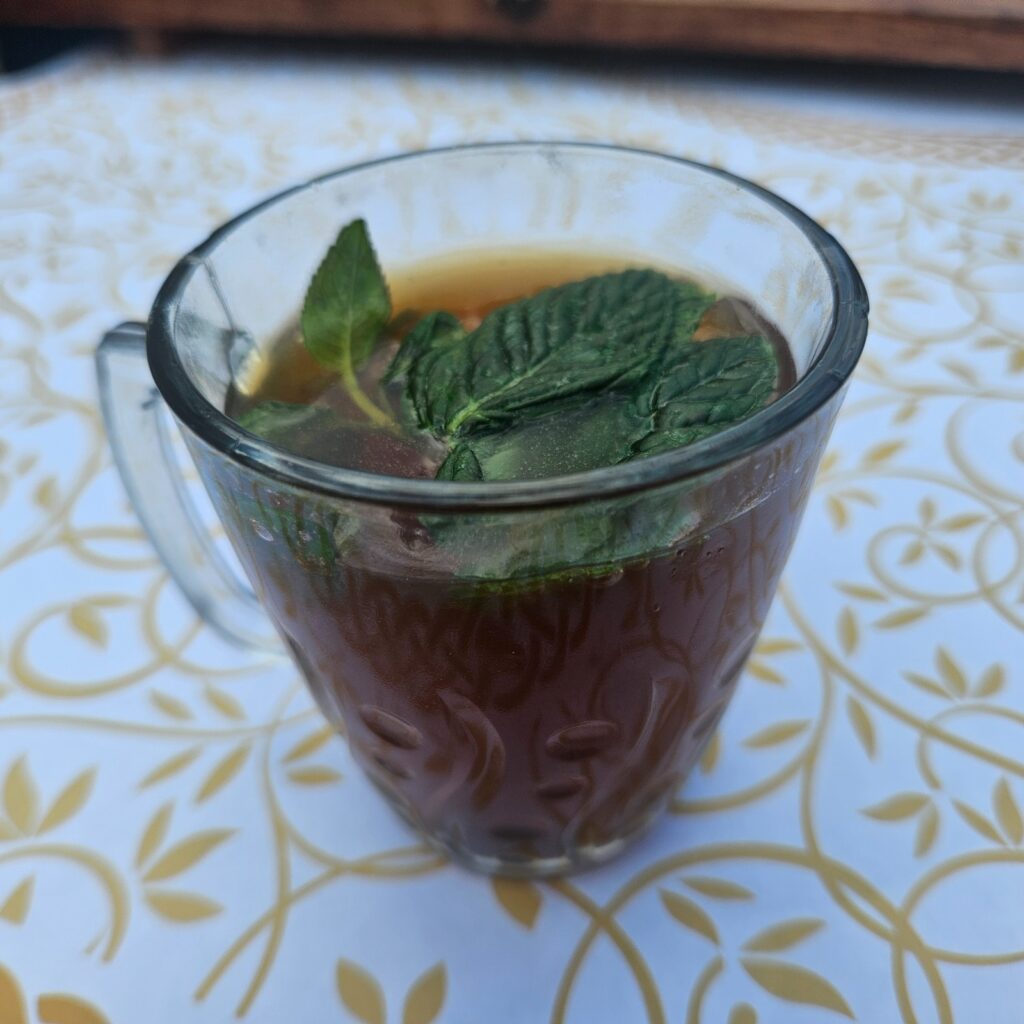
By combining traditional Algerian flavors with proper running nutrition, you can enjoy your meals while keeping your performance high and recovery smooth.

Useful information
🗓️ When? The North of Algeria is worth a visit any time of the year due to its Mediterranean climate.
👟 Urban: bring shoes for asphalt.
✅ Running through history is real here, from Roman ruins to bridges and coastal cities, not just scenic routes 🏛️😊
✅ Landscapes change dramatically in short distances, offering sea views, mountains, ruins, and dense cities in one trip 🌍
⚠️ Traffic can be intense in cities, especially early mornings, so awareness and flexible routes are essential 🚗
⚠️ For most European citizens, it is difficult, costly and lengthy to get a visa.
One book
“The Stranger”, by Albert Camus.
Reading “The Stranger” while in Algeria adds a profound layer to your travel experience. The novel is steeped in the physical and cultural landscape of Algiers: its beaches, streets, and cafés are vividly described, giving readers a literary map of the city as it existed in the 1940s. Experiencing these locations in person allows you to see the intense heat of the sun, the Mediterranean light, and the social tensions Camus subtly portrays, deepening your understanding of both the setting and the existential questions he raises. Additionally, the book offers insight into Algeria’s colonial history and the everyday lives of French-Algerians, providing context that enriches your exploration of the country beyond the surface of tourist sites.
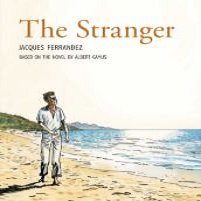
Plot Summary: The Stranger tells the story of Meursault, a French-Algerian man living in Algiers, whose indifferent reaction to life and death shocks those around him. The novel begins with the death of his mother, an event to which he responds with emotional detachment. Over the course of the story, Meursault becomes involved in a violent incident on the beach, ultimately killing an Arab man in a moment of impulsive action. The second half of the novel follows his arrest, trial, and confrontation with the absurdity of existence, highlighting themes of alienation, the meaninglessness of social conventions, and the confrontation with death. Camus’ spare, precise prose mirrors Meursault’s detached perspective and the stark, sun-drenched landscapes of Algeria.