Azouega and Chinguetti, Mauritania. January 2026.
On January 2026 we lived what it turned out to be one of our most adventurous trips. Mauritania!
In my channel you can SEE the whole journey:
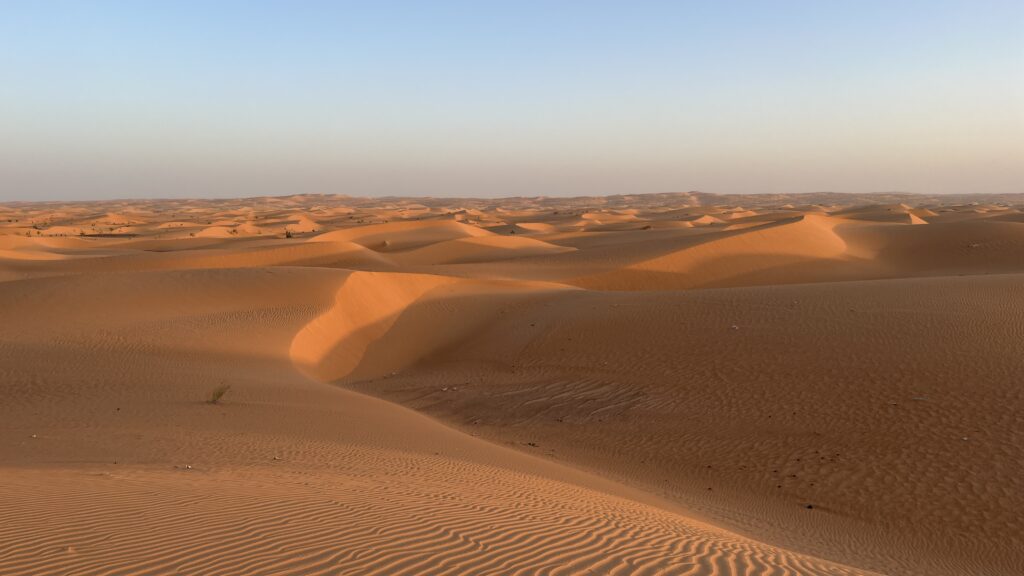
We ran on its highest dunes, in Azouega, and through the narrow streets of Chinguetti, a fascinating little town in the middle of the Sahara, where we sparked a lot of interest both from locals and animals 🤣.
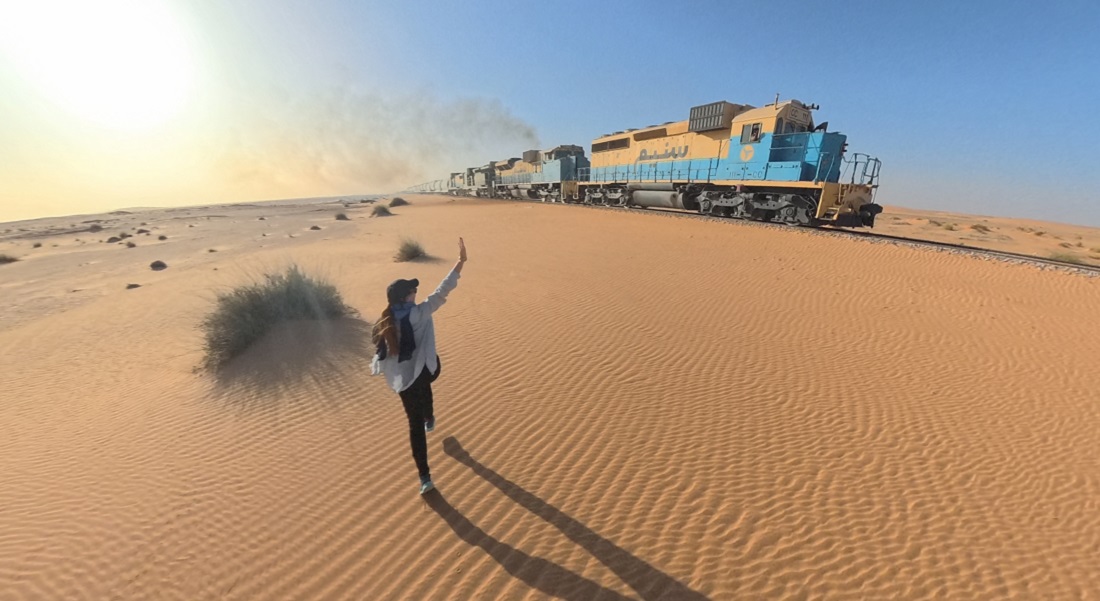
Plus alongside the iron ore train (which we later rode)!
And even inside an abandoned tunnel in a conflicted land: in Choum, next to Western Sahara.
This was one of the most thrilling trips we have lived – and we ran our way through it!
TLDR; “too long, didn’t read”
- I just want to run! Take me to RUN.
- I have 1 minute. Take me to USEFUL INFORMATION.
- Running is my excuse for travelling. Take me to TRIP.
- Running is my excuse for eating. Take me to CARBOLOADING.
- I want to know what to read in the plane. Take me to ONE BOOK.
🌍 The trip 📷: What to experience in Mauritania
Mauritania is vast, raw, and demanding. It is not built for tourism, which makes it perfect for adventure runners. 🏜️
We traveled through Mauritania with a great agency which specialises on off-the-beaten-track trips, “Against the Compass”. It was a great choice!
The tour was beautifully organised and our tour guide, Leti, was a star. I really recommend them. They handled logistics, guides, and safety, which is essential in a country like this.
Not only Leti but the whole Mauritanian team was knowledgeable, friendly, and made every moment smoother.
Nouakchott
We started our trip in Nouakchott, the capital city. Nouakchott is dusty, wide, and alive. Old Mercedes fill the streets, which Roger really liked!
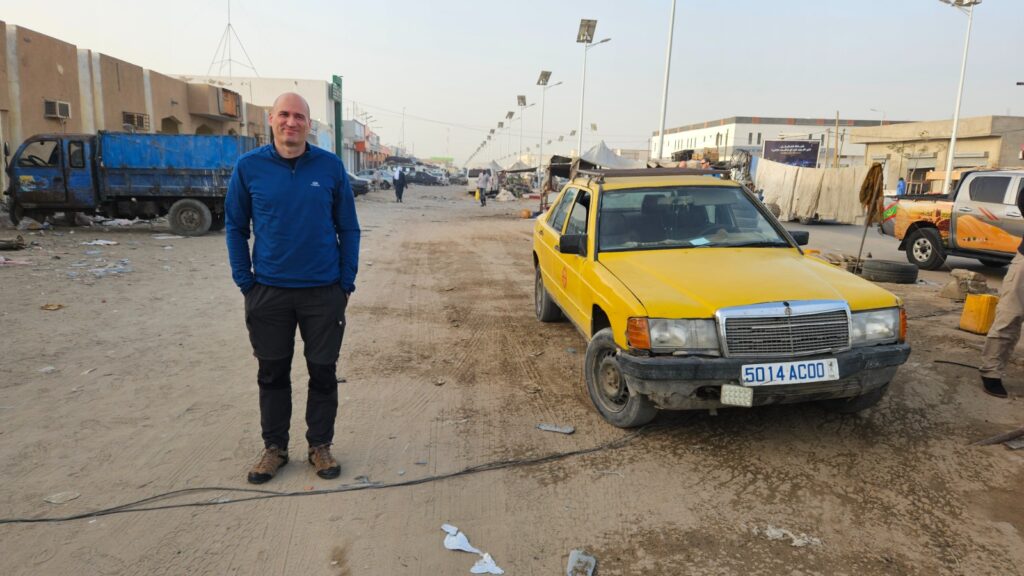
In Nouakchott, the air smells of sand and fuel. Polished facades are rare. As the agency advertises in its web, it is probably the only capital in the world with dunes in its streets!
Curious fact: In Mauritania, most cars are Mercedes, or Toyota.
Fish Market
In Nouakchott, we visited the fish market. Boats were painted in bright colors, some with football logos… including the Barça one! Of course, we were specially happy about this last one 🤩
But in all fairness, we took pictures of all the boats, as I couldn’t decide which one was more artistic.
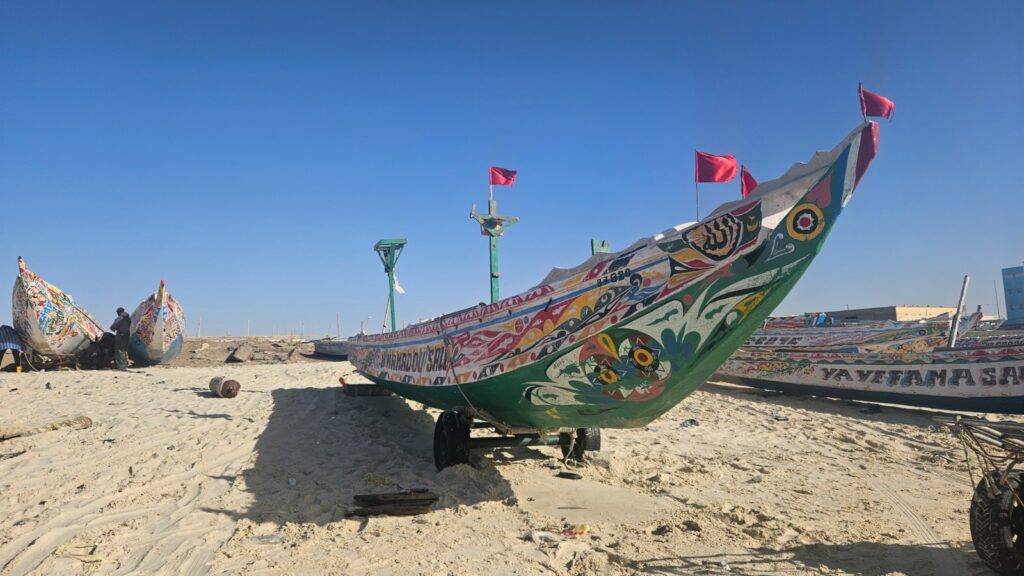
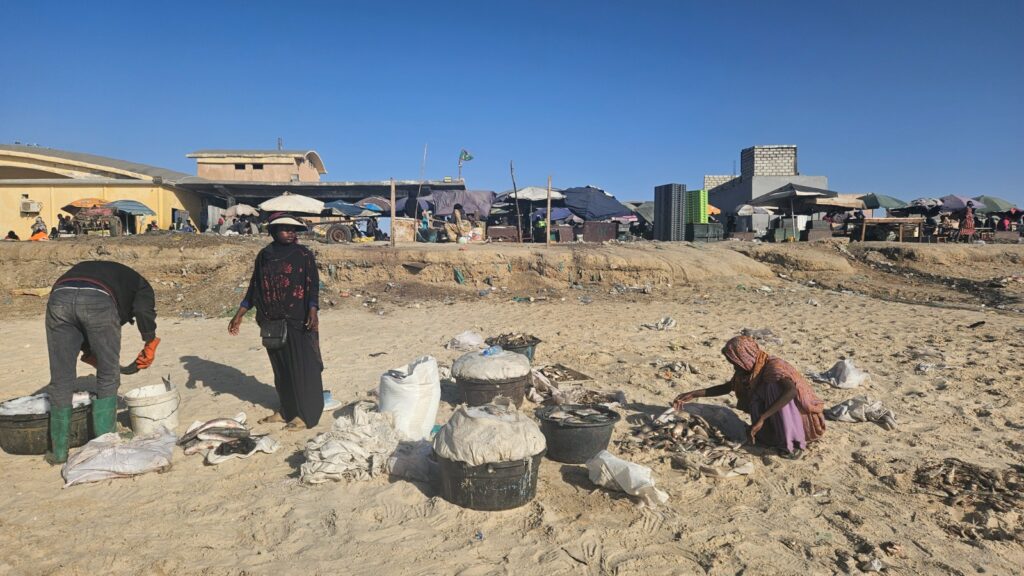
Chaos, shouting, and smell mix with beauty. A lot of people, and a lot of inmigrants from Black Africa (specially Mali and Senegal) were to be found working there.
Big Camel Market
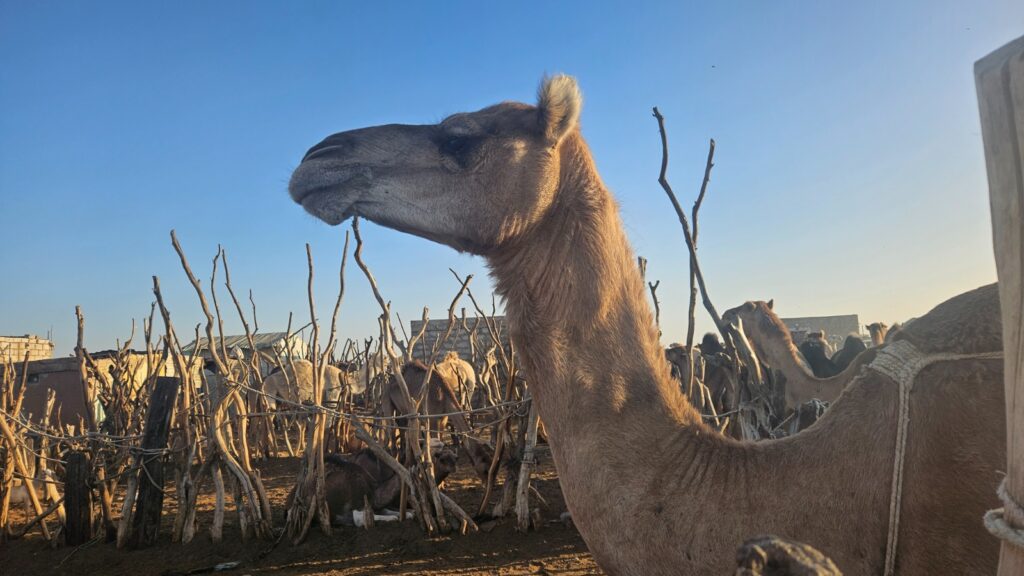
We also saw the camel markets nearby, one of the biggests in the World!
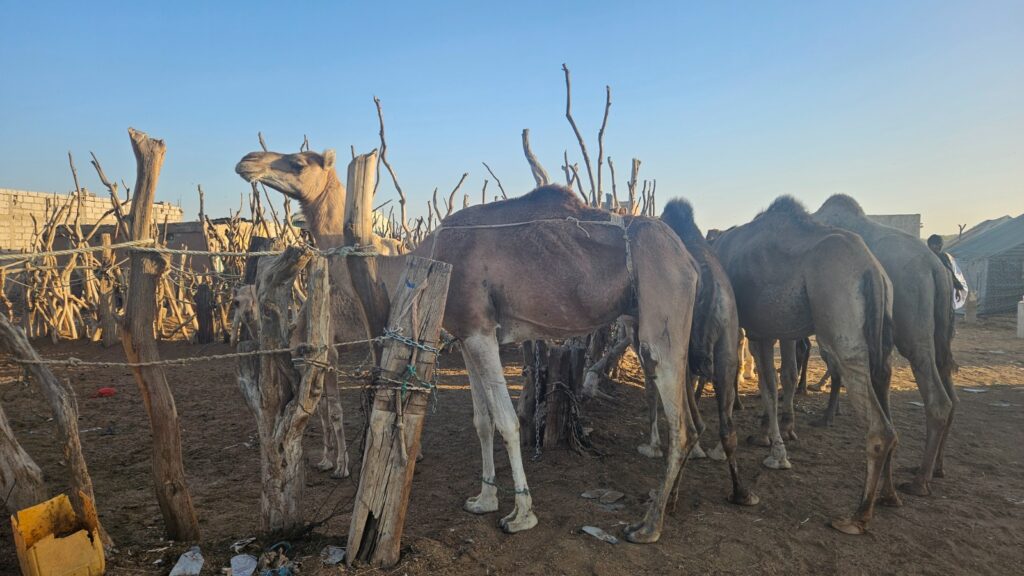
A very unique experience. Camels are everywhere, some for milk, some for meat…. which makes it a little sad if you think abou it.
The scale of it is overwhelming, and walking among them feels timeless. Like we were back in time; so different than our daily routine…
Azouega and the dunes
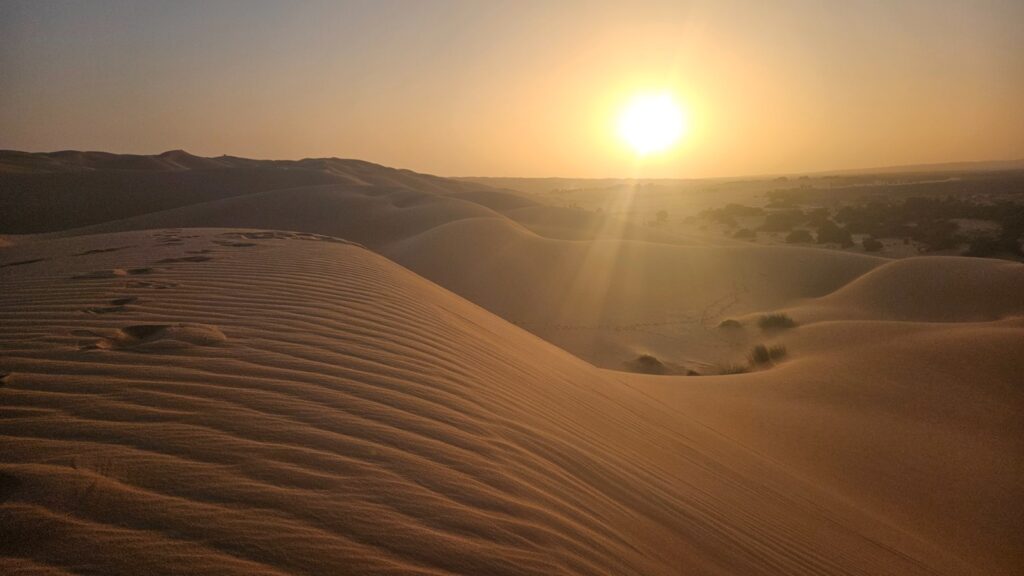
The second day, we headed to Azouega. Azouega is home to some of the highest dunes in Mauritania. 🏜️ They rise abruptly, isolated and stunning, with peaks around 200 meters.
It was a tiring journey in 4×4. We drove for more than 6 hours and we arrived late afternoon and rested. Mauritanian tea, peanuts, and cookies prepared us for the evening in our camp.
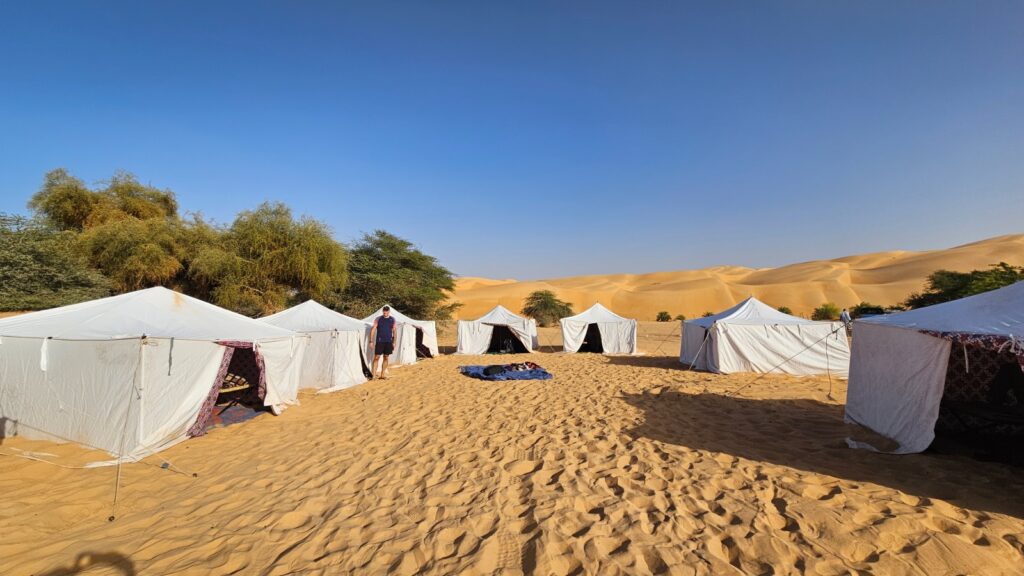
The guides played traditional table games with “camel droppings,” adding a light-hearted touch to the preparation.
And when the sun was setting, we climbed the dunes. In our case, it was the first step to our run in the dunes, which I will describe below.
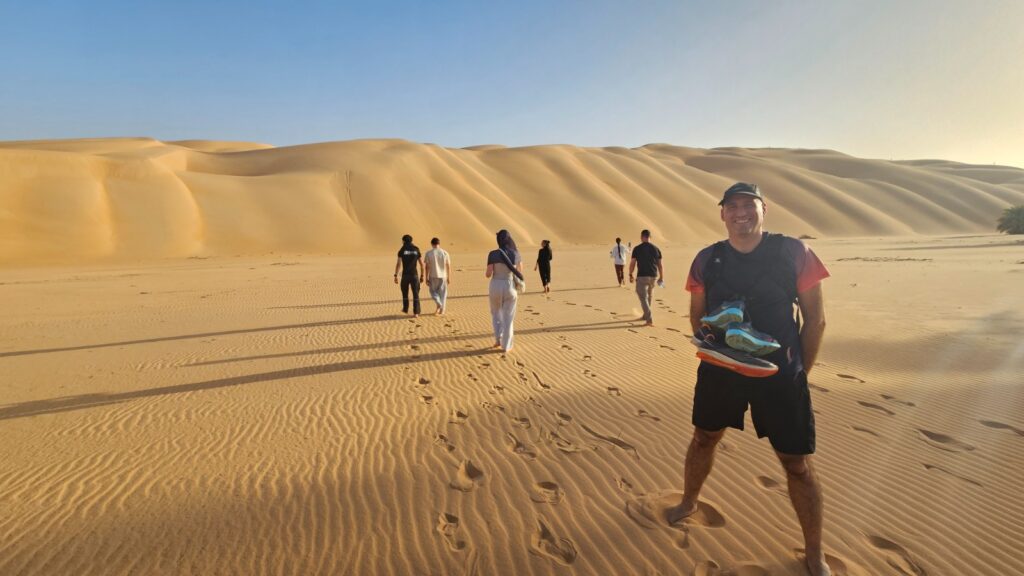
Climbing the dunes was challenging. The sand shifted beneath our feet. At sunset, the sky glowed red and orange, and shadows stretched across crests. We advanced barefoot along the top edges, careful not to lose our bearings.
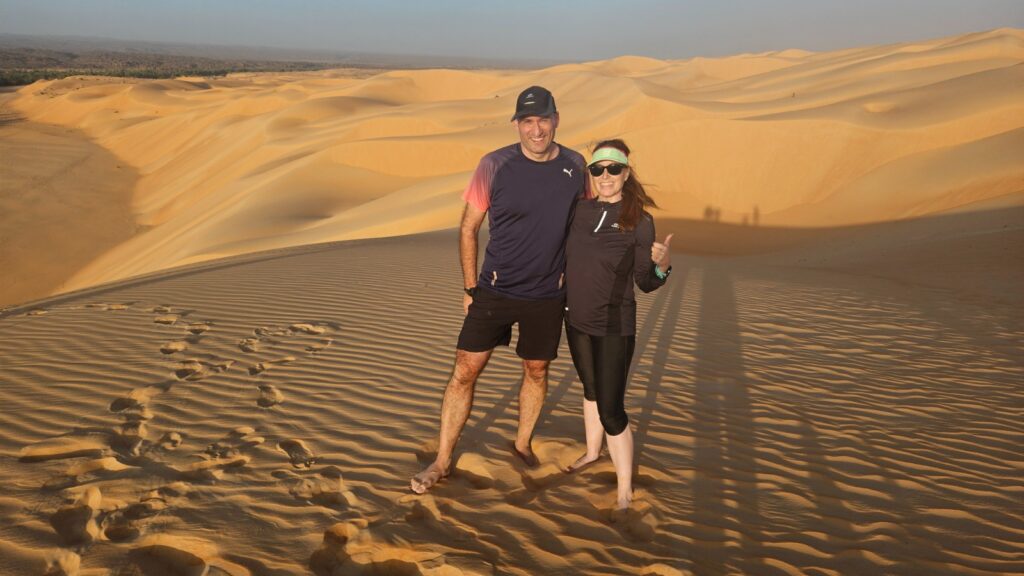
After the climb and our workout, dinner was under a starry sky: lamb, french fries, vegetables, and improvised lamps (cell phone lamps and bottles of water!).
Sleeping bags and cold air made it a peaceful night. Although, in all fairness, it was much colder than expected.
The experience felt remote and magical, far from anything we had known before. Such a starry night! Sleeping under the stars in the desert is one hell of an unforgettable experience.
Chinguetti
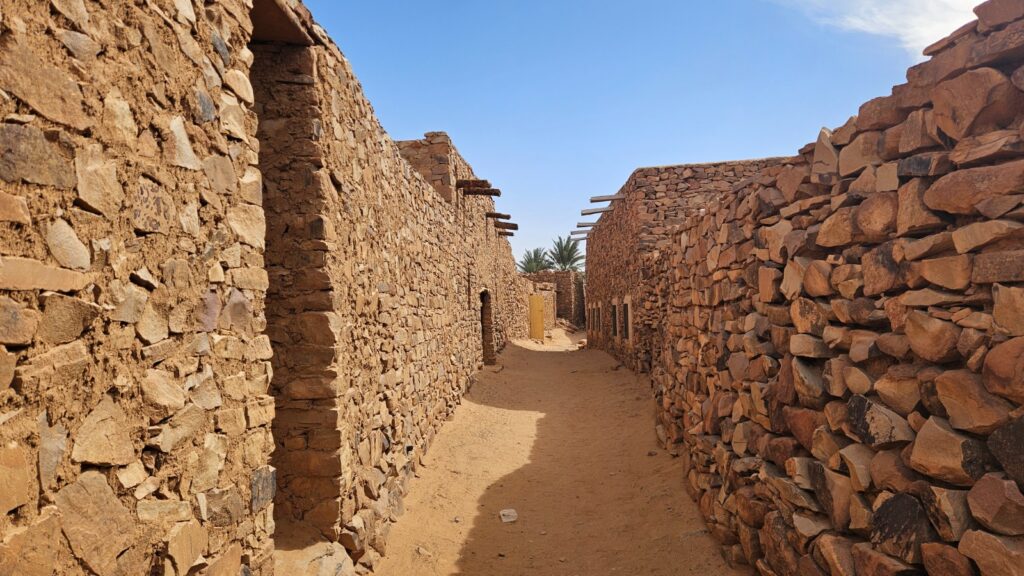
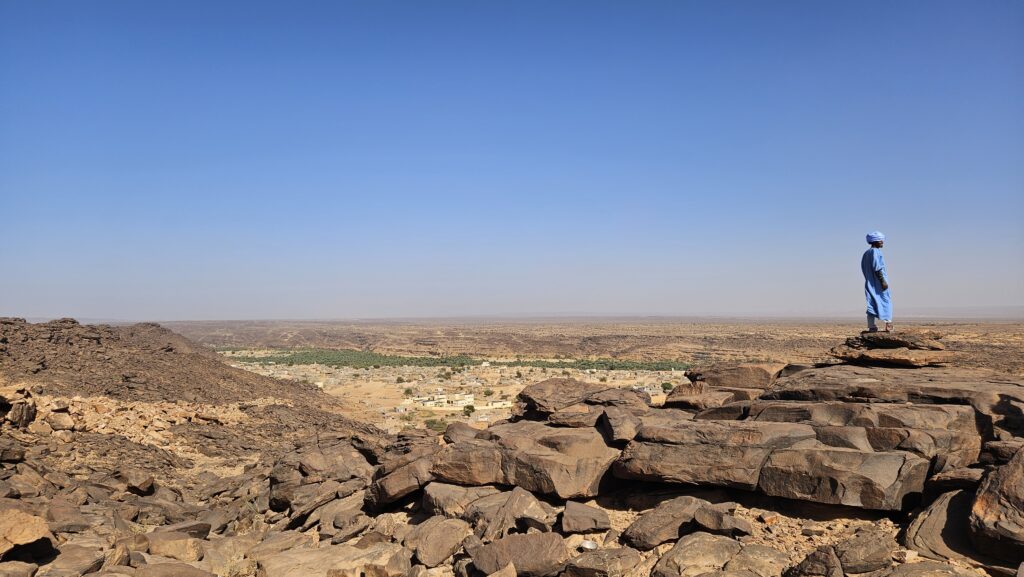
The next day we travelled to Chinguetti. An ancient, partly buried in sand, and a UNESCO heritage site. Narrow streets and old houses create a labyrinth. The town moves slowly. Really, really slowly.
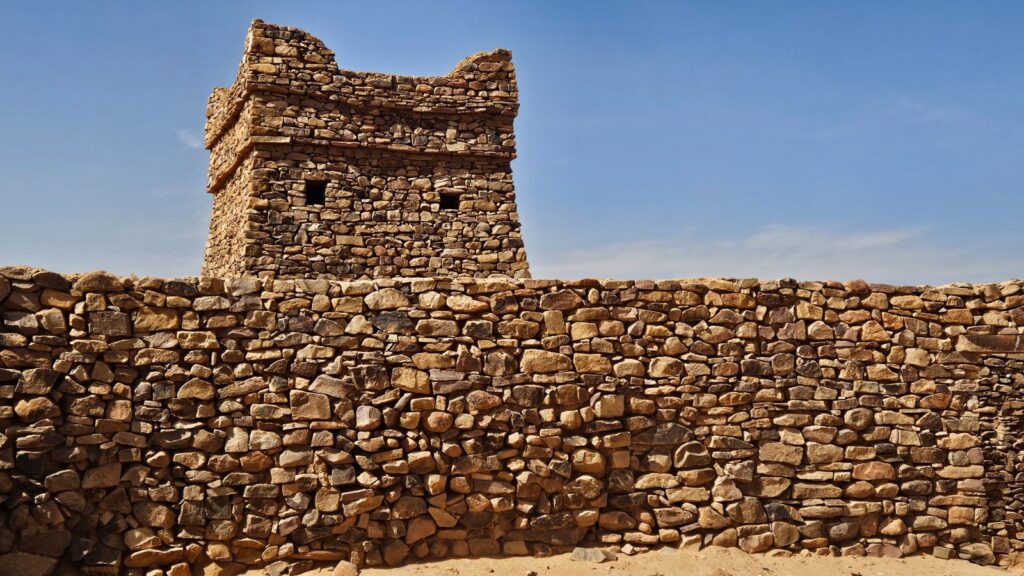
As soon as we arrived, we went for a run, which as well I describe later.
And the day after, we visited local libraries, admired manuscripts, and learned about traditions. Like force feeding women to weigh up to 200 kgs! The ancient elder who explained it, also said in Spanish: “Dame gordura y te daré hermosura”!
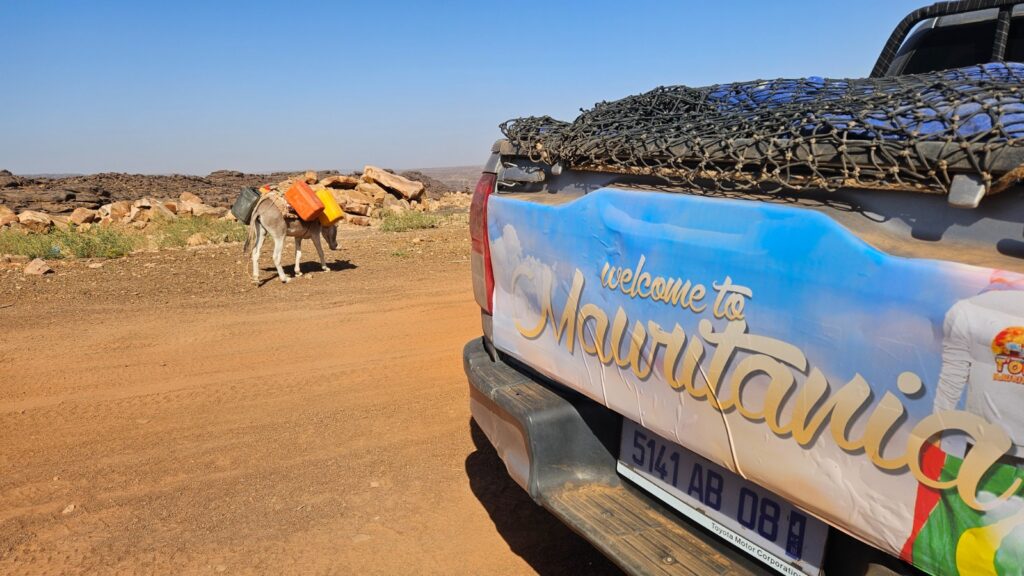
Children, goats, and donkeys wandered freely through the streets, and I realised what a special, unique place this is.
Atar and the surrounding desert
The following day had us drive to Atar. This drive was long but spectacular. Canyons, rock engravings, and valleys appeared between arid plains.
Also, from time to time, little stop overs desert-style: with tents to trade and water matresses for the camels to drink.
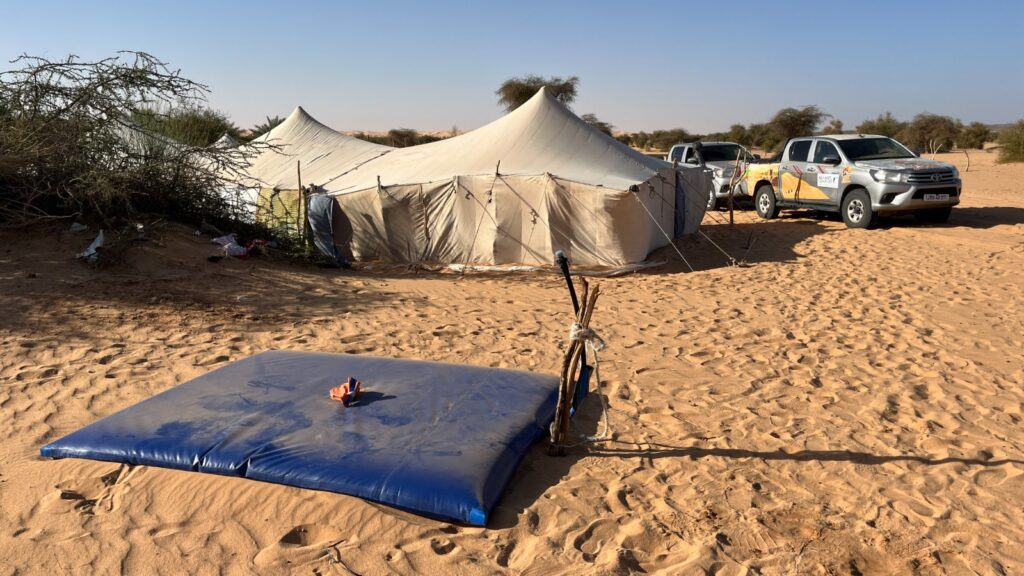
And we even got to ride outside the 4×4, feeling free in a way only the desert wind can make you feel. It is truly a liberating experience.
Later, we explored Oudane, an old town completely empty of residents.
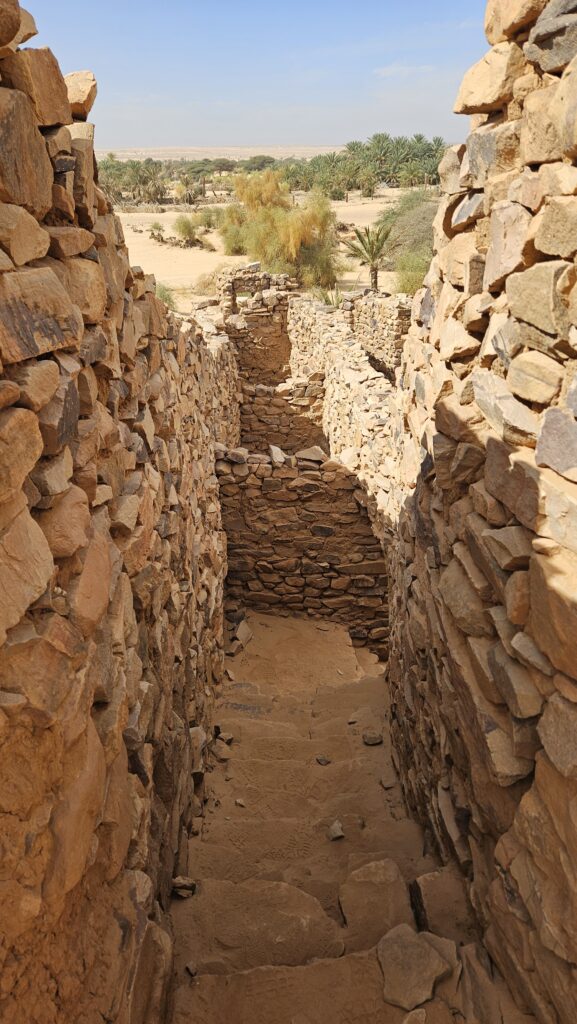
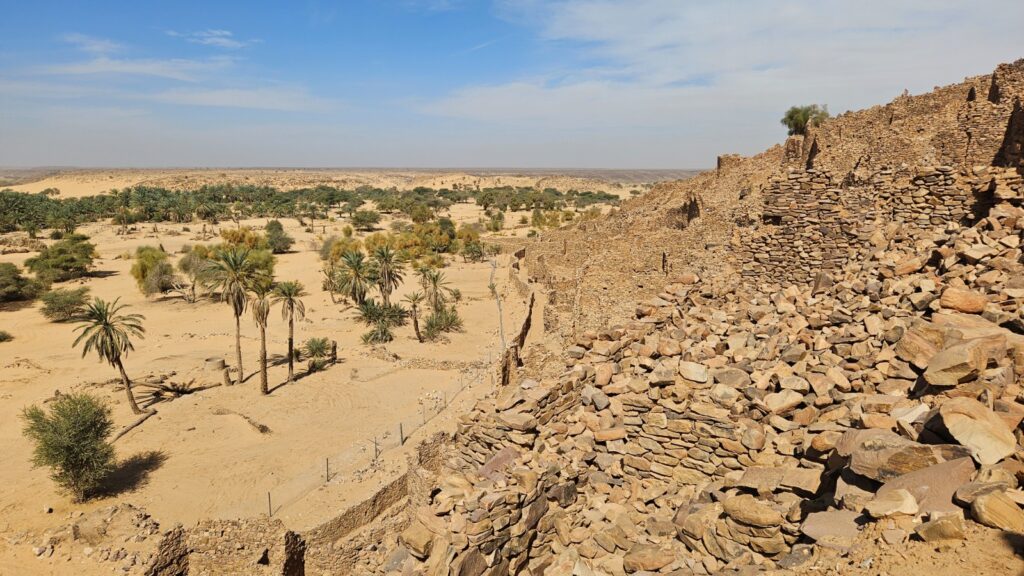
Ancient wells, sun-baked buildings, and absolute silence made it haunting and peaceful.
Here, the desert winds and extreme sun required caution and respect. Every stop felt both ordinary and extraordinary at the same time.
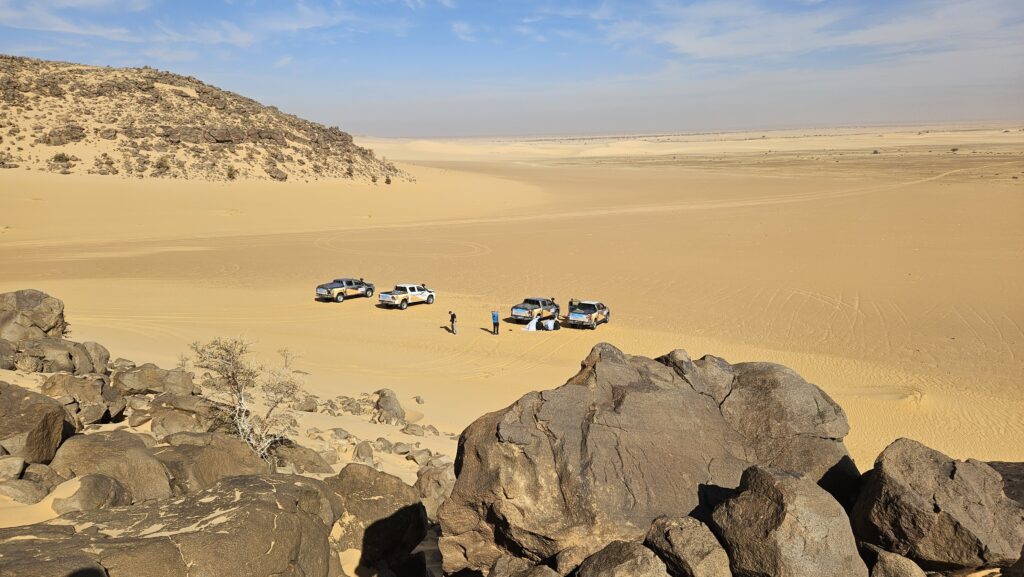
Choum and the tunnel
Then we headed to Choum, which sits near Western Sahara, in a sparse and tense landscape. In fact, we did cross into Western Sahara, a territory which history is well know in our native Spain:
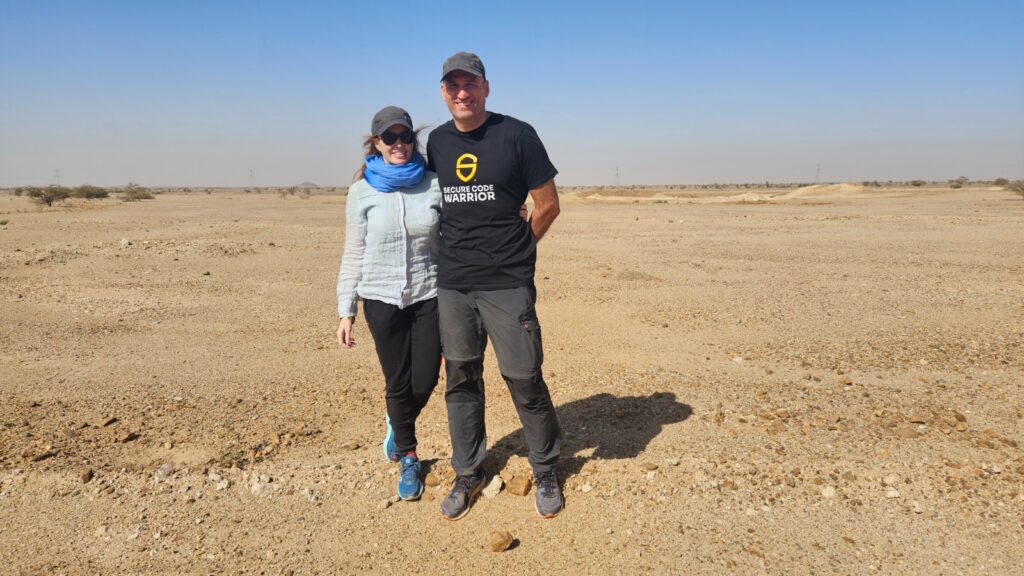
Western Sahara is a disputed territory, with parts controlled by Morocco and others by the Sahrawi Arab Democratic Republic. The region is sparsely populated, desert-dominated, and sensitive politically.
We also ran briefly inside the famous Choum abandoned tunnel, darkness all around. 🦇 The tunnel was short but thrilling. It felt like entering another world, separated from time and space.
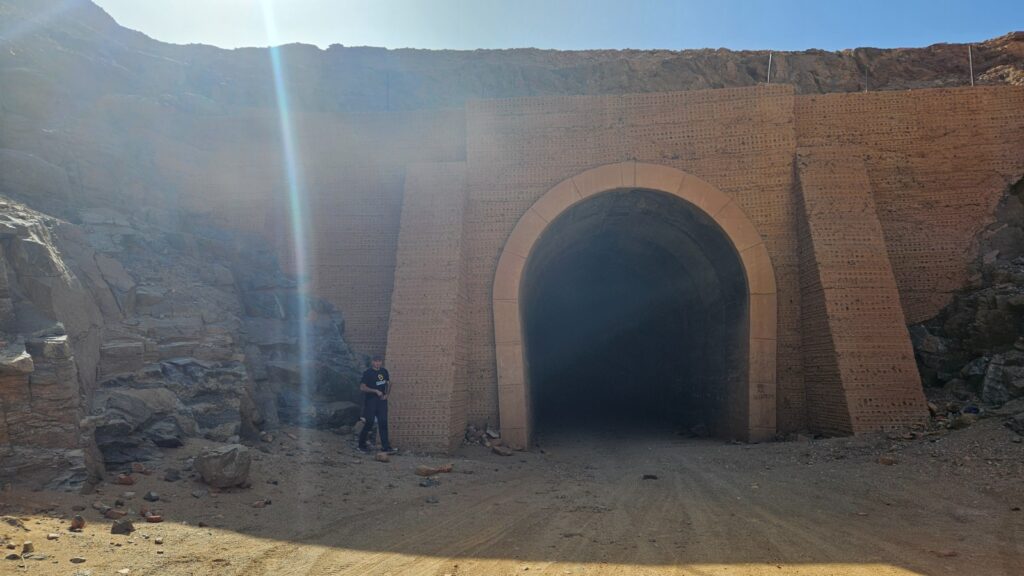
⚠️ But, in fact, word of caution! ⚠️ If you are ever there, do NOT enter like we did!! There are bats carrying diseases inside! We were lucky but not very clever.
The area around Choum is rugged. Driving through it feels like racing across an untouched desert. Again, the drive highlighted the adventurous and unpredictable nature of Mauritania.
Second Biggest Rock on Earth
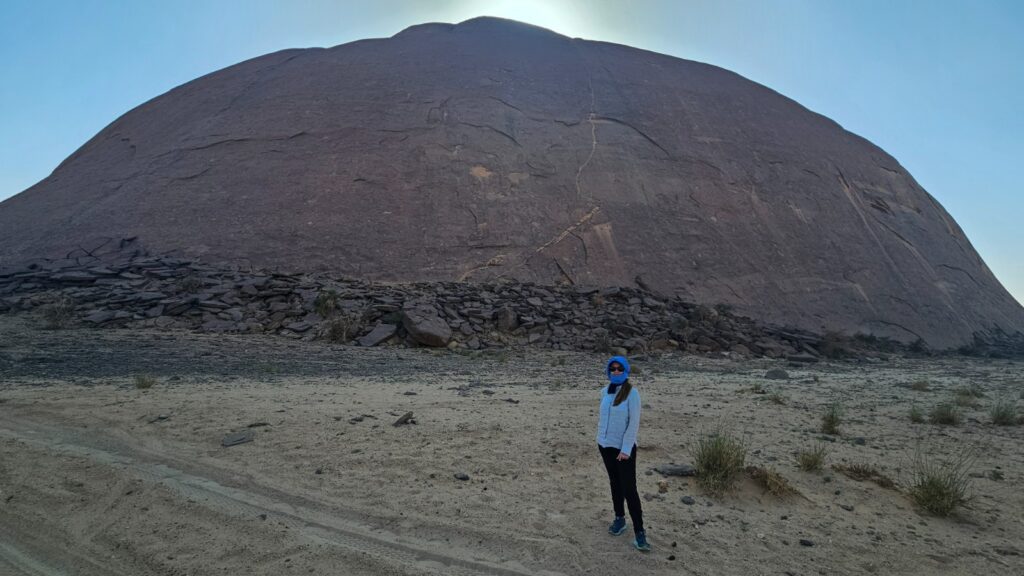
We also passed by the second biggest rock on Earth! Ben Amera. It is a massive sandstone formation near Atar, Mauritania, known locally as “La Vagina.”
I include the following picture which is worth a million words…
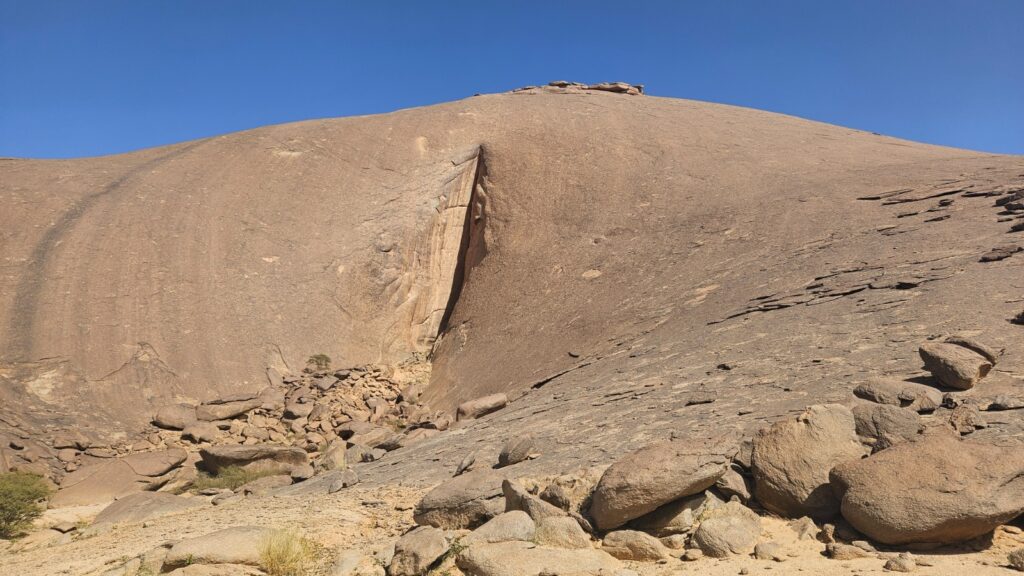
Its surface is covered with ancient carvings and engravings, some depicting giraffes and prehistoric symbols.
Climbing is prohibited due to danger and cultural significance, but walking around its base reveals stunning views and a deep sense of desert history.
The Iron Ore Train
And, finally…. the reason for the trip! The very famous Iron Ore Train. It is the longest on Earth. 🚆
2,5k to 3kms long! We were going to ride on it that night, but in the afternoon we managed to see it passing by.
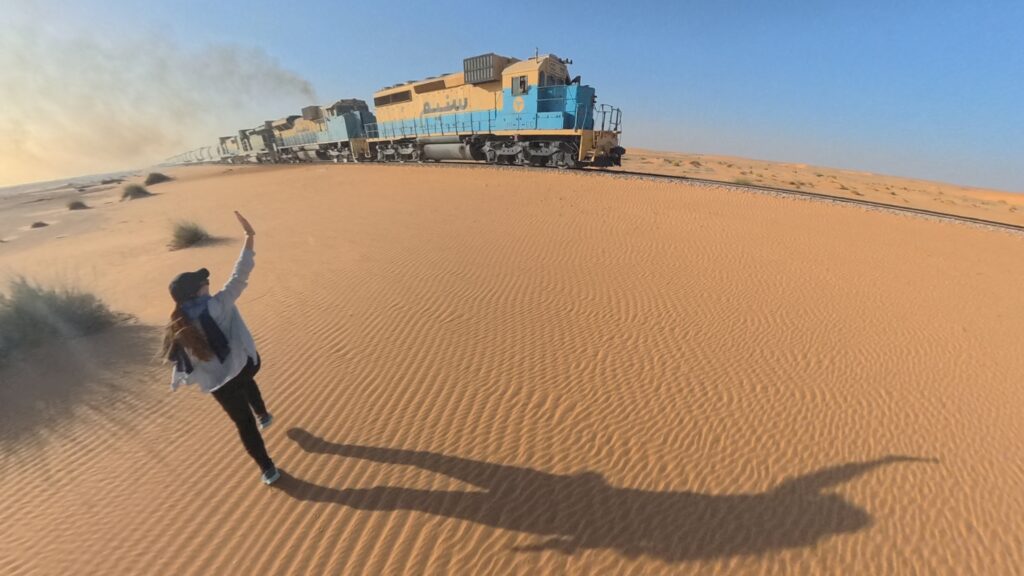
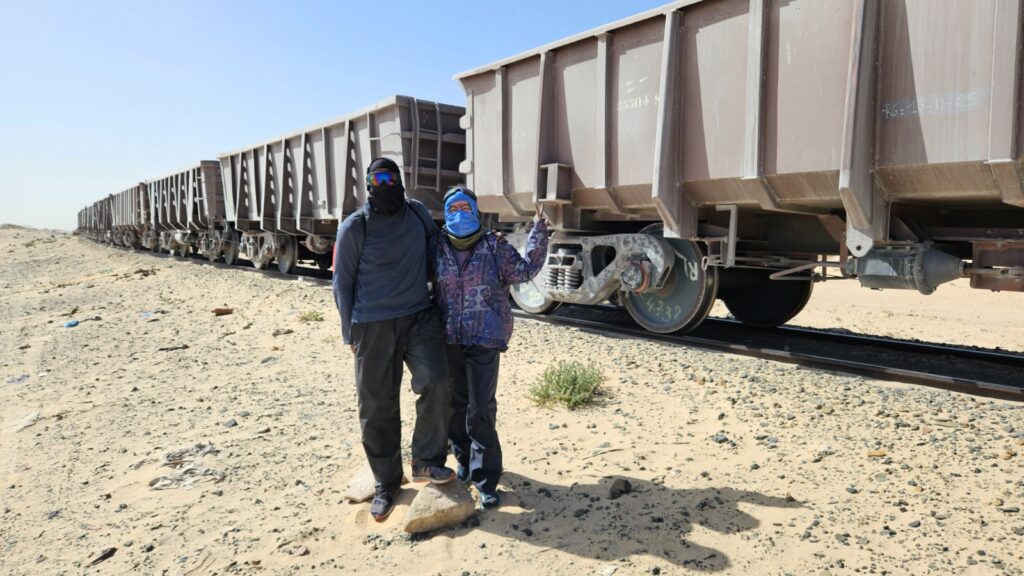
And we could not resist… as soon as we saw it, we ran next to it! What a great idea!
Running alongside it during the day is surreal. Dust, wind, and scale make it unforgettable.
We even ran in its tracks for a while 🤩. Just for the fun of it!
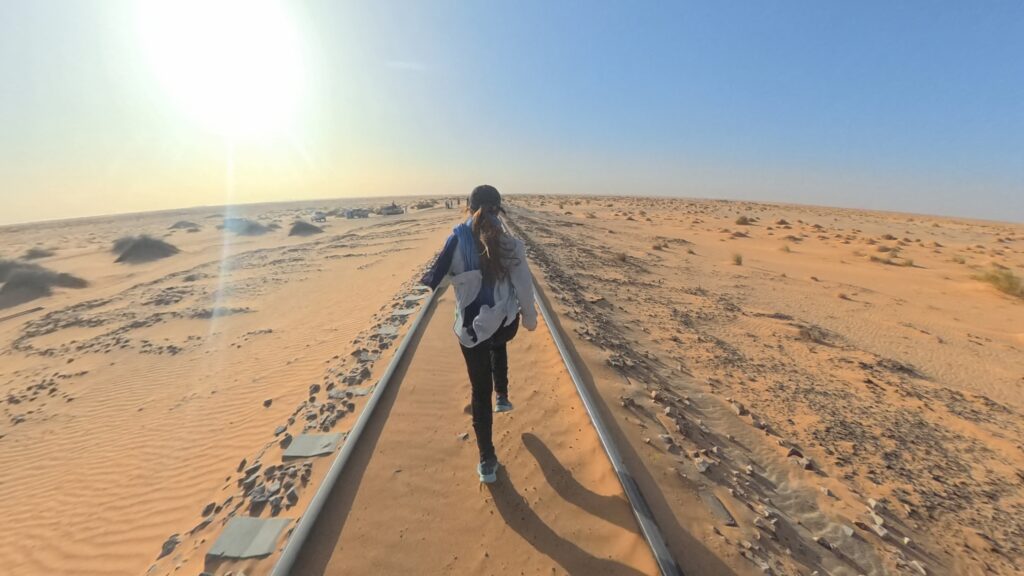
And we rode it! (For 11 hours!)
And then…. at night, we boarded the train.
We dressed accordingly as the iron ore is extremely toxic and the night is extremely cold. Googles, scarfs, masques, and some “Miami Vice” jackets we had bought in Atar the day before 🤣
Then we woke up at 3am and headed to the station. Silence and darkness were required, as the mining company is not keen in tourists riding it. The locals are allowed, though.
Climbing wagons was painful and difficult, since it was pitch black, but the experience was worth every bruise.
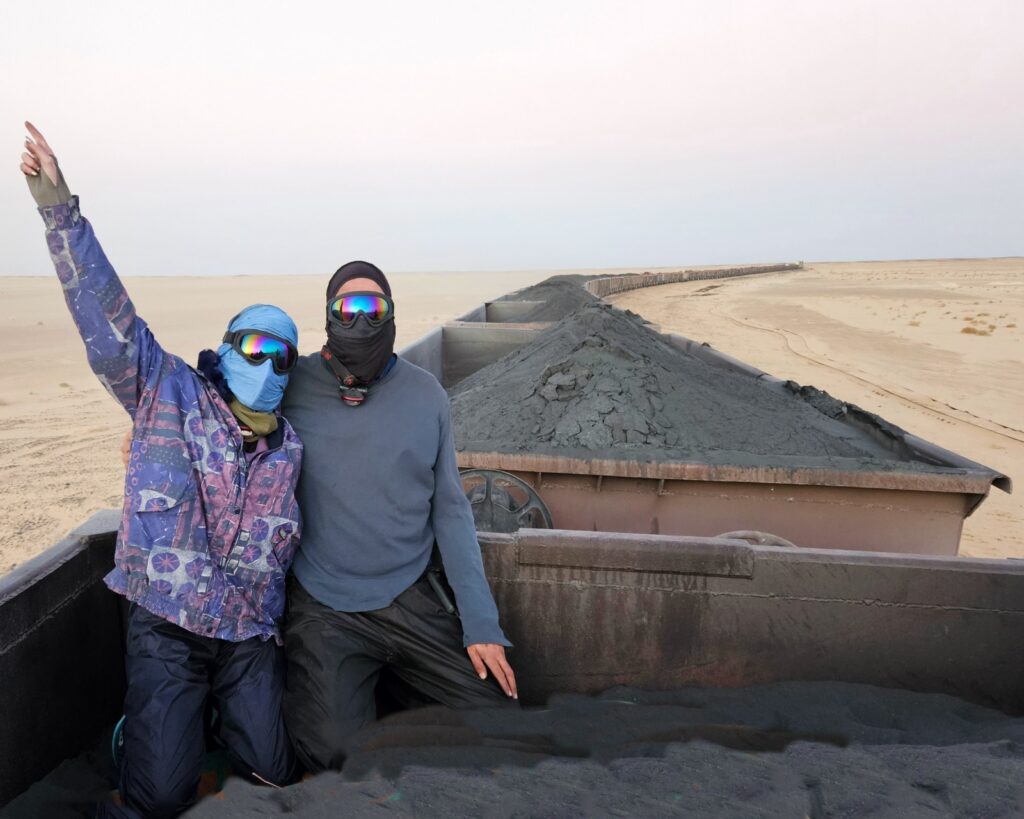
Stars above, steel below, wind blowing. Sunrise was magical. I have no words to describe it, really.
But, again… it was also challenging because of the dust, the ore and the low temperatures. I will always remember how cold the iron ore felt when I touched it with my hands.
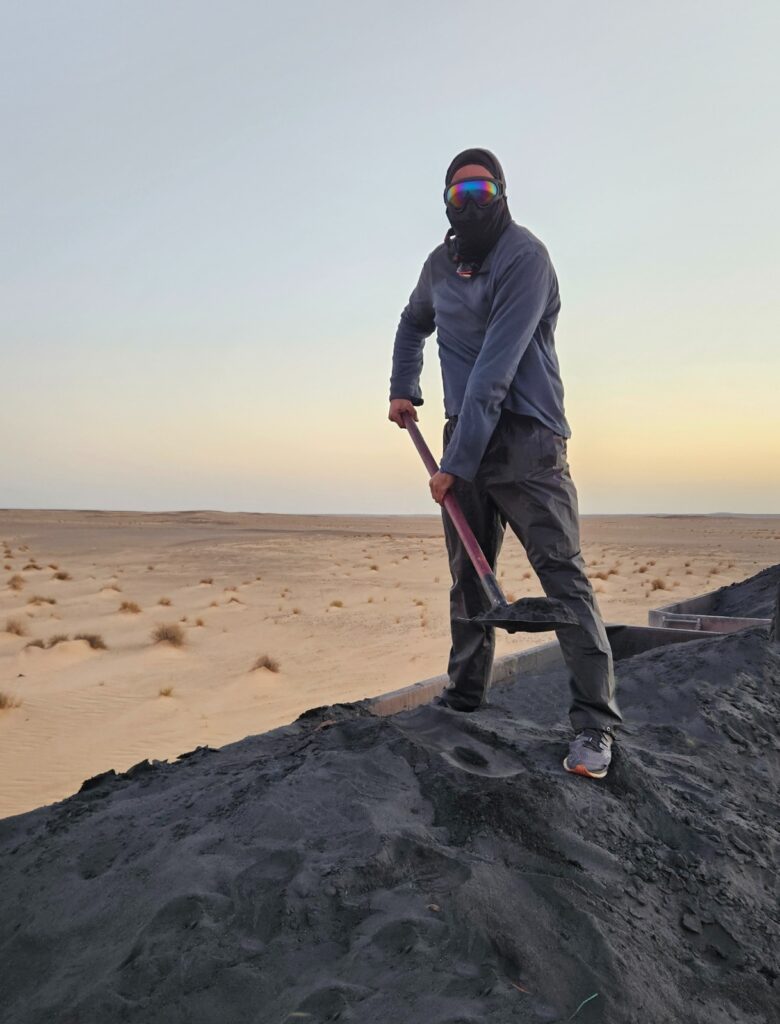
Hours spent riding above the iron ore revealed the desert differently. The rythms slows down while the train advances.
Then the sun rose and we went from extreme coldness to heat in less than 30 minutes. Crazy! But we could admire the landscape and minutes turned into hours.
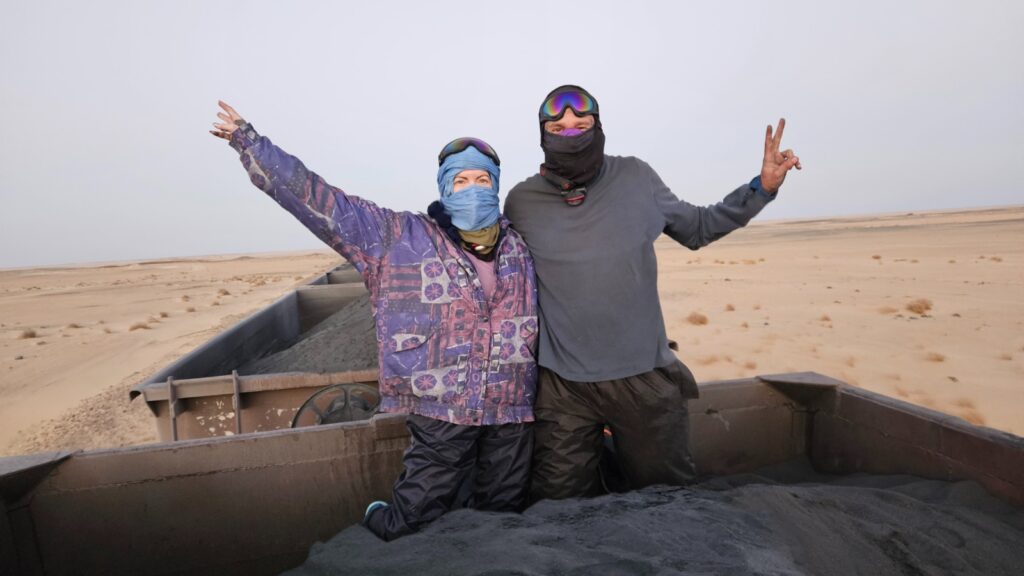
We spent 11 hours and by the end were completely exhausted, but happy.
We disembarked at Nuadibú, and, seeing locals transporting goats while tourists are restricted added another layer of wonder. How was it possible? We struggled so much, while the locals were transporting dozen of goats!
🏃♀️ The Runs 🏃♂️
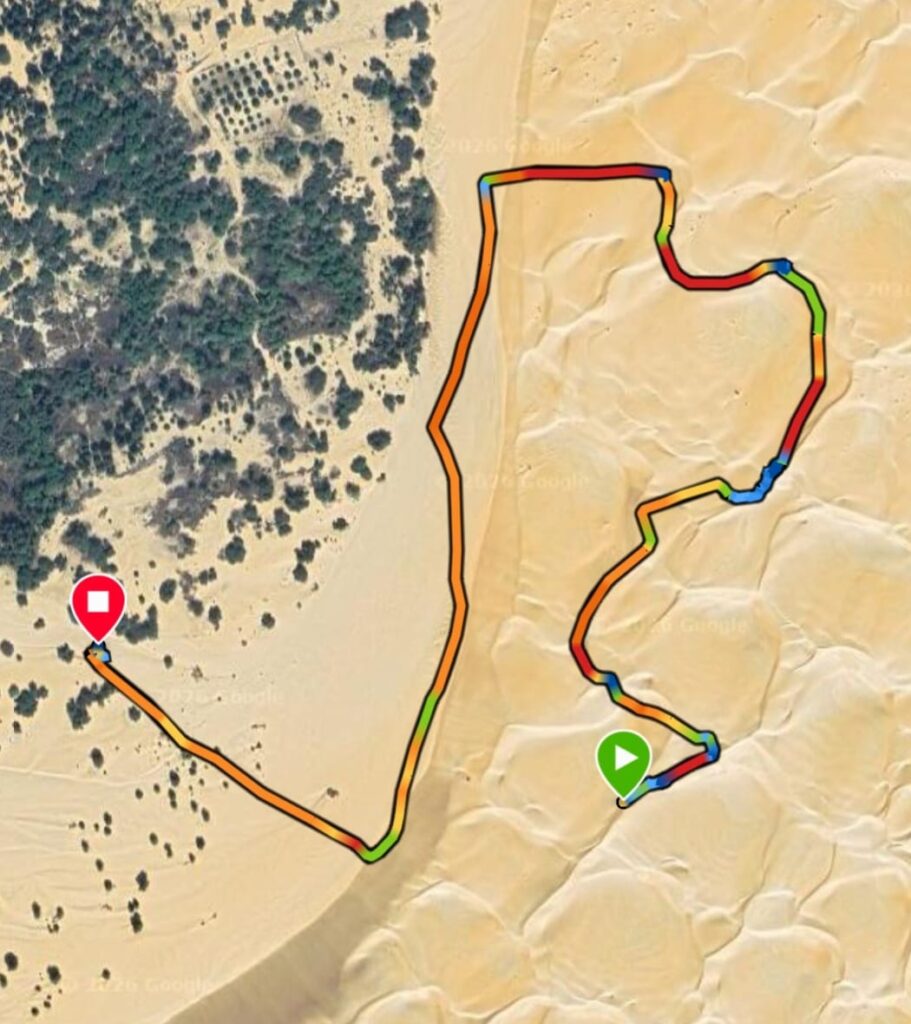
Azouega Dunes Run (3k)
The dunes
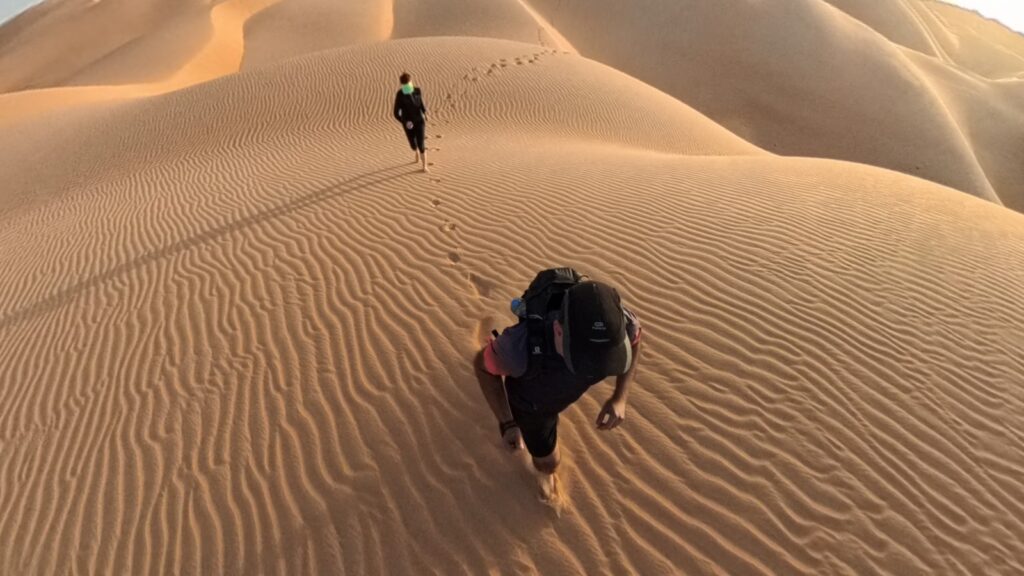
Azouega’s dunes are high, isolated, and spectacular. Some reach 200 meters. They rise like waves frozen in sand. Every step shifts the surface. 🏜️
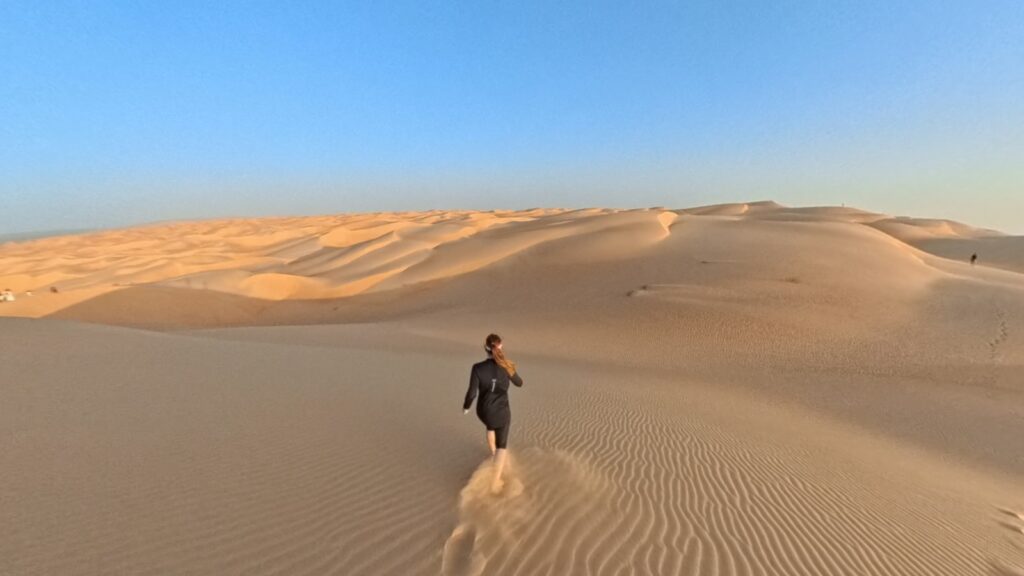
The desert is quiet. Only wind and sand accompany you.
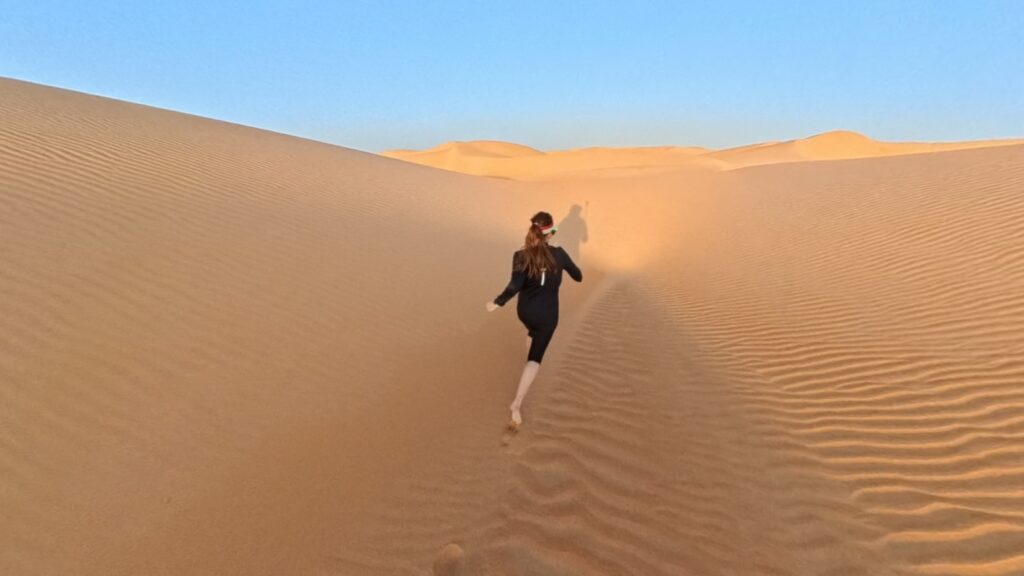
Running up is slow. The sand gives way under your feet. Small avalanches cascade with each step. Balance is crucial.
From the top, the horizon stretches endlessly, blending desert and sky.
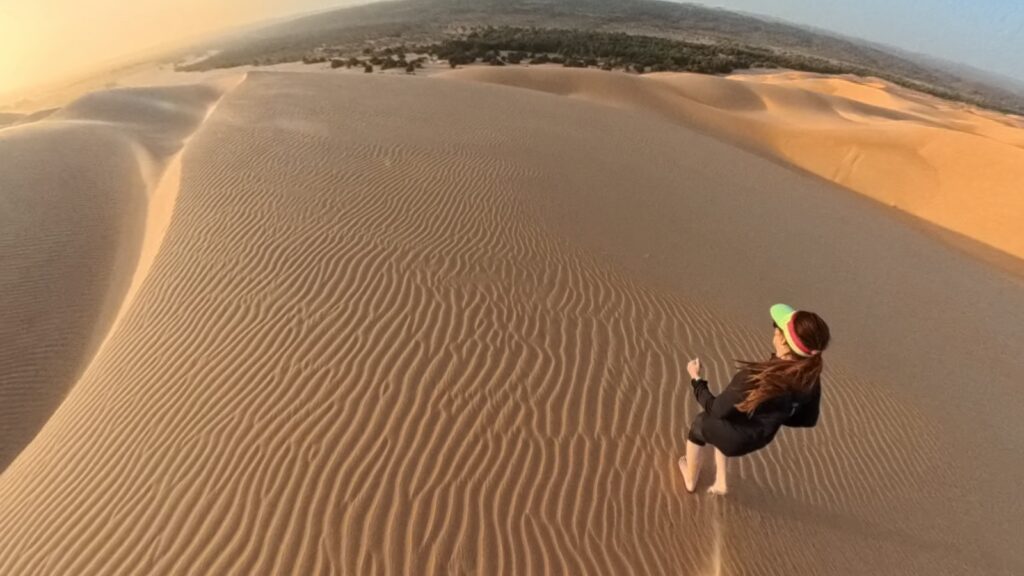
Sunset transforms the landscape. Orange and red colors glow. The wind hits your face. Sand gets in your eyes and hair.
Running here feels like moving through a painting.
Running the crests
We ran along the dune crests to avoid deep sand. Barefoot running works better, because shoes sink and slow you down.
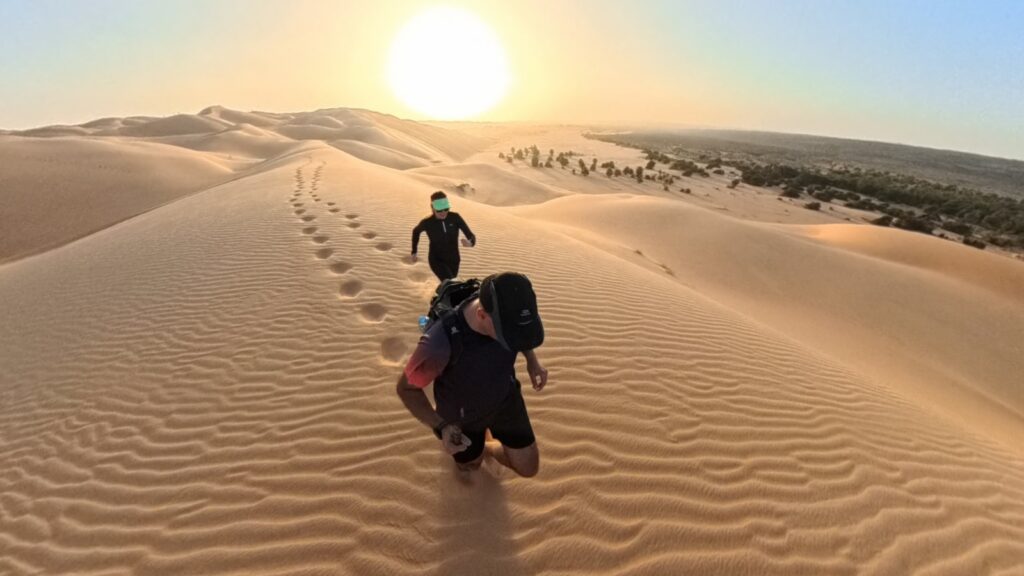
The run is short, about 2.5 to 3 kilometers, but intensely exhausting. Going down is fast but requires control and, as we had established, going up is slow and taxing.
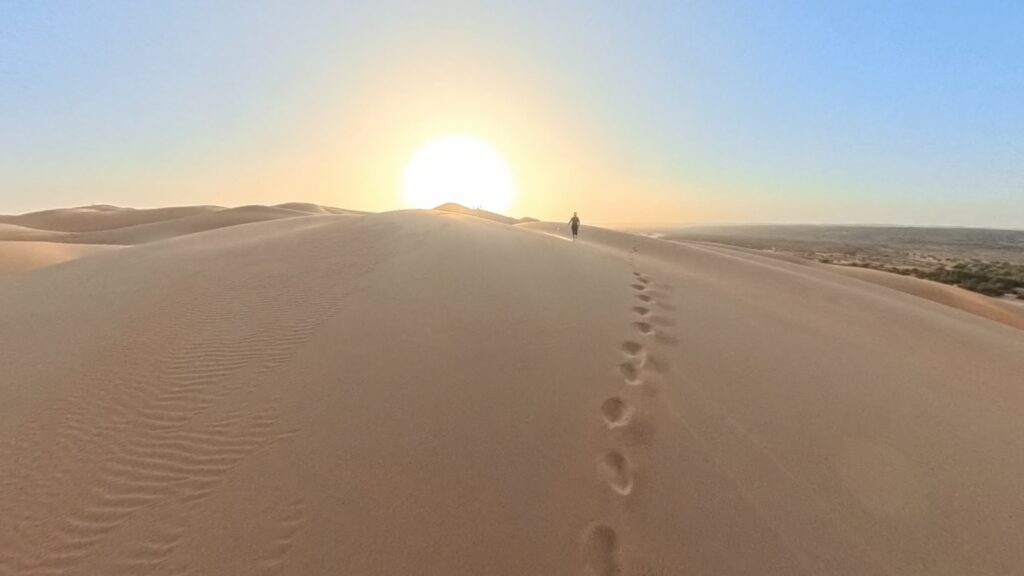
Isolation and silence make every step feel meditative. On top of it, we ran at sunset and it was one of the most special runs ever – it made me feel a very special connection with the Sahara Desert.
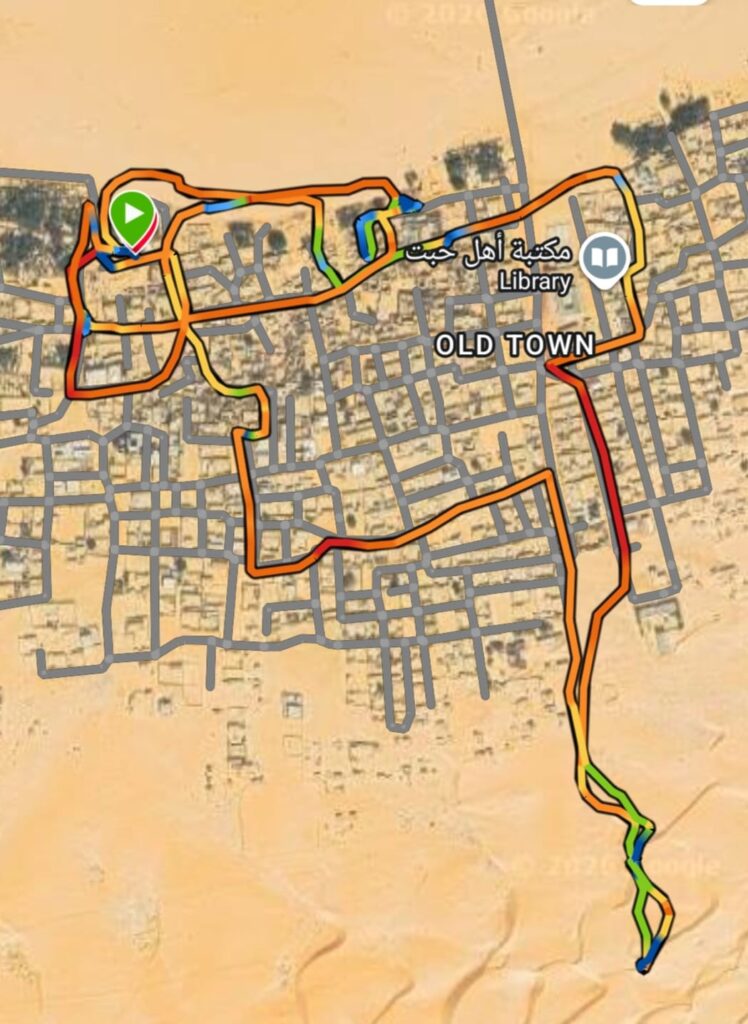
Chinguetti Streets Run (5k)
The Town
Chinguetti is ancient, partly buried in sand. Libraries hold centuries of manuscripts (In fact, the day after we visited one of the libraries and could see the manuscripts ourselves). Streets are narrow. Houses crumble slowly.
As I mentioned before, the town is a UNESCO site, and when running it you understand why.
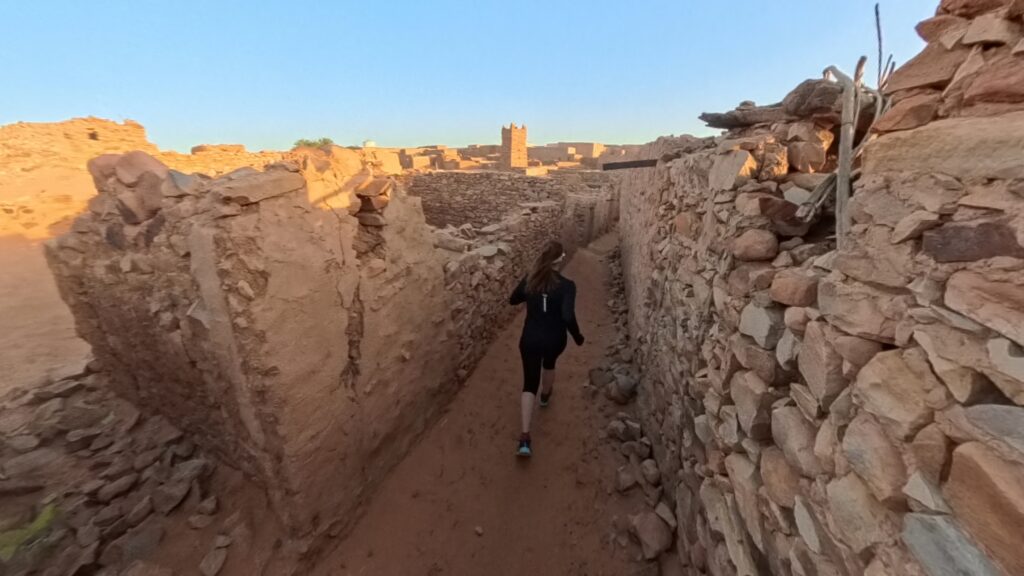
We went for a 5k run which turned out to be a very scenic run full of surprises.
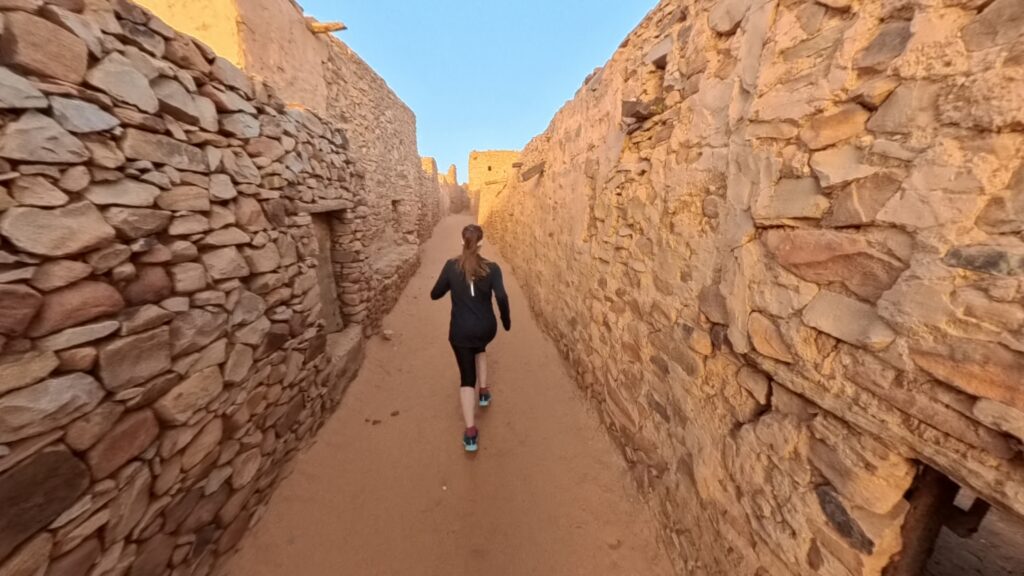
Running through it feels like stepping back in time. Goats wander freely. Donkeys pull carts. Sand drifts into the streets, blending desert and architecture. You have to watch your footing and adapt constantly.
We ran through alleys partially filled with sand.
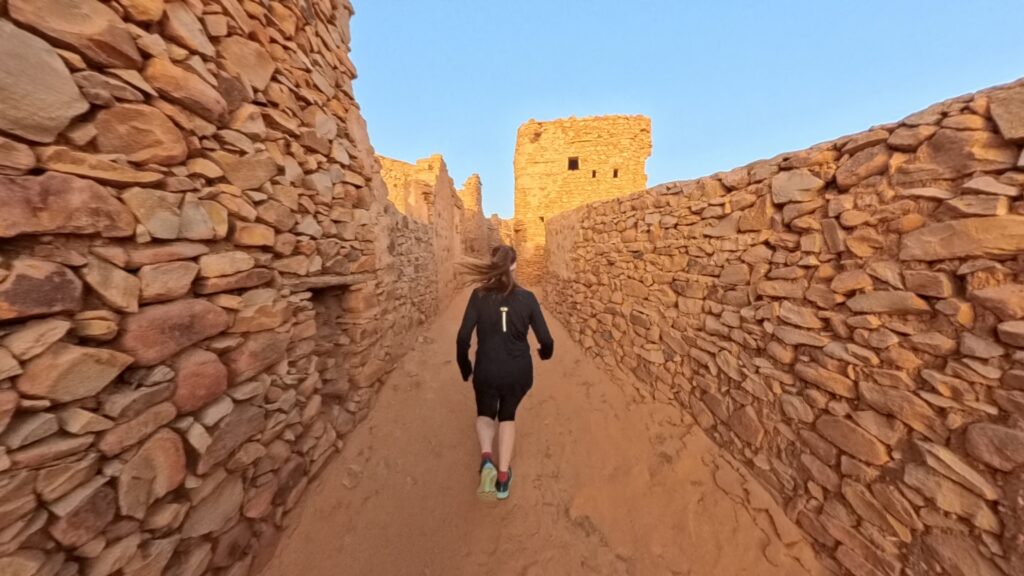
Animals, carts, and ruined walls kept forcing constant attention, but we ran happy, past some curious locals…
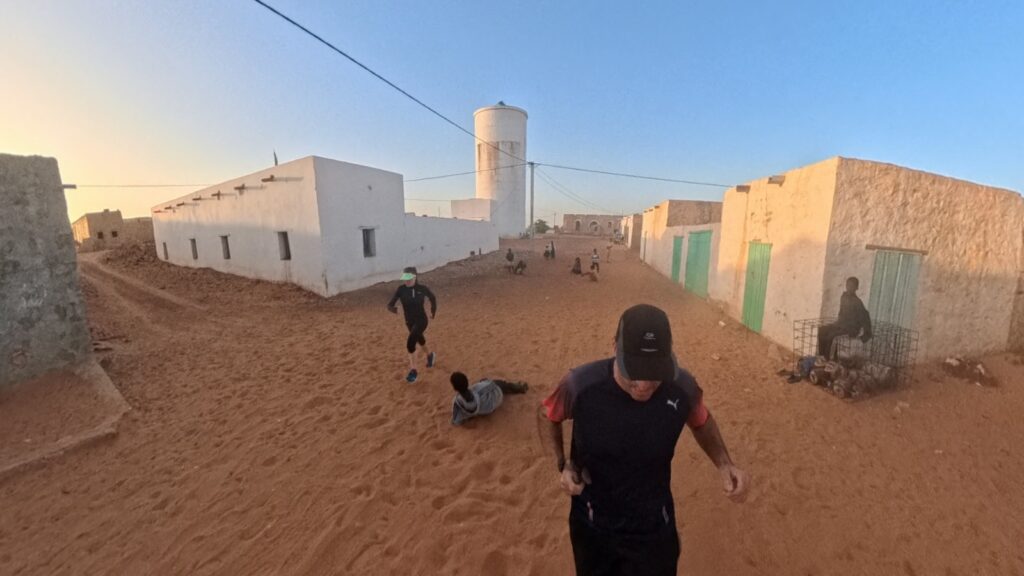
And of couse, goats!
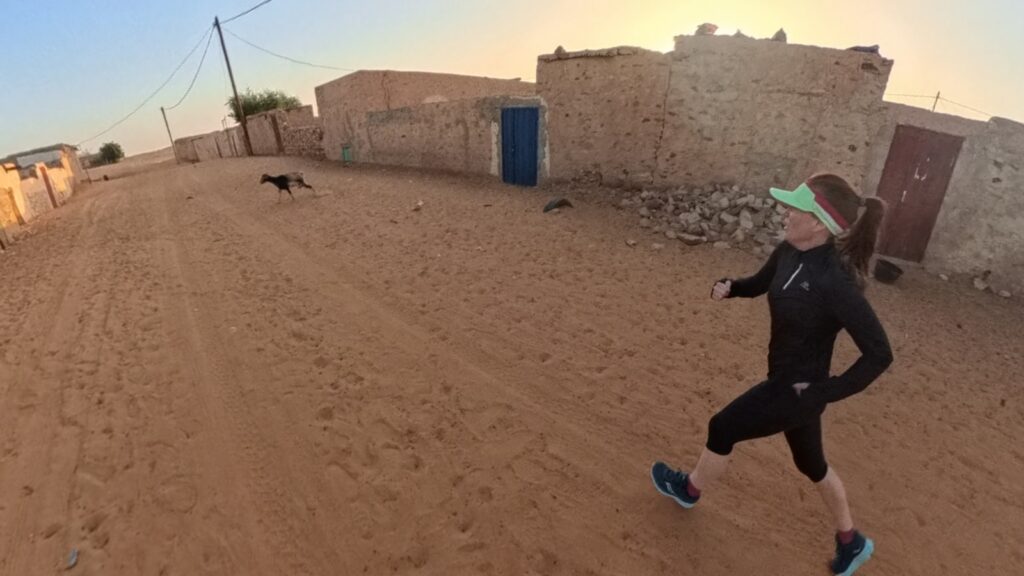
The Dunes… and the Spanish Consulate!
The run flowed from town into small dunes on the outskirts. And, of course, we ventured into those dunes!
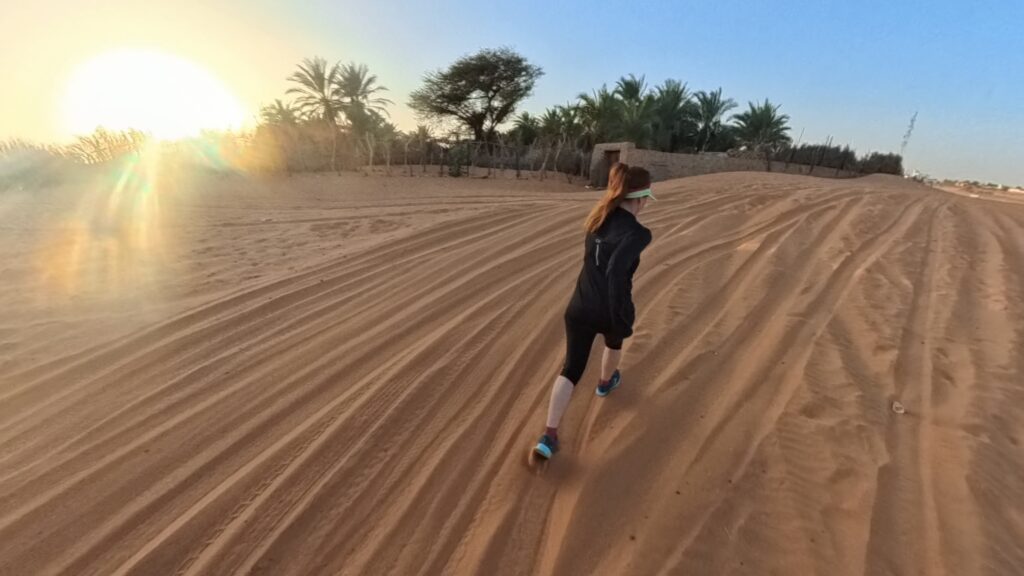
Sunset closed the run. Breathless, laughing, and fully immersed.
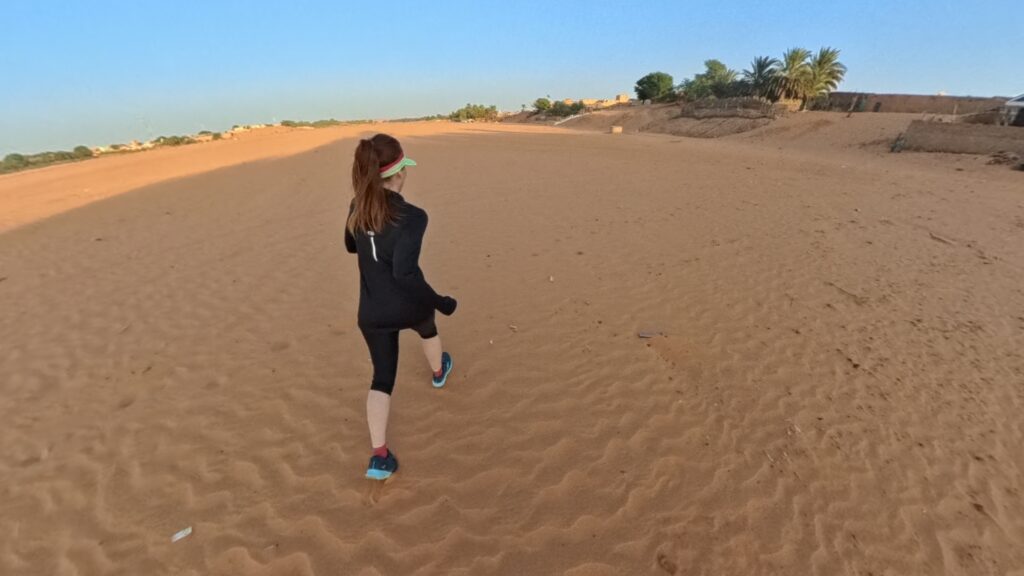
And to end our run… another surprise!
A very big Spanish flag. We asked a local and he informed us is the brand new Spanish Consulate. How weird!
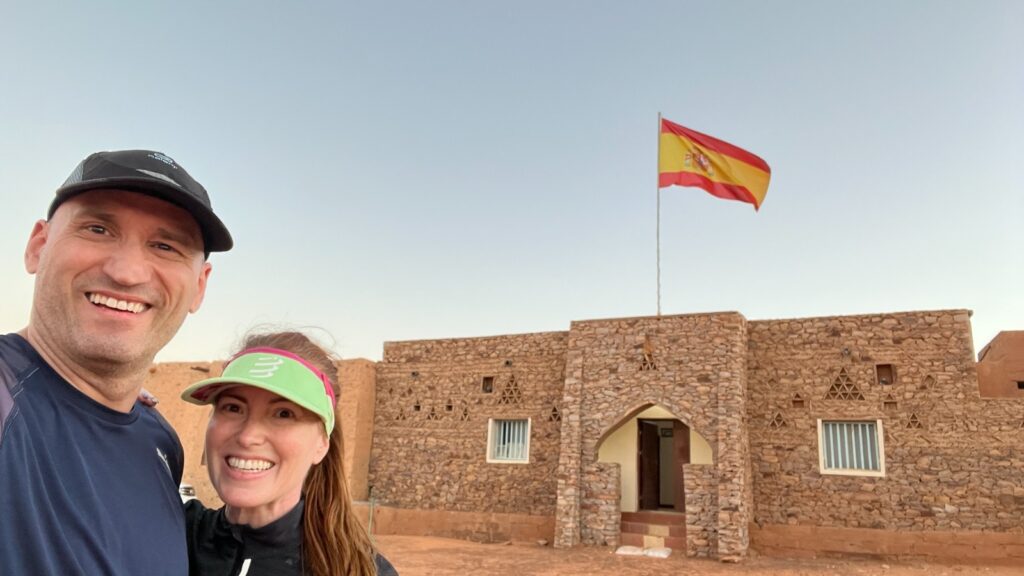
Anyway, running in Chinguetti is social and playful. It contrasts the solitude and physical challenge of Azouega.
Every step connects you to history, the desert, and local life.
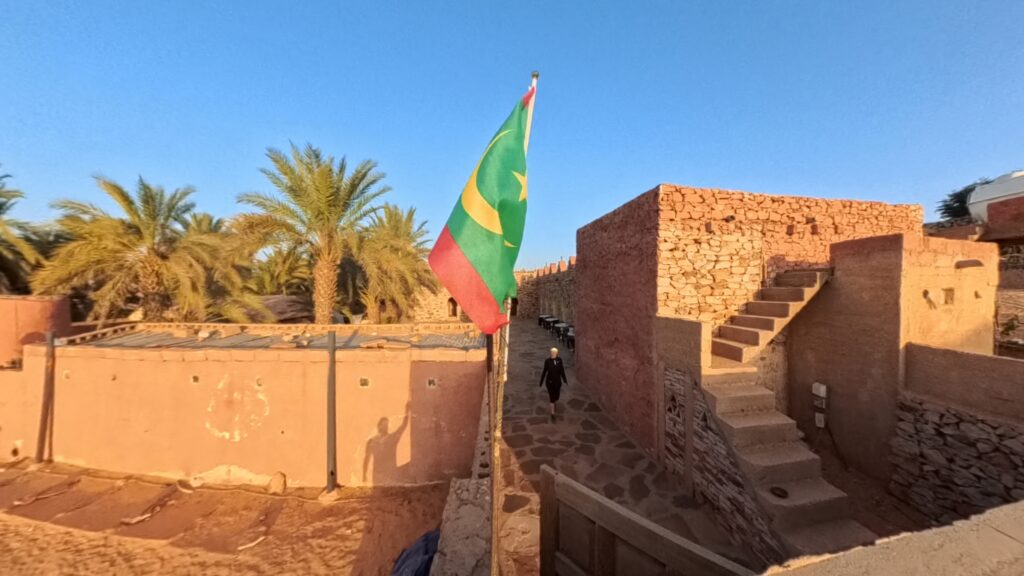
🍜 Carboloading 🍝: What to eat in Mauritania if you are a runner
Carboloading in Mauritania is simple but effective. Couscous is the staple. It appears in every meal and keeps energy steady:
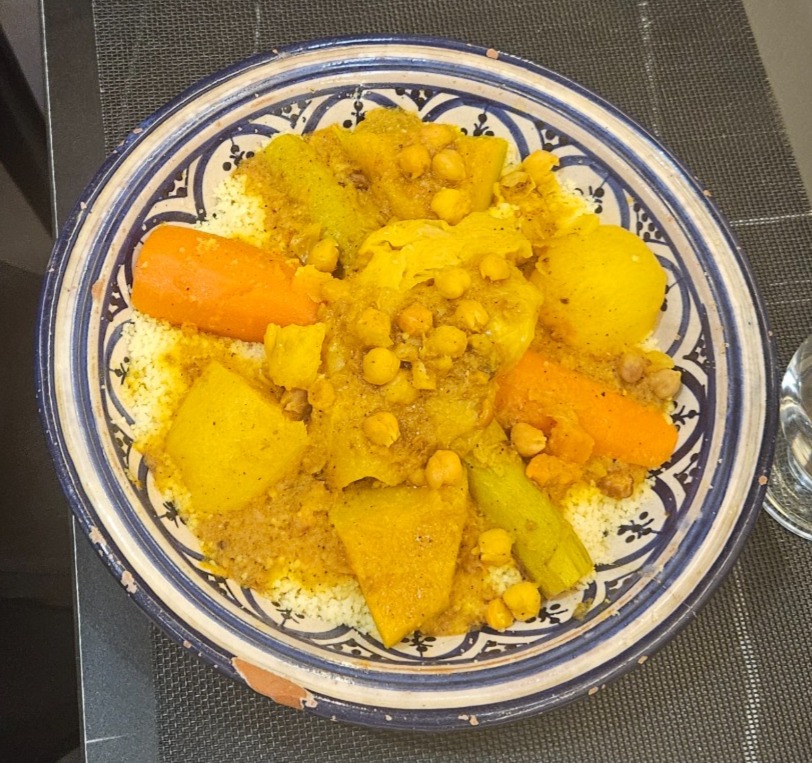
And we even had camel couscous!
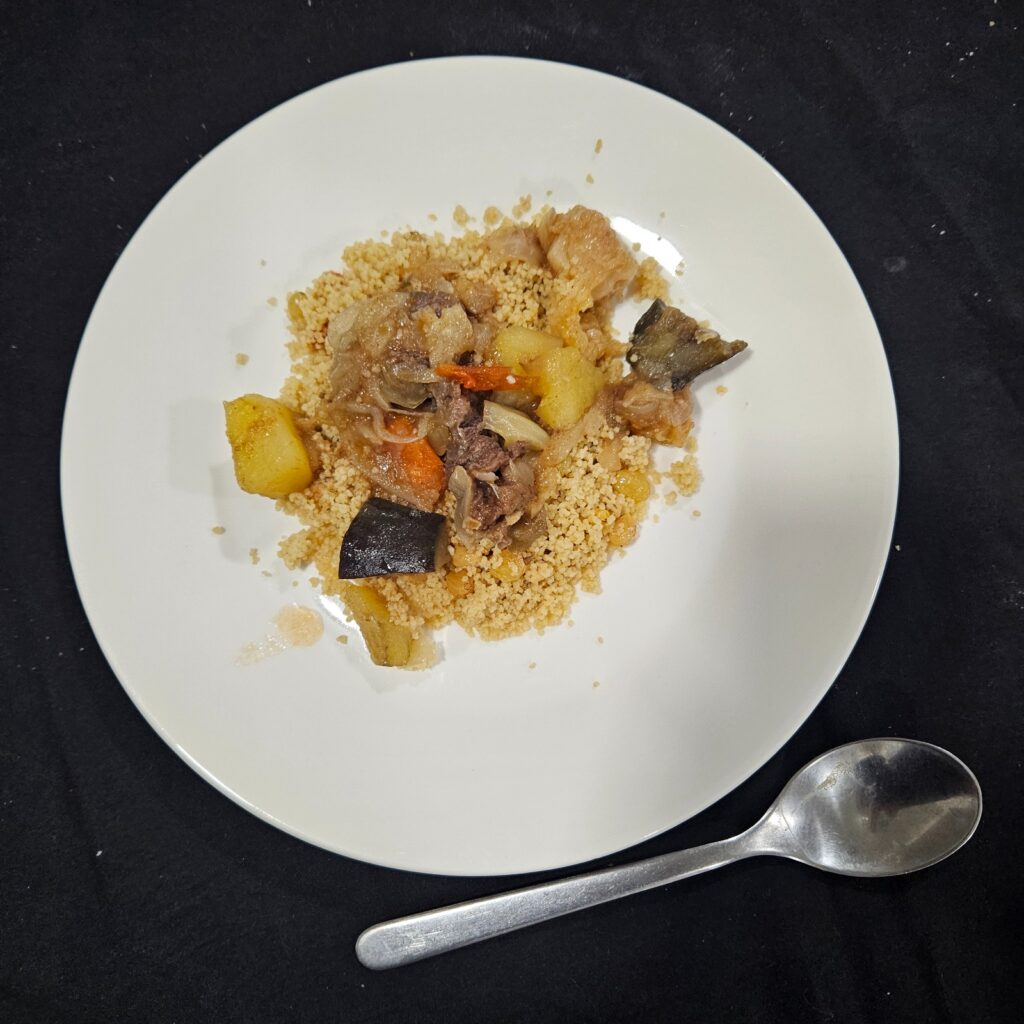
Öur tour offered crepes with Nutella for breakfast every day! They became my ritual.
Sweet Mauritanian tea is served hot and drunk quickly. It delivers both sugar and a moment of calm. ☕
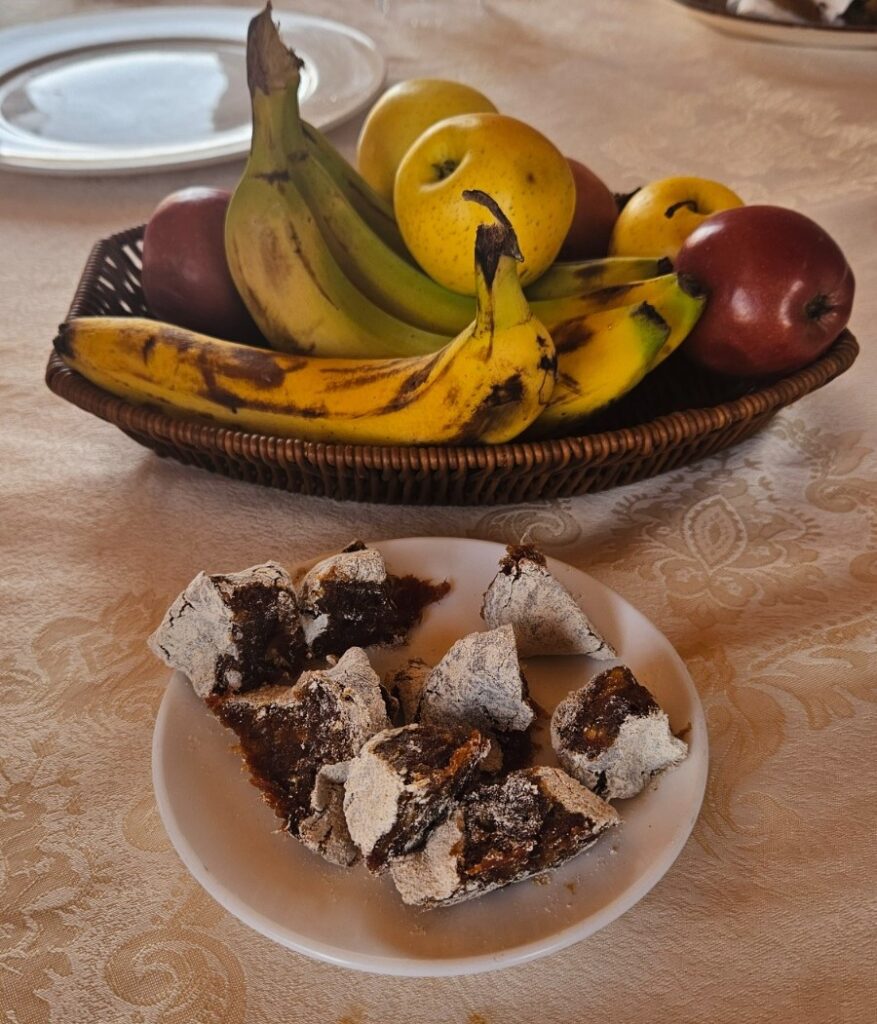
Lentils, dates, and watermelon were constant companions. These foods hydrate, provide carbs, and taste refreshing in a desert climate.
Meals are not rushed. Preparing and eating slowly is part of the experience.

Useful information
🗓️ When to run? Do not venture in Mauritania in summer – the hot climate is very extreme!
👟 What to wear? Shoes for trail are best. You are not going to use your urban ones. But, in many places, running barefoot is the best option! And do not forget your suncream and own hydration! Obviously there are no drinking fountains…
✅ Running in the dunes of Azouega is an unforgettable challenge, combining physical effort with breathtaking desert views. 🏜️
✅ Chinguetti offers unique cultural runs through narrow streets and sand-filled alleys, often alongside locals or animals
⚠️ The desert terrain is unpredictable. Loose sand, steep dunes, and hidden obstacles require caution and good balance.
⚠️ Extreme heat, wind, and limited water make hydration and sun protection critical during runs. ☀️
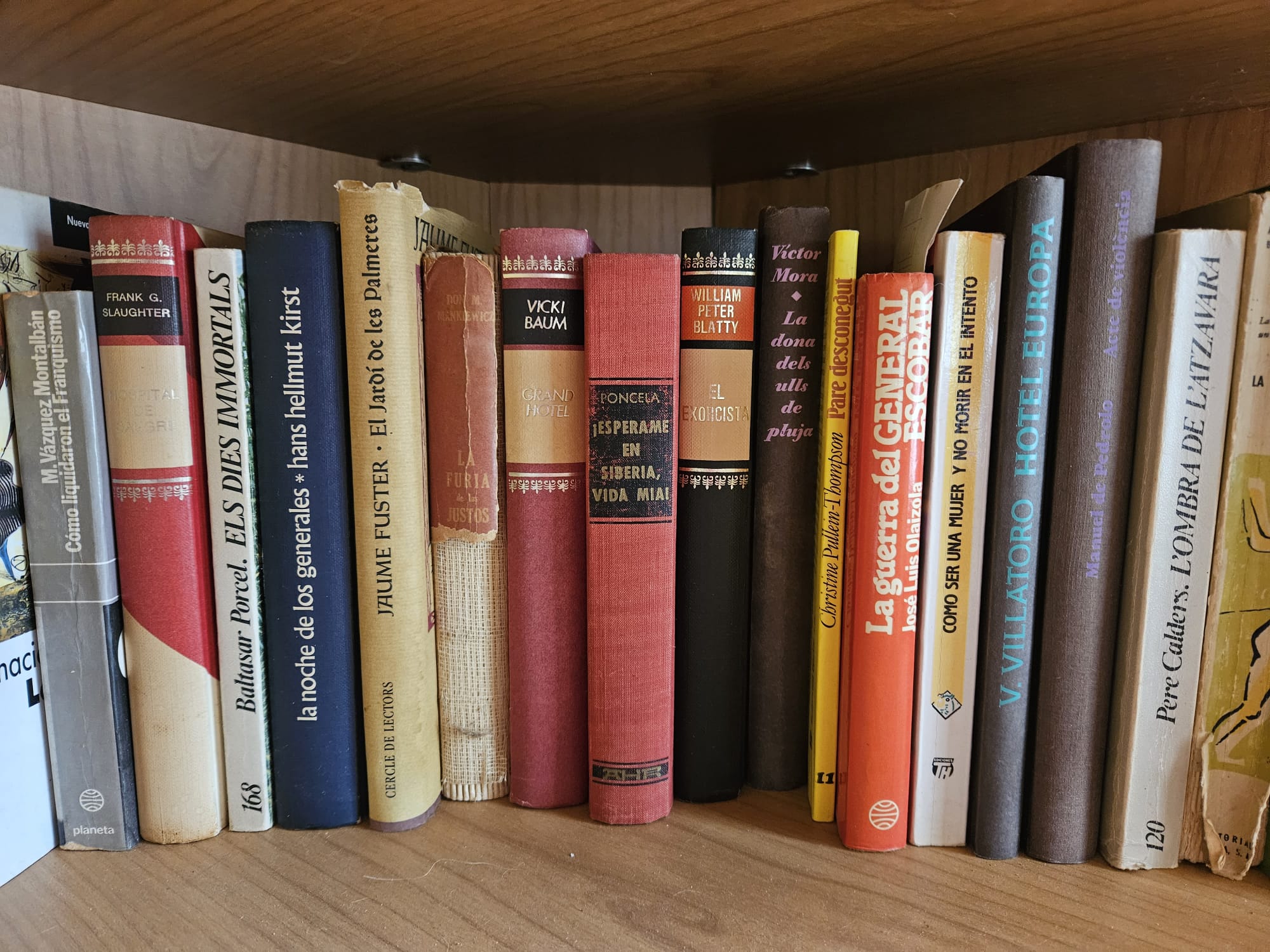
One book
“The Desert and the Drum” (original French: Le Tambour des larmes) by Mbarek Ould Beyrouk
The Desert and the Drum is a must-read before visiting Mauritania. It teaches you to observe silence and understand local culture without oversimplifying.
The novel explains tradition, pride, and social tension in a subtle way. It helps prepare mentally for the long, quiet stretches of desert and remote towns.
Reading it also gives context for running in Mauritania. You notice rhythms, gestures, and attitudes you might otherwise miss.
The book helps connect you to the land, the people, and the experience. After reading it, every dune, street, and train ride feels deeper, more meaningful.
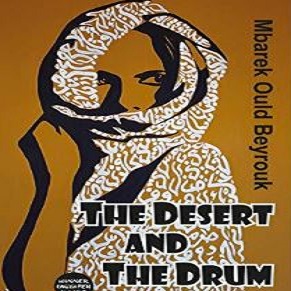
Plot Summary: The Desert and the Drum follows Rayhana, a young Bedouin woman from a traditional tribe in the Sahara. Everything changes when foreigners arrive to mine for metal near her camp and she becomes involved with a man named Yahya, an engineer. When she discovers she is pregnant, her mother hides her away for the birth and the child is given to another caretaker. Rayhana is then married off, but when the truth comes out and the baby’s location remains unknown, she steals her tribe’s sacred drum in anger and sorrow.